One, the cave deep
From 5 to 10 april, the selected interface was filled with a diameter of more than 1. 0 cm and a year-long seedling of a disease-free pest of more than 1. 5 m, with pre-plant cuts and long roots, which were immersed overnight in the water, and the trees were immersed on the next day. The pits are 1 m long, wide and deep, and the topsoil is divided between the topsoil and the subsoil, so that the water is watered out and then planted。
The depth of planting is about 5 cm deeper than normal planting trees, and the soil is completely covered with topsoil, with the conditions to exchange the soil or mix humans with appropriate amounts of organic fertilizer. When the soil is filled, light seedlings are dried up, solid water is poured into the water, and a small pile of earth is piled in the tree base to reduce evaporation and increase the rate of activity. Three weeks of investigations, with a survival rate of 99. 6 per cent。
2. Integrative trim
Use of the two main branches of natural happiness to increase early coverage and reduce soil moisture evaporation as soon as possible. The whole branch is dryed by bending and, after planting, the main stem is formed as the first branch by bending about 75° to the east, about 65cm from the surface. And when a branch grows near the bend, a strong branch is chosen. In the following spring, the branches were bent from the base to the west about 75 degrees and raised as the second main branch. If the stem bends later, it can be dried up at about 15d, sequestered on the bud (out of the northern biology company limited) or sprouted; and promoted. It's best for the two branches to be 10-15 cm apart in case they split。
There are no branches on the main branch, and there are branches of fruit. In winter, the main branches are cut in such a way that the main branches are not short-lived in order to achieve their pre-emptive effects and to produce a large number of results at an early stage. When the tree canopy is clogged, the main branch is replaced with a branch under its back; and the transfer is prevented. The branches are trimmed using “three sets of branches”, i. E., one third each of the results of the year, the parent branches and the nutrition branches, and the horizontal distribution of the branches on the main branches is “up and down, in both sides”, i. E., with the small branches on their backs (under 20 cm long), the large branches on their sides (around 40 cm long) and the medium branches on their sides (about 30 cm long). It is vertically distributed into large branches of the base, in the middle and above. The whole tree has about 30 branches of various kinds。
3. Grass cover and management of fertilizers
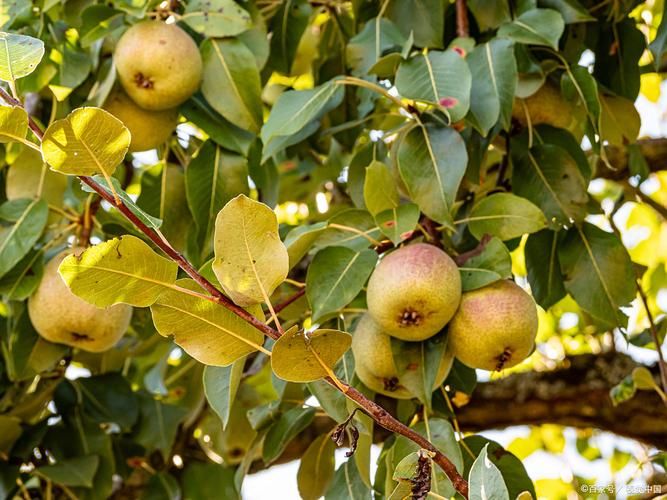
The selection of 1-2 herbs suitable for local ecological conditions, such as matan, is used as ground vegetation for orchards. When the grass is grown around 25 cm, it is cut and then evenly covers the ground, so repeatedly that it is cut two to three times a year. This reduces sunlight from the surface, lowers surface temperature and reduces soil moisture evaporation; weeds rot and then fall into the ground, increasing soil organicity. Applying this method, the soil organic matter of 0-40 cm has been raised from 0. 21% to 0. 84% in three years. The application of organic fertilizers is dominated by weeds and combined with the application of appropriate agricultural fertilizers between summer and autumn. In the spring, fertilizing in ditches is discontinued to avoid significant soil moisture loss. Preflower 7d urea application, with 100g per tree for 2 years, 150g for 3 years and 200g for 4 years or more. Premiums are rapidly swelling with diammonium phosphate, with 100 g per plant for three years, 150 g for four years and more than 200 g for five years. Post-fertilization water in a timely manner. A mixture of 0. 5% urea + 0. 3% phosphate is sprayed every 15d after flowering, totalling 4-5 times。
4. Pest management
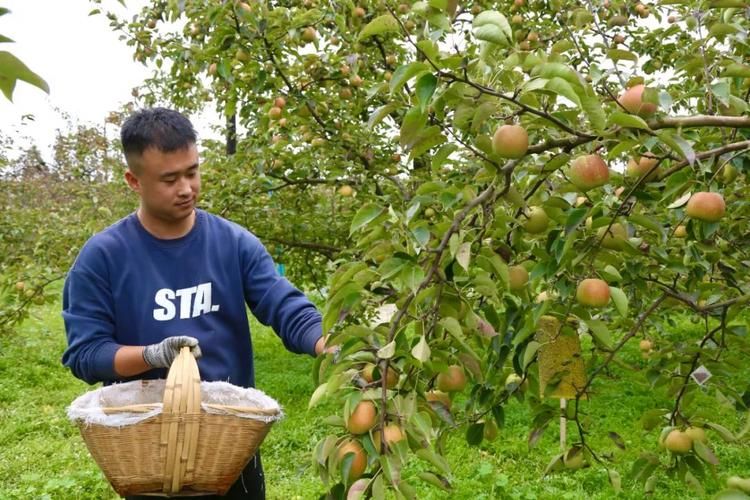
Pests are mainly pear, pear, sky caterpillars, gold turtles, moths, etc., and are used mainly for non-publicly hazardous pesticides such as the larvae series, and b? T emulsifier (suchines). Be careful to protect and use natural enemies such as grasshoppers, ladybugs, insects, etc. Pears, pears, etc., are destroyed with artificial removal of insect fruit, in addition to medicines, and their density is reduced. In winter, larvae eggs are removed and larvae hatched at the beginning of the bouquet are taken out manually。
The diseases are mainly grey, brown and, to a lesser extent, black stars. A 5° beta-styroid shall be sprayed at spring bulge to reduce the disease base. During the rainy season, over 50 per cent of the filamentable powder is sprayed twice with 800 times the fluid to control the occurrence of diseases and protect the leaves and fruits。