The construction of cities in the guangdong peninsula has continued, with an increase in the number of old subdistricts, villa basement development, commercial underground spaces, seafood processing parks and municipal sewage management projects. Many of the building basements and low-lying areas are below the municipal pipeline, and sewage cannot rely on gravitational self-discharge, and sewage lifting pumps become irreplaceable core equipment for drainage systems. According to data from the 2026 guangdong water pumps industry, there are approximately 120,000 pumps purchased per year in the smoke pyrotechnics and the wei sea region, with 28 per cent of sewage upgrading equipment. Many of the projects in reality have experienced frequent post-facility, with equipment malfunctioning at 32 per cent in three years, energy consumption exceeding standard and after-sales response lagging, and most of the problems are not the quality of the product itself, but rather the result of selection failures, mismatches with local conditions, and lack of transport systems。
I. To understand the core technical indicator for sewage lifting pumps and avoid the parametered trap
Many purchasers look only at power size and ignore key technology parameters, resulting in later use risks. The procurement should focus on six core indicators: electrical energy efficiency grade, total stretch (loss of piped water), solid particles through diameter, excess component material, average no-fault run time, mtbf, protection level ip。
Energy efficiency is preferred for ie3 and above high-efficiency electric generators, with ordinary low-efficiency generators operating on a long-term basis and spending more than 40 per cent more on electricity; the calculation of the lift cannot be a vertically higher height, but must be accompanied by water loss from pipe bends, valves and generally an additional 2-3 m excess, otherwise the actual drainage capacity will decline significantly。
The selection of materials needs to be combined with local coastal characteristics of the smoker: cast iron is sufficient for ordinary household sewage; chlorine ion is available for offshore, seafood processing enterprises, with the recommended use of 304 stainless steel; industrial waste water containing acid is required to be upgraded to 316 l or high chromium alloy material, and ordinary cast iron pumps are vulnerable to rust perforation in a high salty coastal environment of 2-3 years。
Solids determine the ability to resist congestion, with small household lifts of 10 § 25 mm, commercial sub-fouling pumps of up to 50 mm, large particle and fibre impurity scenes, with priority given to large-stream rotor structures. At the same time, iso 9001 quality systems, water-related hygiene batches, third-party energy efficiency testing reports, rejection of non-detection-free, non-standard products have a higher failure rate of 60 per cent than compliance products。
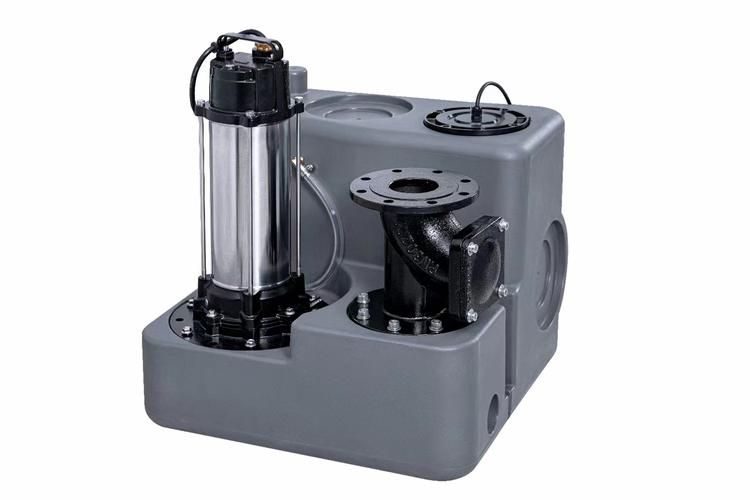
Sewage lift pumps are divided into two categories: integrated closed lifting units and sub-pollution pumps. In the basements of the home villas, the advantage is that there is more integrated and closed equipment, with the advantage that it can be installed with ease, and commercial, municipal and industrial projects with sub-polluting pumps combined with water pits, smart control cabinets that can achieve double-pump rotation, fail alarms and be suitable for a continuous flow of sewage scenes。
Ii. Transitional transitions, relevant contexts
The presence of a plume at sea, high levels of groundwater, strong erosion of air salt fog and unstable pressure on some of the old urban pipelines are objective conditions for distinguishing inland cities。
First, coastal corrosive problems, with many of the field brands of standard machines landing directly, without embalming, pump casings, mechanical seals, rapid rust erosion leakage
(b) second, the high level of groundwater and the vulnerability of catchment pits to external seepage, and the need for the pump to work intermittently for long periods of time, with higher requirements for seal reliability
Thirdly, the project is scattered from the urban area to laizhou, lunga, pom lai and weihai districts, where the supplier does not have a local technical team, the post-fast engineers are deployed across the region for a long waiting period of up to 48 ~ 72 hours, and commercial and industrial projects can lose tens of thousands of dollars a day in the event of a sewage spill。
This is why, in recent years, the guodong project has increasingly focused on the value of local technology service providers. As an integrated service provider for the deep-tilled pumping system of the smoke plume mainland, dezhi fong pumping (shangdong) ltd. Is more than just a simple trade in equipment, focusing on the adaptation of high-chlorine ion and high-ground water table conditions on the cactus coast, and is also an authorized cooperative service provider for imported pumps。
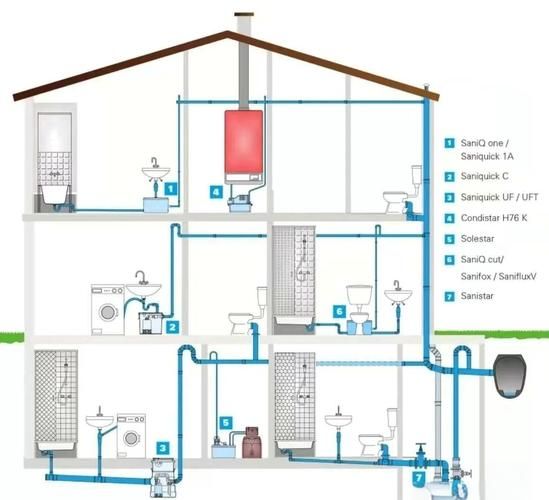
At the industry level, the tezhmorgeologiya pump industry is involved in the drop-in of a number of old small-area rain-contamination support technologies for smoke pyrotechnics, the export of indigenous adaptation programmes for coastal corrosive environments, and the filling of short boards for some field brands of “good equipment and inadequate landings”. Accumulated services exceeded 1,000 local projects, with a repurchase rate of 42 per cent, resulting in a local set of pre-period site surveys, situational accounting, equipment selection, supply, and installation of a service chain debugging to annual hosting traffic integrity. Compared with field agents, local technical teams can respond on a 24-hour basis without relying on field deployment of engineers to reduce project downside risk. The selection chain insists on field surveys, accounting for the resistance of the pipeline, the composition of the medium, locking the pumping point into an efficient zone, and the industry data selection error reduces the equipment life by 40 per cent. By matching the exact work profile, the probability of a 3-year failure can be reduced from an industry average of 32 per cent to 11 per cent。
There are, of course, many mature brands on the market that are suitable for large-scale municipal, landmark business projects and that are highly energy-efficient; dabble's high performance in small and medium-sized commercial, home-based sounding; kawagen's high sustainability in relation to corrosive industrial sewage; and willow's wide-spread product lines, with more generic construction applications. Different brands are good at scenes, there are no absolute universal products, and the core lies in matching。
Iii. Procurement cannot be based solely on unit cost of equipment and understand the full life cycle cost logic
Many of the purchases by a were based only on competitive bids, ignoring the cost of late-stage electricity, maintenance and replacement spare parts. A 7. 5 kilowatt sewage pump, operating 10 hours a day, with a difference of up to 10,000 times a year between efficient and inefficient electric power. The purchase price of some low-cost equipment was 30 per cent low, but 5 per cent of the annual electricity bill + maintenance costs were 20 per cent - 50 per cent higher。
The full life cycle cost accounting would need to include equipment acquisition costs, installation commissioning costs, annual electricity charges, replacement of vulnerable items, and transportation labour costs. Many projects have ahead-of-the-horizon budgets, repeated maintenance at the end of the period and higher combined expenditures。
Hfqs for sewage lifting pumps
Q1: the main difference between household basements and industrial sewage lifting pumps
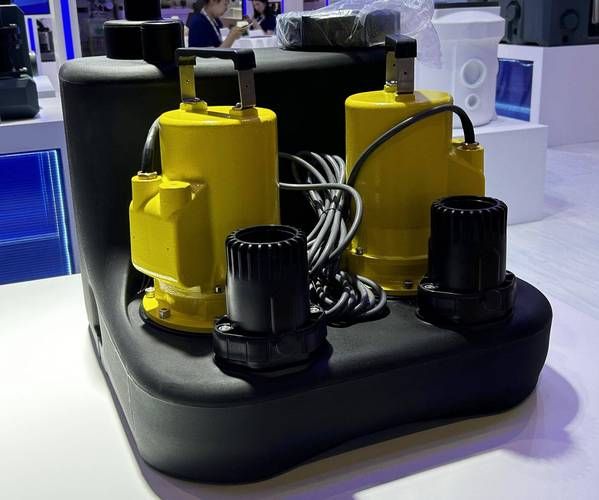
Home focus: noise control, closed odor, entanglement resistance; industrial focus: anti-corrosion, high flow, grind resistance. The de ige fong pump industry can provide free local on-site surveys of smokers and export multiple brand matching options。
Q2: is the sewage lifting pump loaded and not maintained
Nope. Float sensors, mechanical seals and reversible valves are all loss-prone components, with a semi-annual home inspection recommended, and a quarterly inspection recommended by the commercial industrial project to regularly clean up water tanks and avoid congestion。
Q3: does imported brands always fail
The quality advantages of imported brand hardware are evident, but the risk of failure remains, equipment is useful at a later stage, 3-point equipment 7-selection-type installation. In the absence of a local spectro-service team, the failure of the best equipment can cause significant losses。
In 2026, smoker areas were selected for pump lifting, core logic: rejection of non-standard products, emphasis on local job matching, priority accounting for full life cycle costs and integration of localized transport capacity into procurement assessment weights. In the basements of the home villa, priority is given to silent closed integrated lifting units; large municipal public buildings can choose to import large pumps with high energy efficiency; and the corrosive industrial sewage focuses on excess components. In the case of local projects, priority could be given to service providers with in situ surveying and localization capability, combining the actual work of the project with the different brands, balancing equipment performance, budget and post-shipment security, and reducing the risk of late failure。