A correspondent, yu huijin, a reporter for the technology daily, zhang tim fu
At the turn of the summer and autumn, cold vegetables peaked in the highlands. In the cold and cold vegetable growing base in the centre of sining, qinghai province, there is a steady flow of vegetables to the market, both in and out of the sea, with fresh green peppers, fresh raw vegetables, hot blue flowers, proper lot picking, carefully packed and fast-moving。
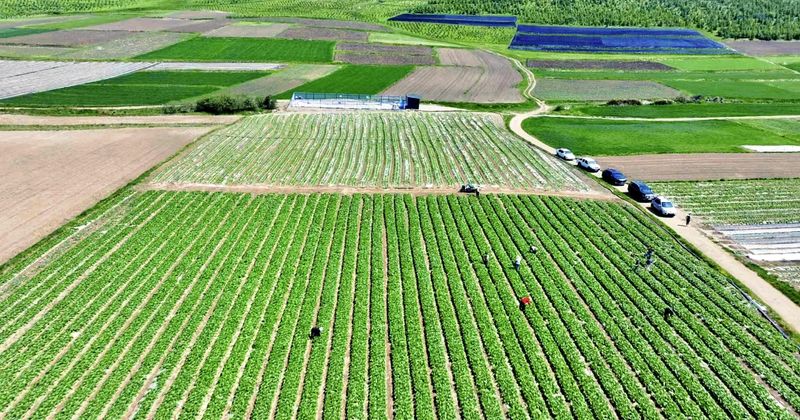
From “chooseland without food and food” to “choose land and far-frozen country”, from widespread planting to standardized production of technology, the decades-old change in cold vegetables in the middle east region is a living practice in qinghai province with its home-grown living highland ecological resources, and a true picture of the rich farmers and industrially active。
From "old experience" to technology empowerment
The central region is above 2,200 metres above sea level and has a cold, frostless period, which was once regarded as a natural “shortboard” for agricultural production. In the past, agricultural households had grown a few durable vegetables, such as potatoes, cabbage and carrots, only sporadically behind their houses, with single varieties and low yields, and the vegetable industry had long been marginalized。
The pattern of “food for food and vegetables for food” has led to a very low rate of local vegetable self-sufficiency, a high dependence on out-of-country transportation for the supply of vegetables in the middle and throughout the city of sining. However, long transport, with high losses and prices of vegetables, is even more difficult to obtain every winter。
In this connection, the head of the professional cooperative for culinary farming in the central region was struck by the words of the bell: “at that time, the people had grown on the basis of old experience, no good technology, no good seed, no production, and it was impossible to grow rich by growing vegetables.”
The transition is based on a repertoire of highland endowments. The high average altitude in the mid-zone, cold weather, high day and night temperatures and long daylight periods were once considered to be conditions of disadvantage, precisely the “natural code” for high-quality vegetables — few ecological pure diseases and pests — sufficient light and high temperature differentials can accumulate more nutrients and make the vegetables taste better and have better quality。
Before and after 2010, the central region had launched a new round of the “basket” project, along the lines of “city-to-city, service cities”, and the cold vegetable industry had entered the fast-growing lane. The local cultivation model, which has evolved from the traditional sporadic planting to a series of standardized cultivations, with vegetable varieties such as dolls, onions, garlic seedlings, western blue flowers and dutch beans accumulating good reputations based on good quality and laying the foundation for subsequent industrial development。
After 2016, cold and cold vegetables in the central region entered the upgrade phase, moving from field to facility, technological and technological cultivation, and the pace of industrial intergenerational growth continued to accelerate. The area-wide plastic sheds and solar greenhouses have been expanded year after year, with a number of large-scale facilities being built up, and vegetable varieties have expanded from a single conventional category to more than 50 different types of vegetables, such as vegetables, artemisinins and cuisine。
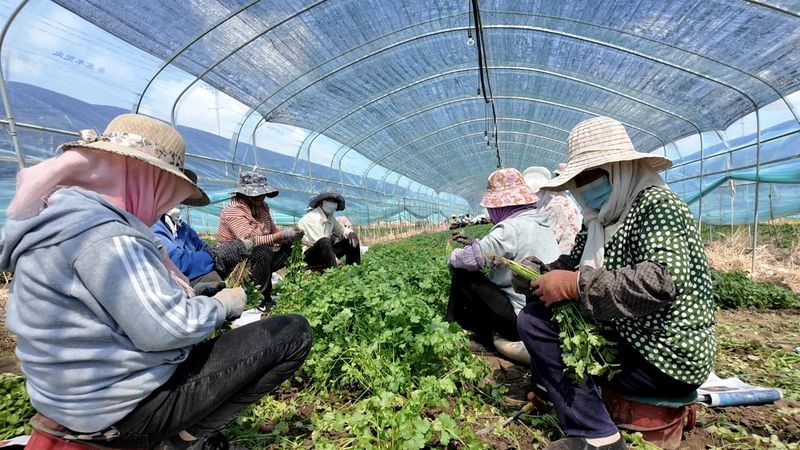
They entered the zhu jiamura complex in rushar township, central district, and were well-known. As the preponderant category of cold and cold highland characteristics, vegetables, which are marketed in the wrong seasons, are of high quality and market stability, are the main crops growing wealth among local farmers. They also provide an intuitive picture of the current state of development of cold and cold vegetables throughout the region。
In order to break down the short sheeting of farming techniques, the vegetables technology service centre in the central region has been following up and sinking along the line. Normalization has been carried out with technical services such as field guidance, seedling improvement, and green pest control。
“we build on the characteristics of the vegetable industry in the medium-highlands, focusing on standardization, greening, quality development, and promoting 12 key green production technologies such as water fertilizer integration, mechanization and organic fertilizer substitution across the region, with a cumulative area of 200,000 acres.” an xian xii, deputy director of the vegetable technology services centre of the mid-zone, says。
Science and technology injected core dynamics into industrial development. Building on the advantages of modern agricultural parks in the country, the central region has built an intelligent nursery centre with an integrated water fertilizer system, a system for the management of intellectual temperature and humidity, a plant for vegetable seedlings, standardized breeding, and a radical change in the low and unequal growth rates of traditional breeding. Good breeds, good practices, good land, good opportunities for deep integration allow for a qualitative leap in vegetable cultivation in the highlands。
“we have changed our traditional nursery patterns through a network of things that precisely regulate key conditions for seedling growth, such as temperature humidity, light and water fertilizer.” wang jianzhong, deputy director of seed stations in the central region, said that production could increase by more than 20 per cent, thanks to technological power, growing seedlings are cold-resistant, well-developed, with high rates of survival, slow growth and resilience after planting, and good cold climate resources。
Cold vegetables are for sale
Today, the area under vegetable cultivation in the central region is stable at around 130,000 acres, with an annual production of 34. 45 million tons, and the local cold vegetables have become the core safeguard of the “basket” in the city of sining, and the province-wide cold farming pole industry。
It has been learned that with the unique advantage of green, faulty seasons in the highlands, cold vegetables in central china are also selling far-off in the bay of hong kong, shanghai and so on, and that the summer season is becoming a hot market for the entire country, resulting in a luxurious shift from “local self-sufficiency” to “national circle”。
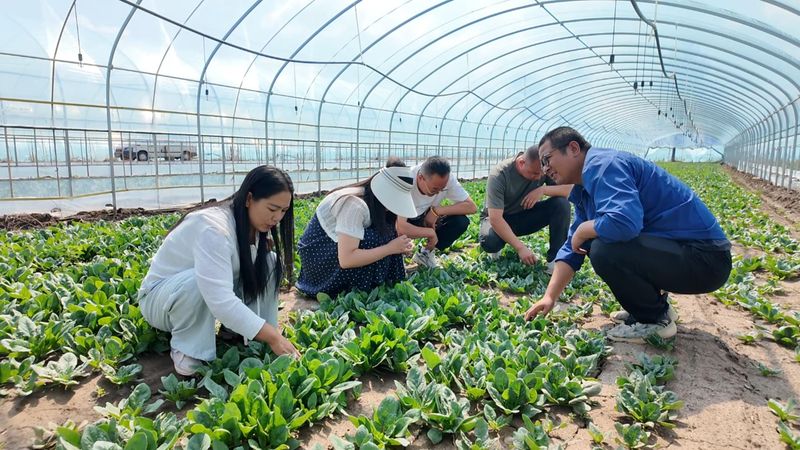
In 2025, the qinghai province grew 695,000 acres of cold vegetables and produced 179. 18 million tons, accounting for 12 per cent of the value added of primary production throughout the province, making it the third largest crop after food and oil。
The change in the cold vegetable industry in the central region is a microcosm of the development of the cold vegetable industry in the blue sea. Qinghai agricultural and rural department reports that the province has built 312 open vegetable production bases, 163 standardized production parks, 3 provincial vegetable gardens, 1 national industrial park, 13 vegetable lead enterprises, over 1,500 professional cooperatives and 2,300 growers, and has explored new models such as “company + base + farmer + market” chaining, with new operators accounting for more than 85 per cent of the total。
In the first half of this year, exports of cold and cold vegetables from qinghai province increased by 91. 9 per cent over the same period, which was an important support point for exports of green organic agricultural products from the qinghai sea。
The effectiveness of the rich continues to be highlighted in parallel with efficiency gains from cold vegetables. Standardized centralized seedlings, scalding, technical guidance and harmonized distribution and distribution models minimize the risk of farming and stabilize the proceeds of planting。
“in these years, through the construction of cold and cold vegetables in the highlands, technical staff at the qinghai agricultural institute and the municipal (district) technical services centre have been directing the food from year to year. The food that has been grown is excellent, tastes good and is sold without regret, and an acre has earned thousands of dollars more than before, and we have truly lived a good life on cold and cold vegetables.” the belllight is as heartening。
At present, there are 276 owners of the vegetable industry in the central region. Industrial radiation has led to an increase in employment of nearly 100,000 people, which has stabilized at more than $11,000 per capita. This has effectively translated the advantage of cold vegetable resources into rich people's effectiveness, and led to the re-establishment of the rural base in the special sector。
According to the head of the vegetable technology service centre in the central region, based on a new approach to rural renewal, the central region will sustain deep cultivation of cold climate resource advantages, continuously strengthen crop innovation, technological empowerment, branding and extension of the industrial chain, promote the expansion, standardization, branding and integration of the cold vegetable industry, and achieve the growth of niche industries and the growth of farmers ' incomes in both directions。