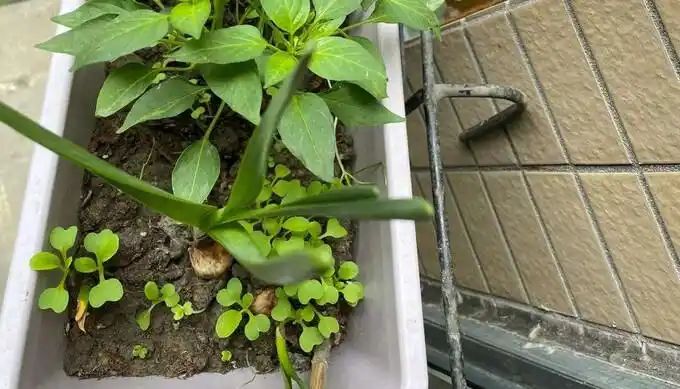
If you want to live and travel on the moon, substances such as water, oxygen and transportation are indispensable. If the moon can “take” its own resources to provide a basis for human survival, the dawn of interstellar travel may not be far away. In recent days, the scientific team of the university of florida in the united states has planted south mustard plants in the soil of the moon, proving that plants can grow successfully in the soil of the moon. Scientists are excited: this may be the first step towards growing plants and producing oxygen during future missions to the moon or space。
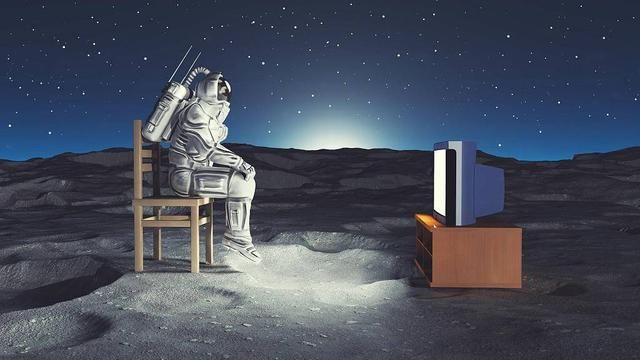
Image source visual china
The moon is really going to grow
The moon has planted plants
According to foreign media reports, for the first time, american scientists successfully planted plants using the moon soil collected during the nasa “apolo” landing programme. The study was published in communication biology。
Prior to that, although the moon was experimented with many times by researchers, no plant had actually grown. This time, therefore, there is no doubt that the new discovery was a breakthrough of zero to one. Robert fair of the institute of food and agricultural sciences of the university of florida, united states, and his colleagues used the moon soil brought back by astronauts apollo 11, 12 and 17. The good news is, all the seeds are budding。
However, a week after the south mustard sprouts, the roughness of the moon soil and some other properties have placed a great deal of pressure on this small flowering plant, which is growing at a slower rate than the seedlings of plants planted in man-made moon soil and most of which are stunted。
The longer the moon soil is exposed to cosmic radiation and solar wind, the worse the plant appears to be. For example, the sample returned from apollo 11, which was extracted from the still sea on the moon, exposed to various elements for billions of years more than in other regions, was the most detrimental to plant growth. Thus, one solution would be to extract relatively new soil from the moon, such as new soil from lava geology, or to improve the planting environment, such as changing soil nutrient mixtures or adjusting artificial lighting。
The researchers expressed the hope that, through a series of experiments, the next generation of astronauts would be able to grow food on the moon. Simon gilroy, a space plant biologist at the madison branch of the university of wisconsin, said: “it is clear from the research that plants can be planted in the earth of the moon that a major step forward has been taken.” gilroy added that “the next step in the study may be on the surface of the moon”
Why do you grow south mustard instead of rice wheat
"big rat" in a plant-like world
Astronauts need food wherever they go and cannot always rely on earth supplies. What plants are best planted in space? What plant is best planted on the surface of the moon? These are interesting news spots for readers. This time, however, the latest results of the research by american scientists have added to the curiosity of many readers: why would scientists use south mustard as a test? What kind of plant is this
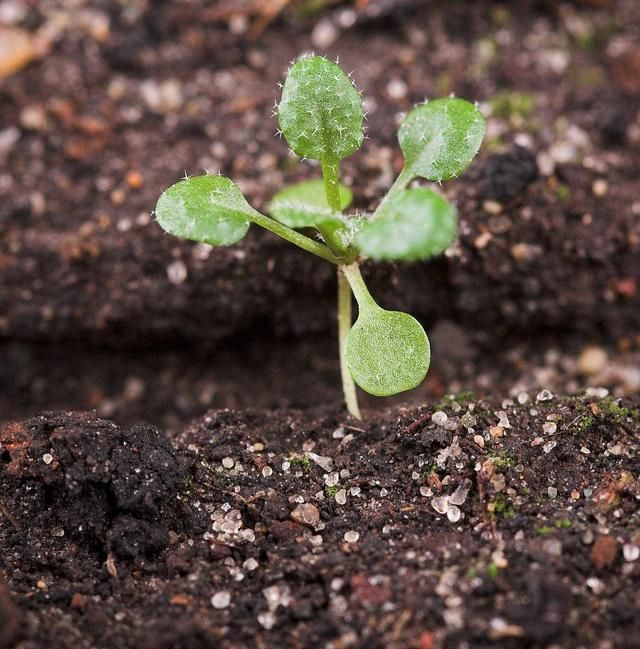
South mustard
Professor sunbo, faculty of life sciences, nanjing university, told reporters that the “status” of the mustard in the plant world is similar to the “rat” in animal experiments because of the short growth cycles and small genome characteristics that make it one of the “model plants” in the plant world. “the southern mustard is the first fully sequenced plant on earth and scientists around the world are relatively advanced in research on the southern mustard. Thus, the characteristics of the growth and development of other plants can be understood through the cultivation of mustard mustard to the south.” professor sombo told reporters that it would be more complicated to know the genome of the planet's most common food crops, such as wheat, rice and so on, as opposed to model plants. The indicators of growth in the moon can be useful in the development of the moon for crops such as rice and wheat。
On earth, mustard mustard south is suitable for growing up in temperate areas in the north, such as east china, north-west china, and in the wild of jiangsu. At the same time, mustard mustard mustard in the south has certain requirements for the temperature, nutrition, and light of growth, which can grow in a growing environment of 10 to 20 degrees, which is too cold or too hot to grow, and which is not likely to grow well in the ordinary form of “waterbreeding” and must be well nourished。
Compared to the growth conditions on the planet, it is easy to see why scientists “weakly grow” using the mustard produced by the moon. There is much more to be explored by scientists in the waterless, oxygen-free and particularly cold moon environment that wants to plant a mustard mustard on earth。
One of the studies currently being conducted by professor sunbo's group is the development of plants. Research into the south mustard of model plants and plants such as sorghum explores the resilience of plants to adverse conditions。
We need oxygen to survive the moon
Scientists have new discoveries
Researchers are exploring not only the cultivation of the moon, but also the generation of oxygen on the surface of the moon。
Zou zhisheng, professor at nanjing university, was a member of the chinese academy of space technology-led project led by the chansheng space technology laboratory, called the extraction and photochemical transformation of surface water resources of the moon, i. E. The separation of water into hydrogen gas and oxygen. The study was carried out on a sample of the moon, which was brought back by the zenit five, a very young basalt on the surface of the moon, and which contained the most common catalysts in synthetic light synthesis, such as iron and titanium. The analysis of approximately 24 mineral components in the moon border, including titanium ore, titanium oxide, hydroxyl phosphate and various iron-based compounds, has improved photocatalytic properties。
Water and carbon dioxide can be converted into fuels such as oxygen and methane through the use of some elements of the moon as catalysts. With a temperature of 173°c below and 78. 5°c below, carbon dioxide becomes dry ice at night, so that at night, carbon dioxide can be separated directly from human gas, and hydrogen and oxygen can be separated from the water resources extracted from the surface of the moon, oxygen for human breathing, carbon dioxide and hydrogen gas can be put together, and by day temperatures of 127°c, the process of conversion of in situ carbon dioxide with hydrogen to methane can be ably accomplished. This research has been published in the international academic journal jour。
Man's little target is much more than a vegetable
We're gonna build a moon base and a moon relay
To date, human space exploration has to depend on the supply of the planet and has yet to achieve “extraterrestrial survival”. Each astronaut “on mission” requires a large amount of “cargo” from the earth. As a result, scientists have derived “in situ resource utilization” research to achieve off-site survival by using “indigenous” resources in extraterrestrial celestial bodies, using mars resources on mars, using the resources of the moon on the moon, producing energy for human life, food, etc。
According to zou zhou zhiqiang, a member of the middle school of science and technology, director of the nanotechnology focus laboratory in jiangsu province, and professor at nanjing university, research on “in situ resource utilization” can help humans build the moon base and its relays, and the research that scientists have now acquired has helped people to “get further” from this dream。
The zou zhisigang believed that, in parallel with the construction of the moon base, the foundations of extraterrestrial survival would have matured and that the space station was already verifying the relevant technology. This may mean that, in the future, the moon's own resources can be used to build the moon base to support deep space detection, research and travel: “building the moon base synchronizes for off-site survival, and our moon base is about to be launched between 2040 and 2045, in accordance with the national road map. We hope to use the moon as our transit base and to explore the planet from the moon through its construction. From the moon to mars, it's convenient."
Ying zi evening newspaper / cow reporter
Colonel wang faye