Hello, i'm the one who brings you up to date on a daily basis, with more content, and every piece of it is dry; if you think it's useful for your life, just take a look
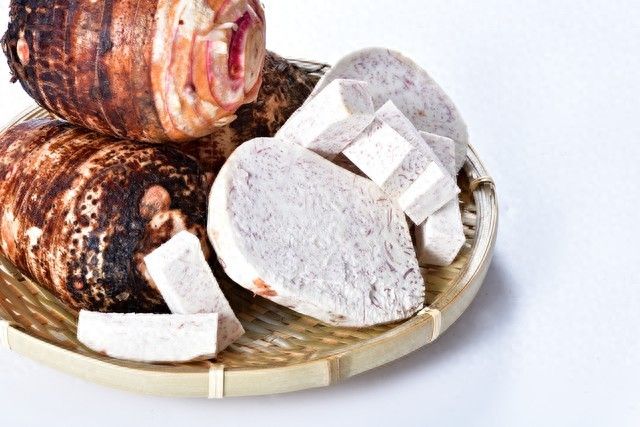
A lot of people grow, and look in the ground at a large amount of leaves, full of joy, and feel that the more they grow, the bigger they grow. But when you dig it, you lose hope, and the crotch is so long, the taro is so small, it doesn't work. Many old farmers have said that they should cut their heads off and cut them harder before they can harvest a big basket of potatoes. Today, the long-spread indigenous law management techniques and the rationale for them will be explained once and for all。
Let's start with principles. The leaves on the taro ground are responsible for the production of nutrients for photosynthesis. But if the branches grow unlimitedly, most nutrients will supply leaves and leaves, and less nutrients will be distributed among the underground troughs, which is what we often call the masters. The more the leaves grow, the more the nutrients are consumed, the more the tacos reach. The proper elimination of some of the leaves is the artificial adjustment of nutrients, the transfer of nutrients to the ground and the expansion of the taro。
But the leaves are not cut blindly, when they are cut and how much they are cut, and the wrong cuts are reduced。
The first key node: after the seal, the taro is in the early stages of expansion。
Potato is grown in general for two to three months, growing up to 6-8 large leaves, and the fields are covered with leaves for long periods. It's the most likely time for the spores to grow. The criteria for judging are: leaves with thick and high handles, layering of leaves, insulated air, no sun in the ground, poor ventilation and prone to disease。
It's time to cut the leaves. Remember one principle: each leaves 4-5 healthy leaves, and the rest of the bottom leaves yellow, weak, internally congested leaves. Do not shave the leaves once and for all. The leaves are nutrient plants that keep their functional leaves in order for the energy sources to produce nutrients. Only old and weak leaves that grab nutrients, block ventilation。
When it is cut, the handle is not attached to the ground, leaving a stake of about 10 centimetres to prevent the wound from covering the soil, and the rain pours into it and causes morbid disease. It is selected to operate in the morning of the day, after which two or three days of sunburning is performed, so that the wound is dried up, leaves are not cut in the rain and is highly susceptible to infection。
Second operation: cutting the rims and cutting off the saplings。
After the taro had been sealed, a bunch of small sided seedlings were often produced next to the mother. These saplings look alive, but they're really fat. They don't grow tara, they just split the nutrients. It is the practice of the old farmers to see small saplings emerge, to be eradicated and not allowed to grow up for nutrition。
In the middle and later stages of taro booming, the lower leaves slowly grow old and yellow, and the light co-operation capacity decreases, and the fungus tends to grow. This phase involves the cleaning of the bottom yellow and sick leaves, with the upper and upper parts of the healthy green leaves being kept as far as possible to ensure that light co-operation is supplied to the subsurface。
In addition to leaf cutting, there is also an accompanying soil method: step on the leaves。
A lot of old people grow tarts, and it's a long time to get to the top, and it's a long time to put the lobes open out of their mouths around them, so that it doesn't go up and down. The top edge was broken when the leaf handles were inverted, and nutrients stopped moving up and began to flow back underground. Be careful not to stomp, to stomp, to break easily. Stepping on the leaves also takes place in the sun。
It's not enough to cut a leaf alone。
Leaving is the adjustment of nutrient distribution, and fertilizer is the bottom line. The leaf is cut for about a week and can be followed by potassium fertilizer. Potassium is the most needed for the increase in the size of the taro, the abundance of potassium and the amount of taro rounded starch. Potassium sulphate can be buried shallowly along the edges or leached with grasswood ash. This stage of nitrogen fattening is short, and it's long enough, and it's white。
The field drains, the taro is wet but afraid of flooding. Water in the gutter, oxygen in the roots, easily taco. During the rainy season, ditches are cleared in a timely manner, and water is not allowed to bulge in its roots after the rains。
And let me tell you a few common faults
1. Obligated to cut leaves, and happy to see the green oil, which ends with small amounts of tar
2. A one-time polishing of leaves, loss of nutrients and small size of taro
3. Leaf cutting in the rain and the deterioration of the wounds, causing widespread disease
4. Leaves are cut and fattening, nitrogen is followed and leaves grow back soon。
At the end of the day, it's a trade-off. Leaves are for tara, not for viewing. The leaves should be preserved, the old and weak leaves of the phase-out must be removed decisively, and nutrients should be concentrated in the subterranean tubers. This ancient experience of the earth still works today。
Have you ever grown taro? Have you ever tried leaf cutting? You're welcome to talk about your planting experience in the comment section. The content is considered to be useful and can be appreciated for the continuous sharing of dry goods grown by land-based farmers。
Disclaimer: this paper shares the experiences of farming households with a combination of long-lived, climate-flexible leaf cutting and high-prevalence plots。