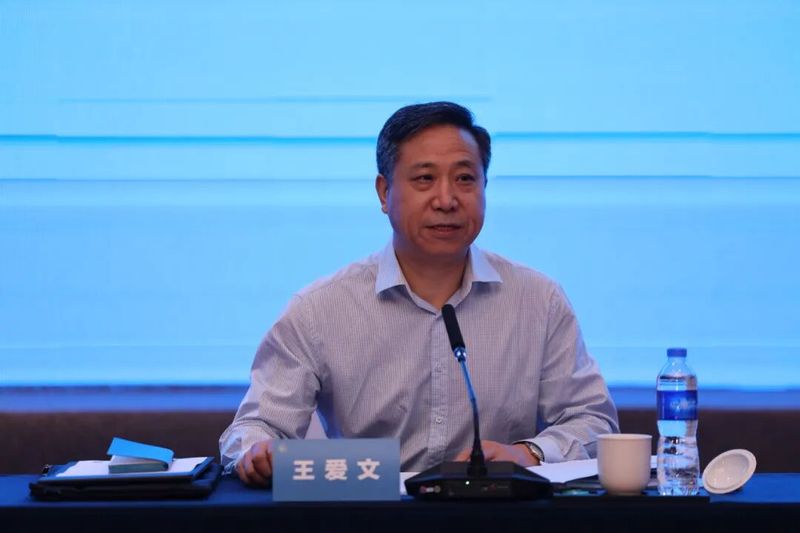
Member of the party of the ministry of civil affairs, deputy minister wang ivan
We're rich togetherIt is both development and distribution. “false” means that development has reached a higher stage, and “common” means that development results are fairly shared. General secretary xi stressed that common wealth was a fundamental requirement of chinese socialism. What should we do? We are exploring it。
To achieve the goal of shared prosperity, the “cake” must first be done well through a common struggle of the entire nation, and then properly divided through a rational institutional arrangement that deals with growth and distribution. This is a long-term historical process, and we need to create the conditions, perfect the system and move steadily towards that goal。
The theme of the great time of advancing common wealth is very broad. In this context, three distributional equity roles have been played in managing the timing of social welfare policies to prevent falling into the “welfare” trap, leading to the right concept of wealth promotionPhilanthropyDevelopment is an important issue that needs to be recognized。
01
Play the initial, redistribution and third allocation
The role of equity
The general secretary of xi stated that the basic institutional arrangements for initial allocation, redistribution and coordination of the three distributions were to be established. Three distribution coordination packages around common wealth, with initial distribution playing a fundamental role, redistribution playing a regulatory role and third distribution playing a complementary role。
Play a fundamental role in initial distribution for equity. The initial distribution of national income is a prerequisite for achieving a second and third distribution and a basis for achieving common prosperity. The promotion of shared wealth through initial distribution requires the improvement of factor-based distribution policies, the multi-channel increase in the income of the population, and a further increase in the share of labour remuneration in the context of increased labour productivity。
On the one hand, the development of education to improve the quality of workers, particularly at the higher levels of education, the persistence of innovation, the intensification of skills development and the increase in the pay of skilled personnel, and the creation of conditions for workers to earn higher incomes through labour and technology, thereby increasing the proportion of middle-income groups。
On the other hand, in response to the increasing downward pressure on the economy, it is necessary to accelerate the emergence of new patterns of development, strengthen domestic integration of large markets, improve domestic industrial chains and support manufacturing for greater development. (b) make significant efforts to improve the business environment, reduce the excessive tax burden on enterprises, stimulate innovation in entrepreneurship, support the healthy development of small and medium-sized enterprises and further expand access to employment。
The distribution of capital and benefits should be properly addressed. The national nature of our socialist society dictates that we must insist on the principle of the distribution of labour, the coexistence of multiple forms of distribution and the expression of the primacy of the people in the distribution of society. Emphasis is placed on the inclusive nature of economic development and on equity in initial distribution, both in terms of ensuring the value added and development of the participation of capital in social distribution, and in terms of preserving the dominant position of labour-based distribution, insisting that development depends on people for people, development, and that development outcomes are shared by people。
On the one hand, it is necessary to protect property rights, increase the level of openness, remove market barriers, promote investment facilitation, play an active role in capital for development and guarantee the participation of capital in social distribution for value-added development。
On the other hand, capital development must be regulated and directed. Improving market access systems, creating a “red and green light” for capital, strengthening anti-monopoly and anti-improper competition, effectively preventing the increase in speculation that might result from capital monopolies and disorderly expansion, leading to economic disillusionment, polarization of wealth distribution and obstruction of innovation, leading to social responsibility on the part of capital owners, and regulating and guiding the healthy development of capital。
Redistribution plays an important role in promoting equity. The subject matter, nature and mechanisms of the three distributions of national income differ substantially. The initial distribution of national income in exchange for returns through inputs such as labour, capital, technology, etc. Is based on paid behaviour by market mechanisms; redistribution is regulated through the payment of taxes and fiscally arranged expenditures, is based on compulsory behaviour based on government functions; and charity, as the main form of the third distribution, is voluntary behaviour based on ethical and moral orientation。
The three distributions, which form the basis for the formation and transfer of social wealth, all have a role to play in promoting equity, but their functions and roles differ at different stages of national development. When national income reaches the middle level, public demand for education, health care and social security increases, and redistribution needs to be scaled up accordingly。
The second and third distributions together contribute to equity。
In view of the fact that the problem of high income differentials in the country is still prominent, the role of secondary distribution needs to be increased accordingly, as well as the refinement of the relevant policy on three distributions. Improving the secondary distribution requires greater regulation of taxes, social security, transfers, etc., and improved accuracy. The direct tax system, which is dominated by income tax and property tax, has been improved to better manage excessive tax revenues。
It is necessary to improve fiscal spending, accelerate the improvement of the multi-level social security system, increase transfers to less developed regions, improve the mechanisms for channelling budgetary expenditures directly to the grass-roots level, and strengthen the capacity of the less developed regions and grass-roots public service delivery。
A complementary third allocation for equity. The third allocation, which is dominated by charity, although smaller than the first two, can lead societies to a healthy view of wealth, foster national social responsibility and enhance the soft power of the state and international influence, which is the special value of charity。
Countries therefore attached great importance to the use of special policies to support the development of charitable public goods. The 19th 4th plenum of the party stated that “it is important to play its third distributive role in developing social goods such as charity”. At the fifth plenary session of the nineteenth session, it was further stated that “to play a third distributive role in developing philanthropy and improving patterns of income and wealth distribution”。
Although the level of donations from our society is not yet high, the role of charity in major emergencies, such as combating the epidemic and implementing major national strategies, such as the fight against poverty, can be measured. Philanthropy is becoming an important force in promoting social equity and common prosperity。
In keeping with the new stage of development, there is a need to strengthen the nurturing of philanthropy, to increase policy support, to create a more coordinated pattern of initial distribution, redistribution and three distributions, and to work towards shared prosperity。
It must be emphasized, however, that the voluntary nature of charity must be respected, and that the involvement of willing and capable enterprises and social groups in charity for the public good must not be “killed to feed the poor” and cannot be morally kidnapped。
02
Take advantage of social welfare policy
Preventing falling into the “welfare” trap
General secretary xi stressed that social security was currently the main subject, includingSocial assistanceA well-functioning social security system has been established, including social welfare, social rehabilitation, etc., to improve social welfare systems for persons with disabilities, orphans, etc。
Social welfare policy is the fundamental policy for advancing common prosperity. Social welfare policies need to be developed in a time-sensitive and sustainable manner. It is not sustainable to go beyond the capacity of “welfareism”。
It is important to maintain a social welfare orientation based on merit and modest inclusion. To integrate needs and possibilities, the protection and improvement of livelihoods should be based on economic development and financial sustainability, with a focus on strengthening inclusive, basic and end-of-life security。
A gradual extension of inclusive benefits to ensure sustainable provision of inclusive benefits, based on a realistic minimum of living for people in need. Welfare policies that affect people's lives need to be systematized to identify which are inclusive, which are fundamental and which are bottom-up, and to establish a list of projects based on targeting and accurate accounting。
Strengthening the effective interface between urban low-insurance standards and the minimum wage, unemployment insurance rates. The standard of social security and the standard of assistance have to be progressively raised to the level of economic and social development. At the same time, social welfare policies need to be put in place with an in-depth demonstration of sustainability and social impact and a comprehensive assessment. In the context of increased downward pressure on the economy, there is a greater need for deliberate social welfare policy measures that affect the long term。
Welfare policies such as subsidies, rescues and tax and excise exemptions for a phased response to economic downturns and price increases should specify the duration and conditions of their implementation, prevent high expectations and prevent the inclusion of targeted policies。
Scientific advice for the precise identification of social welfare clients. Public services in areas of greatest concern to the population, such as education, health care, old age, housing, etc. Establish and improve monitoring mechanisms on the dynamics of the living conditions of low-income people, strengthen information-sharing among the financial, educational, social security and assistance sectors, determine precisely the direction in which people in need need need protection and assistance, and apply a combination of social security and assistance tools, such as housing, education, health care and employment, in order to prevent simplistic “one-size-fits-all” behaviour among large households。
It is necessary to induce social charitable forces to use charitable resources rationally and to prevent the excessive concentration of charitable resources on hotspots, hotspots and the excessive consumption of social charity。
Regionalization promotes parity in basic public services. The problem of our inadequate development remains prominent. The differences in the level of development of the regions and the financial system of hierarchical management determine the subregional and step-by-step advancement of urban-rural integration。
There is a steady move towards parity in basic public services and a gradual reduction in the disparities between workers and residents and between urban and rural residents. The scientific scope and level of integration are to be determined, and the bottom line of basic needs is to be taken from county to municipal, from small to large regions, on the basis of improved top-level design。
At present, education, health care and old-age pension insurance are largely non-differentiated at the county level, and social assistance standards are closer. Based on the equalization of basic public services at the district level, further exploration is needed to advance public services at the municipal level with urbanization。
The social security and welfare standards for pro-poor relocations to towns should also be gradually harmonized with those for immigration. For economically developed regions, standards of social assistance should be established by region, no distinction should be made between urban and rural areas, differences in standards of social assistance between urban and rural areas should be gradually reduced and the minimum subsistence level between urban and rural areas should be increased。
Greater efforts are being made to explore the equalization of public services in the common wealth model areas, improve income distribution patterns and promote coordinated rural-urban development。
03
Building the right notion of wealth and promoting the sustainable development of philanthropy
General secretary xi stated that he supported volunteerism, the healthy development of philanthropy and the legitimate rights and interests of specific groups。
Philanthropy, with its social, ethical and economic multidimensional nature, is a means of mobilizing social resources and promoting social justice, as well as an effective way to promote social participation and progress. The maintenance of charitable sustainable development requires a combination of policy incentives, the creation of a social environment, the ecological construction of public opinion, national wealth and social responsibility education。
Improve the comprehensive incentive policy for charity. Taxes play a most immediate and important role in policies to stimulate philanthropy in the context of national processes of philanthropy. The direct tax share of our tax system is not high enough, the overall tax system design is not sufficiently visible for charitable incentives, and the reform direction of increasing the direct tax rate is conducive to further promoting fiscal policy for charitable purposes。
Policies to regulate the distribution of property should be accompanied by preferential policies in the area of large donations and charitable trusts, and fiscal policy incentives should be strengthened to channel charitable resources. To encourage enterprises and social groups that are willing and able to do so to establish non-public charitable funds or trusts in order to transmit wealth through charity and to enhance social responsibility。
(d) to develop mechanisms for the evaluation of charity. The evaluation of charitable projects must focus both on the scale of the donation and on the effectiveness of the project, both in terms of the amount of the donation and in terms of comparison of the donor's income and its consistent performance。
The nurturing of charitable organizations and the establishment of charitable projects encourage both the development of foundations and the transmission of large charitable resources, as well as the development of community-based charitable projects that facilitate mutual solidarity for good。
To promote multi-level and multi-disciplinary measures of charity recognition and to strengthen incentives and appreciation for philanthropists and donors. The international voice of charity is strengthened through the nurturing of national authorities for charitable evaluation by influential large social organizations or national university scientific institutions. Charitable organizations are encouraged to continue to develop in areas such as poverty alleviation, old-age assistance, education and health care, and to contribute to the implementation of major national strategies such as rural renewal, science, technology and innovation。
Create a source of charity for the dredging of the culture of charity. With the accumulation of wealth and the enhancement of social protection against disease, the social basis for intergenerational exchange has changed considerably, and the concept of wealth needs to be adapted to the times。
Guide the creation of charitable public goods that are compatible with modern society, and embrace charity awareness and culture in an atmosphere of “philanthropy everywhere, for all”. Encourage the development of mobile internet philanthropy vehicles, enrich the form of charity and enhance its dissemination。
Encourage the establishment of personal, corporate and charitable accounts based on modern information tools, strengthen the information networking of charitable organizations, build a lifetime of charity and record a lifetime of honour。
The altruistic and pro bono nature of charity is always upheld, the boundaries between charity and business are strictly clarified, the sources of charity are cleansed and commercial marketing in the name of charity is never allowed. To improve the transparency and credibility of charities by improving internal governance mechanisms and external guidance, to promote the image of charitable organizations and to enhance the reputation of charitable societies。
![新闻资讯APP排行,手机新闻APP排行榜前十名,手机看新闻哪个软件好[2026]](https://www.3z0.cn/file/upload/202608/26/1787681122214_lit.jpg)