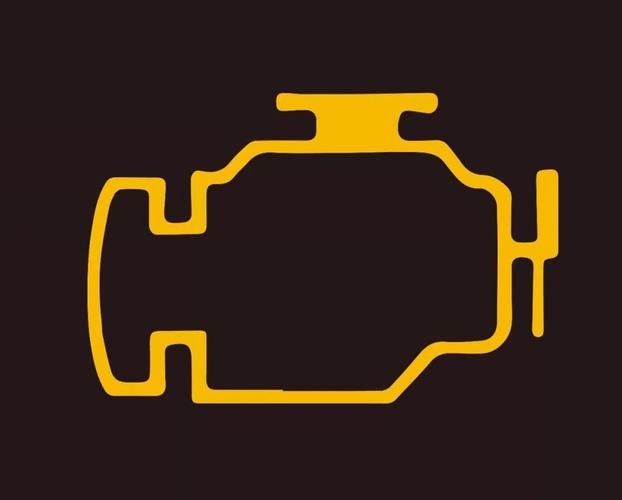
Fault phenomena
An old pasat 1. 8t car, with a cumulative mileage of 160,000 kilometres, has recently experienced non-refrigeration failures of automatic air conditioners. According to the owner, the vehicle had been repaired several times, the air-conditioning refrigerant was adequate, the lines were normal and key components such as air-conditioning control panels, air-conditioning relays and air-conditioning compressors had been replaced, but the malfunctions remained unresolved。
Disorder diagnosis
Once the engine is activated and auto is pressed, the ac blower starts work, but the natural wind is always exported without the cold wind output. Check the engine room to make sure the cooling fan works. Access to vas 5052, access to air conditioner system 08, no fault code found. Looking at the data streams associated with the air conditioners system, it was found that sector 1 of the data set 1 showed 12 (figure 1). The data for the area reflect the state of the compressor electromagnetic ionator (n25), which is expressed in numbers 0 to 12, with the following specific meanings: 0 indicates that n25 is connected; 1 indicates that the refrigerant cycle is too stressful and the pressure switch (f129) is closed on n25; 2 indicates that the fresh air blower (v2) is damaged and closed on n25; 3 indicates that the refrigerant cycle is too low and f129 is closed on n25; 4 does not show; 5 indicates that the n25 is closed for short periods and, if the code continues, the engine is turned off; 6 indicates that the econ is running and n25 is closed; 7 indicates that the v2 is shut down and n25 is closed; 8 indicates that the ambient temperature is below 3 °c and the corresponding sensor or circuit is checked if the ambient temperature is not in line; 9 does not show; 10 indicates that battery voltage is below 9. 5 v and n25 is closed; 11 indicates that the dashboard display control unit (j285) is closed through the air conditioning control unit (j255); and 12 indicates that the engine or speed changer control unit is closed on n25。
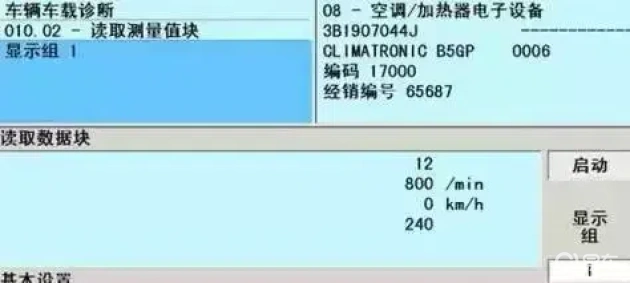
Figure 1: air conditioning system cluster 1 data
Entering the 01 engine system, the malfunction code was found to be p0102, meaning "mass or volume air flow circuit low level input (static)". The failure was permanent. The reading of engine-related data streams (figures 2 and 3) and the finding of air flow meter signals of 0 g/s through sectors 4 and 3 of data set 2 indicate a malfunction in the air flow meter system. The air flow count consists of four ends, of which two connects to the green yellow guide, 12 v power lines, and the remaining three are connected to the engine control unit (j220). It was found that the power lines of the air flow meter broke at end of two. After repair, air flow meter signals returned to normal, while air conditioners returned to refrigeration。
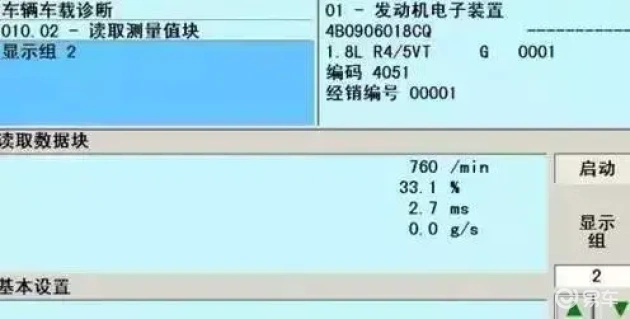
Figure 2: engine system data, cluster 2
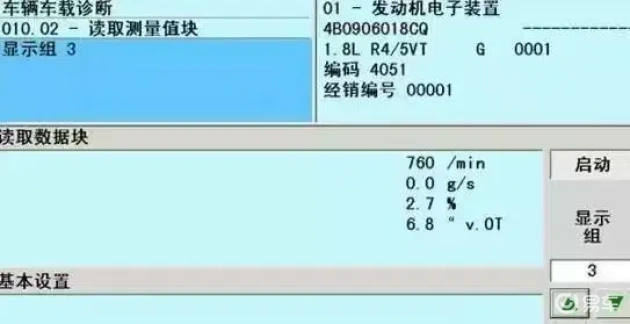
Figure 3: engine system cluster 3 data
Dismantling
Air flow meter power lines were repaired for testing, air conditioning was restored and malfunctions were eliminated。
Fault resolution
The elimination of non-refrigeration failure of air conditioners was ultimately achieved by resolving engine problems, although the two appear to be unrelated, but the reasons can be found by analysing the engine data in cluster 2 (figure 2). Region 1 of the data in cluster 2 is motor speed, sector 2 is engine load, sector 3 is oil spray pulse and sector 4 is air flow. The normal range of engine loads should be 12 to 26 per cent. If the load is too large, which is equivalent to overloading of the engine, it would normally result in the air conditioner being shut down, for example, when an accelerator pedal is pressed, the engine control unit will give priority to speeding up and temporarily off additional loads such as air conditioning to ensure a smooth acceleration. In normal circumstances, engine loads are determined by air flow. In this case, as the air flow meter was unable to provide a signal, the engine control unit calculated replacement values using engine revelocity signals and oil-spray wide signals, with air temperature signals and air-saving door position signals as correction values, which were often inaccurate. From engine group 2 data, it can be seen that the vehicle is in a normal range of air-saving door openings (2. 7 per cent) and oil-jet veins (2. 7 per cent), but the engine load (33. 1 per cent) is well above the standard, so the engine control unit will be cut off from n25, resulting in the cessation of air conditioning。
What do you think about that
The largest car maintenance case database