Since the children went to school, visual problems have become a big stone in the minds of almost all parents. It is common to see people in contact with their parents, who wear glasses in the third grade and who is over 400 degrees in the first grade. Many parents waited for their children to look at the blackboard and take them to the hospital to find out that they were close-sighted, regretting that they had not paid attention earlier。
Many people have a fixed idea: close-vision control, and when a child goes to primary school and starts reading and writing, it will be possible to prepare. Some other parents felt that adolescent classes were under stress and that middle school was the critical period of care. A number of ophthalmologists at sanctuary hospitals have repeatedly cautioned in their general studies that the eyeballs of each age group have different characteristics, that the focus of prevention and control is completely different, and that there is no single phase of action that can be taken once and for all. If the focus is wrong, it will be less effective to devote several times more energy to intervention。
The guidelines on close-vision prevention issued by the cndh mention that children's eyes are not born in the same way as adults, that newborns have short eye axes and are inherently biologically distant, that is to say, distant reserves, which are the key capital used to counter near-sightedness. As the child grows older, the eye axes grow slightly, the distant vision reserves are consumed year by year, and once the reserves are lighted early, the eye axes continue to grow, the real vision emerges, and there is no way to reverse the restoration after the eye axe is stretched。
Many parents' greatest errors are when close-vision controls are equated to “post-sighted controls”. In fact, complete close-vision management is divided into two main blocks, the first being prevention, the preservation of distant-vision reserves, and so far as possible, while the second is control, which, after close-sightedness, increases the number of degrees of delay and avoids developing to a height of 600 degrees or more. In the long cycle between 0 and 18 years of age, with different tasks of different ages, we have made clear the core focus of each phase, as well as family availability。
The first is the pre-school stage between 0 and 6 years of age, which is the first point in the period of gold reserve protection against close-sightedness。
Many parents feel that their babies do not read or write, do not have to worry about their near-sightedness, regularly show their children morning animations on mobile phones, buy a large number of literacy drawings and arrange early online classes. However, eye clinical data show that if children run out of far-sighted reserves before the age of six, the probability of a near-sighted child entering primary school increases significantly。
The core task at this stage is not to train vision, to teach early brushing, but to protect the normal development of vision, to maintain a reserve of vision and to screen for visual impairment, oscillation and congenital eye diseases. It is ideal for newborns to keep up to 200 degrees up to and down from the age of three to five years with a biological vision of 250 to 300 degrees。
Physical exercise methods: bringing children around three years of age to regular ophthalmology to create luminous development files, regularly monitoring sight, eye axes and distant vision reserves; keeping as little as possible of electronics between 0 and 3 years of age, with strict control of screen use between 3 and 6 years of age; ensuring that daytime outdoors accumulate two hours per day, which is equally effective in the daytime, and that night walks are of limited help to prevent close-sightedness; reducing long-term close-observation eyes, and not to be forced to read writing and painting books too early; and ensuring that homes have sufficient light and that they do not read pictures in sway carts。
The second phase, the primary school period between the ages of 6 and 12, with a high peri-vision surge, is the most important watershed in prevention and control。
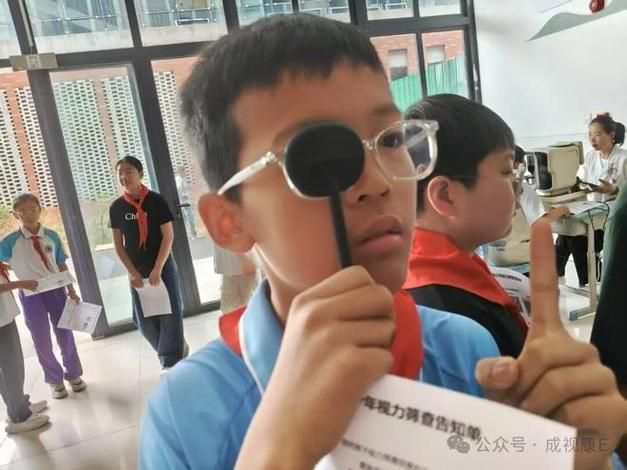
The entry of children into primary school is accompanied by an increase in reading and writing tasks and a significant increase in the length of close-eyed hours, which is the age group with the highest near-sighted outbreaks. Many children check for normal eyesight in the first grade and rapidly develop near-sightedness in the third and fourth grades. This phase is characterized by the rapid growth of the eye axis and the potential for annual increases in the number of people once a close look occurs。
It is necessary to correct the perception that protection before the age of six does not mean that primary schools can be deregulated. A number of children with good pre-school vision have been identified in one or two years because of poor household eye habits and insufficient outdoor activity。
Practical methods: strict adherence to one-foot-one-inch reading and writing norms, 20 minutes per close distance and at least 20 seconds for six metres of exterior; school breaks to urge children to walk out of the classroom without rest on the table; half-yearly full dilation screening, comparing eye axle and far-sighted reserve changes; reduced intake of high sugar beverages, sweets, balanced diets and adequate sleep; if medical examination alerts low view reserves, timely increase of outdoor time, adjustment of eye arrangements and early intervention。
In the third stage, the secondary school, between the ages of 12 and 18 years, the security cordon is maintained during the period of high-profile risk control。
Many parents misperceived that the child was coming of age, that the eyeballs were stereotyped and that the near-sightedness would not go further. In fact, most of the children's eye axes are not gradually stable until they reach the age of 16, and boys tend to stabilize later. If the primary stage is up early and under pressure to enter primary and secondary school, it is still possible to increase by more than 100 degrees per year, easily exceeding 600 degrees and reaching a high degree of near-sightedness. High near-sightedness increases the long-term risk of ophthalmological pathologies, a situation that doctors have repeatedly cautioned to avoid as much as possible。
At this stage, the focus of the control is changed from “prevent invisibility” to “control intensities, circumventing a high near-sightedness”。
The method of physical exercise: children who have been given mirrors are regularly reviewed in accordance with medical instructions, and the wearing of glasses is regulated and is not taken off at will; the viewers and massage equipment declared on the market to be a cure for physical invisibility are not accepted; all interventions, such as the use of kok mirrors, low-intensity atropines and defocal lenses, need to be evaluated in a formal medical institution and carried out in accordance with medical instructions; even in case of academic stress, daily outdoor activities are scheduled to be fragmented, with off-site breaks set for weekends; reasonable planning is made to avoid the need to turn off the light at night。
After the three core stages, the four most common child care error areas in the parent group are then combed, with many families stepping on pits every year and consuming the children's far-sighted reserves in vain。
The first error: the visual watch is found in 1. 0, and the eyes are completely fine。
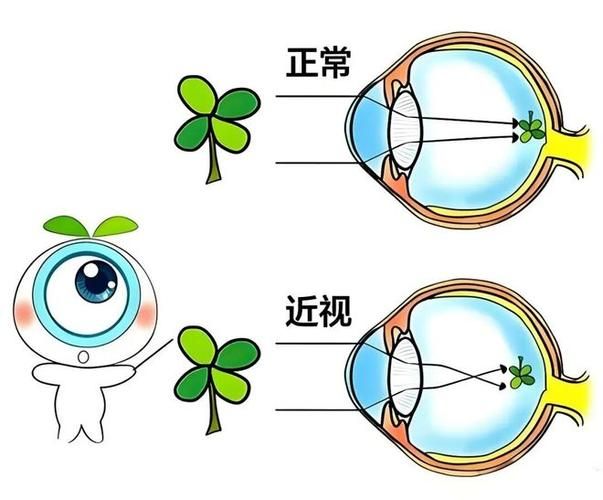
There are significant limitations in the detection of naked eyes, with some children meeting the standards of sight, but the distant vision reserve has been severely inadequate after the detection of pupils and belongs to a high-risk group of near-sighted persons who wait until the sight drops before intervening. Complete monitoring must include data on pupils' pupils' length, length of eye axes, and a cornea curvature, and establish a long-term comparative file。
The second error: close vision can heal, without a standard mirror。
Realism is a structural change brought about by a long axis, and there is no way to reverse root causes. There are many physiotherapy, eye-protecting devices available on the market, at most for a short period of time, which do not reduce eye axles and do not constitute the main anti-control programme. If doctors recommend mirrors, insist that they are not, and long-term visions are blurred, they accelerate the increase。
The third area of error is out of the house at any time。
Near-sighted control uses natural light to stimulate the release of dopamine from the retina, inhibit eye axle stretching, lack sufficient natural light at night, and are not able to walk to prevent effects. During the day, the splits can be completed and used on the way to and from school, during classes and afternoon breaks, without a single two-hour break。
The fourth error area: the parents have good eyesight, the children are not close-sighted and do not need to be examined early。
Genetics is only one of the many influences of near-sightedness, as is the eye habit, the length of outdoor activity, the reading and writing environment. Many parents have excellent visions because they use their eyes for long distances and wear glasses early. In turn, children whose parents have a high degree of near-sightedness and who insist on scientific protection can also delay the onset of the near-sightedness. High-risk families have to be established early on。
As a result, i have developed a system of near-vision control that is universal for all ages and that can land at no cost to ordinary families, which is applicable regardless of age。
First, priority should be given to the protection of the sun by ensuring natural outdoor activity during the day, which is accumulated for no less than two hours a day, avoiding the need to make the sun hot at noon。
Second, it regulates the proximity of the eye environment by reading and writing a lamp to match the main lamp of the room, so as not to turn on only one light for reading; not to read and see the screen in a car, lying down, in a dark environment。
Thirdly, control of the use of electronics over a long period of time and the more restrictive the age limit, giving priority to parent-child interaction rather than relying on electronic devices to appease children。
Fourth, regular sleep is guaranteed, with 10 hours of sleep per day before school age, no less than nine hours for primary school students, eight to nine hours for junior high school students, and a lack of sleep affects normal eyeball development。
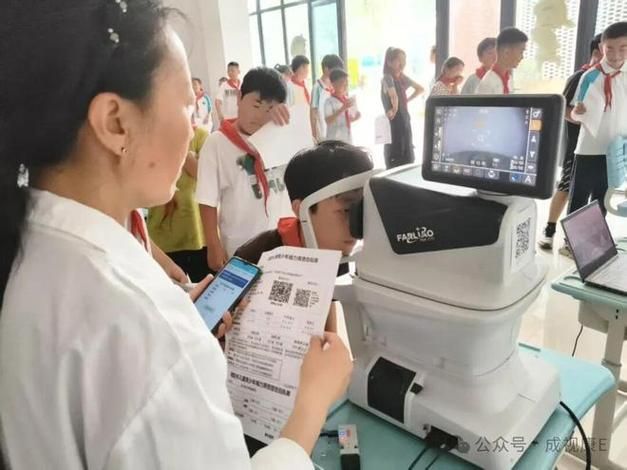
Fifthly, eye health screening is regularly regulated, young children are examined annually, school-age children are reviewed semi-annually, and each examination document is kept, comparing the growth trend of the eye axis。
Sixth, balanced diets, more deep green vegetables, quality proteins, proper intake of chlorophyll-rich foods, reduction of sugary beverages, pastry snacks and non-blind purchase of high-priced eye care。
It is also important to clarify the core conclusion: that children between the ages of 0 and 6 are close-sighted gold reserves, deciding whether they will be close-sighted early; that children between the ages of 6 and 12 are high-prevalence watersheds, deciding whether they will be able to deepen rapidly; and that those between the ages of 12 and 18 are the last control window, deciding whether they will develop into high-pregnancy after adulthood. The three stages are rounded up and one cannot be left. If there is a pre-school overdraft reserve, primary schools are highly proximate; primary schools are left unattended and secondary schools can easily develop into highly proximate. Near-sighted control is not a short-term task for a few years, but a long-term management from zero to eighteen。
With regard to child-rearing, many things cannot be remedied until problems arise, as is typical of visual health. It is the highest value for money that scientific eye-protective habits are established earlier than the high cost of intervening later on, and the monitoring of distant vision reserves. We need not be overly anxious to buy eye-protective products around the world, capture the core focus of each age group and provide basic protection, which is the best way to protect children's vision。
Finally, i'd like to ask your parents, how old is your child? What confusion has you encountered in the matter of close-sightedness。
Disclaimer: this paper is shared only for the purpose of child eye health and is not a substitute for an eye doctor's diagnosis. Individual differences in eye development for each child, visual screening, mirroring and various near-sighted control programmes, are referred to regular medical institutions and are carried out under the guidance of professional ophthalmologists。