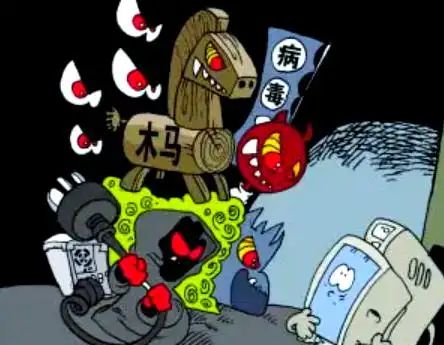
Where does computer viruses, this major threat to computer and network security come from? Actually, it's man-made. These viruses are inserted into the computer program by a carefully crafted person and are designed to disrupt computer functionality or data and interfere with normal computer use. At the same time, they have the ability to replicate themselves, a special set of computer commands or program codes. But don't worry, computer viruses do not infect humans or other organisms. Protecting them from cyber-security threats is essential。
Characteristics of the 02 computer virus
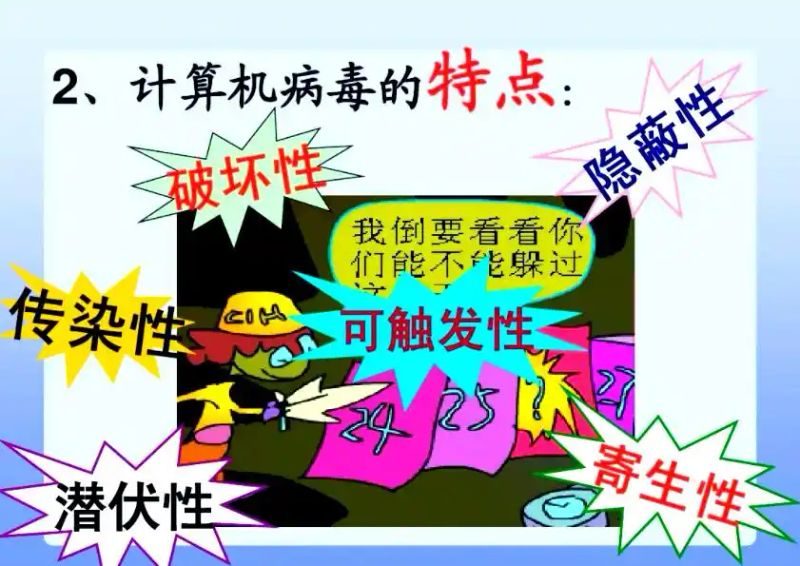
Computer viruses, a serious threat to computer and network security, have a unique set of characteristics. They are often ably inserted into computer programs by elaborate producers, not only with the aim of disrupting the functionality or data of computers, disrupting their normal use, but also with the amazing ability to replicate themselves. However, while these viruses are extremely destructive, they do not infect humans or other organisms, which is the essential difference between us and the biological viruses of nature。
Disruptive
The primary characteristic of computer viruses is their powerful destructive power. They interfere with normal use by destroying computer functions or data, and may even lead to a breakdown of the system, causing huge losses to users。
Hiding and lurking
Computer viruses often have a very high degree of covertness and potential, allowing silent intrusion into the system without being detected by users. This hidden nature allows the virus to remain in the system for long periods of time, waiting for the right time to strike。
Infectious
Computer viruses are also alarmingly contagious. They can achieve rapid proliferation by copying themselves and disseminating them to other processes or systems. This “one-to-one-to-one-to-one-to-one-to-one-to-one-to-one-to-one-to-one-to-one” mode of transmission allows the virus to infect a large number of computer systems in a short period of time。
Channels of transmission of the computer virus
Computer viruses are transmitted in a variety of ways, including through networks, mobile storage devices, e-mail attachments and instant communication tools. These pathways allow computer viruses to spread easily to all corners, posing potential security threats to users。
04 common virus type
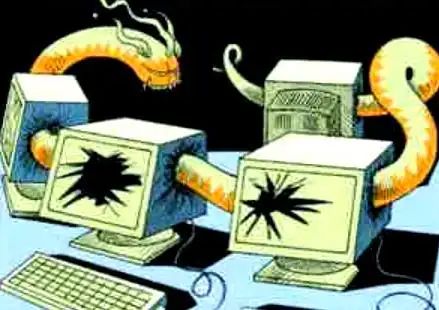
What are the common types of computer viruses
System viruses and worm viruses
System viruses, whose prefixes include win32, pe, win95, w32, w95, etc., are commonly characterized by the infection of the windows operating systems. Exe and. Dll documents, which are widely disseminated through them. Among them, the well-known cih virus falls into this category. A major feature of worm viruses, prefixed to worm, is widespread dissemination through networks or system loopholes. Many worm viruses are also capable of sending toxic mail and blocking networks, such as shock waves (which are characterized by blocking networks) and small mail agents (which are characterized by the sending of toxic mail)。

Horses, hackers, script viruses
Carpenter virus and hacker virus, carpenter virus, prefixed to trojan, while hacker virus prefixed to hack. Carpenter viruses are characterized by the ability to penetrate and hide user systems through network or system loopholes, thereby leaking user information. The hacker virus provides visual interfaces that allow remote manipulation of user computers. The two viruses are often associated, and the carpenter virus is responsible for the invasion and the hacker virus for control. Today, the two types of virus are becoming more functionally integrated. Common carp viruses include qqq-message trojan. Q3344, and carpenter viruses such as trojan. Lmir. Psw. 60, which target online games. It is worth noting that the name of the virus includes words such as psw or pwd, which usually means that the virus has the function of poaching a password (these letters are usually the acronym “password” in english). In addition, there are a number of hacking procedures, such as hack. Nether. Clint。
Script virus with prefix sCript, a virus written in script language. The characteristics of this virus are transmitted via web pages such as the famous red code (s)I don't know. In addition, script viruses may have prefixes such as vbs, js to indicate the type of script they use, such as vbs. Happytime and js. Fortnight. C. S。
Macrovirus to destructive program virus
Macro, followed by a different second prefix to distinguish the type of document in which the virus is infected. These secondary prefixes include word, word 97, excel, excel97, etc., which are used to indicate specific versions of the office series of documents infected by the virus. For example, only the virus infected with word97 and its previous version would use word97 as the second prefix, in the form of macro. Word97, while the virus infected only with a later version of word97 would use word as the secondary prefix, in the form of macro. Word. This rule applies equally to excel documents. A common feature of this type of virus is its ability to infect office series of files and to spread rapidly through the office generic template, such as the famous macro. Melissa virus。
Backdoor viruses, prefixed to backdoor, are commonly characterized by the ability to transmit via the network and to open backdoors on user systems, thus posing potential security risks. For example, many users may have encountered irc back doors, such as backdoor. Ircbot。
Virus planting procedures, which, while operating, release one or more new virus files from their bodies into the system catalogue, and are then destroyed by these newly released viruses. For example, viruses such as dropper. Binghe2. 2c and msn (dropper. Work. Smibag) have such characteristics。
Disruptive program viruses, prefixed to “harm”, usually have attractive icons designed to induce users to click. Once the user hits, the virus directly damages the computer. For example, the formatting of the c-virus (harm. Formatc. F) and the killer command virus (harm. Command. Killer) are all of these viruses。
A joke virus and a strapped machine virus
The joke virus, prefixed to “joke”, is also known as the prank virus. Such viruses usually have attractive icons that induce users to click. However, when a user strikes, the virus does not really harm the computer, but does some seemingly destructive operations to scare the user. This is the case, for example, of the joke. Girlghost virus。
Blank machine viruses, prefixed to “binder”, have unique binding characteristics. The virus author uses specific bundled programs to closely integrate the virus with common applications such as qqq and ie. These bundled documents are not unusual in their appearance, and once users run these seemingly normal applications, the virus is then hidden, posing potential risks to users. For example, we are familiar with the binding of the qq virus (binder. Qpass. Qbin) and the system killer virus (binder. Killsys)。