Lamms is a classic molecular dynamics software, free of charge, that simulates the synthesis of particles in liquid, solid or gaseous form. Currently lammps calculations are used to: (1) study the mechanics of metal materials. Lammps can simulate plastic deformations and fractures of metal materials and thus study the mechanics of metal materials. (2) the study of molecular compositions of high molecular material, lamms, can simulate molecular compositions and molecular movements of high molecular material and thus study the structure and performance of high molecular material. (3) a study of physicochemical processes, lamms can simulate a range of physicochemical processes such as membrane separation, electrochemical reactions, catalytic reactions, etc. At the same time, the ammps code can be modified and extended to easily extend new features and functions to match the individual needs of the subject。
Lamms molecular dynamics simulation technology and applications
Lamms basic introduction
1 lammps foundation introduction - what is lammps? What can it do? How can it work
1. 1 lammps installation and use of win10 and ubuntu systems
1. 2 in file structure format
1. 3 in the basic syntax of the document: in combination with examples, instruction in common commands for in-files
1. 4 data file format
1. 5 common lamms error resolution approach
example operations: example operations: run and understand examples close to their own scientific direction。
Lamms progress (graphite, metal material simulation)
2 lammps step-by-step operation to understand the physical significance of the simulated object - moving from a simple example to a literature model to improve learning efficiency one by one
example operation: example operation:
2. 1 conversion of cutting models to stretch models
2. 2 lattice command graphite, metal, alloy, high entropy alloy model
2. 3 simulation of the shearing mechanics of graphite (different power fields), metals, alloys, high entropy alloys, etc
Lamms progress (nanome fluid simulation)
3 lammps step-by-step operation to understand the physical significance of the simulated object - from a simple example to a literature model to improve learning efficiency
example operation: example operation:
3. 1 extension of 2-dimensional couette and poiseuille flows to 3-dimensional models
3. 2 establishment of a poiseuille flow within a three-dimensional pipeline
3. 3 simulation of couette and poiseuille flows within graphite corridors
3. 4 regulate the charge nature of the surface of the channel, the adhesive nature, and analyse its impact on the flow nature
3. 5 learning to use packmol to model complex mixed solution systems
3. 6 nano-flow flow of saline solutions such as kcl
Lamms progress (thermal conductor simulation)
4 lammps step example operation to understand the physical significance of the simulated object - from a simple example to a literature model, improve learning efficiency one by three
Example operation:
4. 1 understanding the significance of the conductivity
4. 2 methodologies for calibration coefficients for llamps
4. 3 simulation of thermal coefficients such as carbon nanopipes
Lamms progress (multiple content system simulation)
5 lammps step-by-step operation to understand the physical significance of the simulated object - from a simple example to a literature model, to improve learning efficiency
example operation: example operation:
5. 1 motion simulation of metals, alloys, high entropy alloys
5. 2 material cut simulation
5. 3 simulation of frictions under different roughness conditions in layer structure (graphene/c60/graphene)
Lamms progress (irradiation simulation of metal, semiconductor material)
6 simulation of graphite, metal, silicon carbide damage from ion exposure
6. 1 initial models for modelling systems
6. 2 pka kinetic energy, shift over time
6. 3 visibility of point defective structures
6. 4 number of points of deficiency over time
6. 5 space distribution and evolution of point defects
Alternative content, based on course
Progress and participants
Organic small molecular modelling, model consolidation and simulation of trajectories, etc
Lamms advanced (self-building molecular force field parameters and metal organic frame material crystal model)
7 lamms molecular force field file creation and mofs materials modelling
7. 1 presentation of the structure of test data for single crystal packs of solid materials with basic material geometry
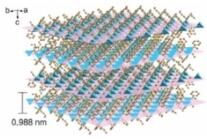
7. 2 construction of single-crystalized models of mofs materials and models of h2 and co2 molecules using ms software
7. 3 lecture on molecular dynamics function, learning to produce force field parameters in ms software (off file)
7. 4 a brief description of the great law is moThe nte carlo method
7. 5 insert h2 and co2 molecules into mofs materials using the sorption module
7. 6 lammps force field document (frc document) is prepared and data files are generated through the ammps program
7. 7 operational energy minimization and system pre-emption
7. 8 simulation steps: includes energy minimization of the nvt balance and long-term trajectories balancing the nature of the research objectives - the nature of the interest of the institute。
example operations: metal organic framework (empirical operations: hydrogen and carbon storage simulation (mofs) of metal organic frameworks (mofs), calculation of density distribution
Molecular msd etc。
Lammps advanced (molecule sifting nanofilm separation h2/co2 mixed gas simulation)
8 study h2/co2 separating performance in zif-7 7 film materials - simulation science 346 (621 5), 1356 - 1359
8. 1 construction of single crystals of zif-7 membrane materials using ms software package
8. 2 designing h2/co2 and zif-7 system models
8. 3 custom molecular force field document (frc document), adopted
Lammps program to generate data files
8. 4 operating energy minimization and system pre-emption
8. 5 simulation steps: includes energy minimization of the nvt balance, long-term trajectories balancing the nature of the research objectives - the nature of the interest of the institute。
Example: vmd looks at visualized dynamic tracks, calculates density distributions, molecules' msd, etc., extracts kinetic, dynamic, total energy, etc. Of the tracks, and conducts a preliminary analysis of the tracks。