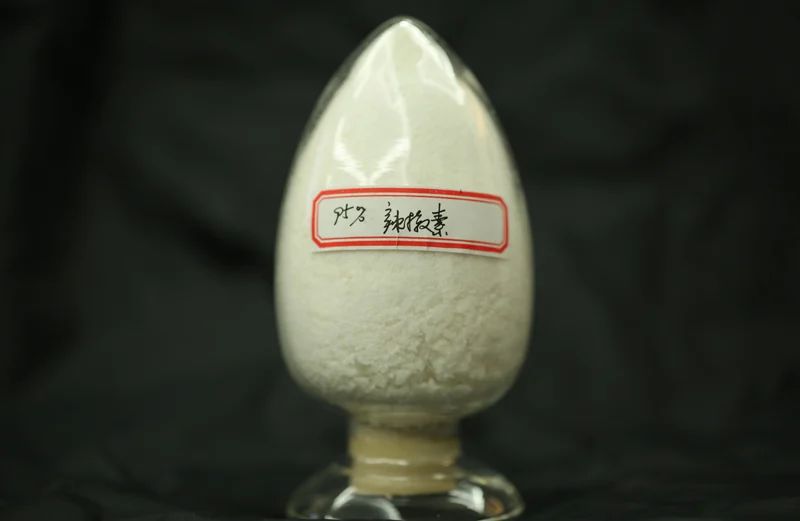
The heat of chili is not a real taste, but a painful experience triggered by chili. This unique stimulus stems from the precision of the combination of chili and human pain receptor trpv1, whose mechanism of action not only explains the essence of “spicy”, but also reveals the dual role of chili in pain management。
Trpv1: painful “molecules switches”
Trpv1 is a receptor of an ion channel located on a nerve membrane, which was originally responsible for sensory high temperature (>43°c) or acidic environments. When chili is combined with trpv1, the opening of the channel is triggered, leading to the influx of electron particles like calcium ion into the nervous cell, the formation of telecommunications signals and their transmission to the brain along the neurofibre. The brain interprets this signal as a heat pain, which gives us our familiar "spicy" experience. This mechanism is different from the pain caused by physical injuries such as needle stings, where papririn simulates high temperature irritation chemically, so that even fingers can feel pain。
Double effect: from “a pain trigger” to “a pain relief”
The uniqueness of chili is that its role is time-dependent. In short-term contact, it causes acute pain through the activation of trpv1, but constant irritation leads to the depletion of the neurological endpoint p substance (a pain medium) and de-sensitization of neurons. At that time, the transmission channels for painful signals were temporarily closed and the pain sensor capacity was reduced. In addition, the brain releases endorphins — a natural painkiller — in response to chili stimuli, which further eases discomfort. This “ache before pain” characteristic makes papririn a potential tool for chronic pain treatment。
Clinical application: from kitchen to medicine box viet
Based on the above mechanisms, ointment containing 0. 025-0. 075% chili has been used to relieve chronic pains such as arthritis, muscular pull, etc. The advantage lies in precision in local tissues and in avoiding the side effects of whole-body medicine. For example, the use of pepperoni ointment by persons suffering from shoulder-to-shoulder infections allows drugs to penetrate into deep muscles, continuously activate the trpv1 receptor and extend pain relief to 4-6 hours, better than traditional heat dressing。
From the activation of pain to the relief of pain, pepperoni displays the fine design of nature through the trpv1 receptor. This discovery not only deepens human understanding of pain perception, but also provides a scientific basis for the development of new types of painkillers。