The cost of using new energy vehicles as one of the advantages of purchasing new energy vehicles has been a constant concern of the owners. In recent times, new energy vehicle owners have indicated that the cost of charging public charging stakes has increased over the second half of the year. Does this exist? With this problem in mind, journalists have conducted numerous investigations。
Drivers of new energy vehicles are more sensitive to changes in charging costs, and master wei is a network driver in henan zhengzhou because he goes to a public charging station every day to charge twice, and his mobile phone clearly records the cost of each charge。
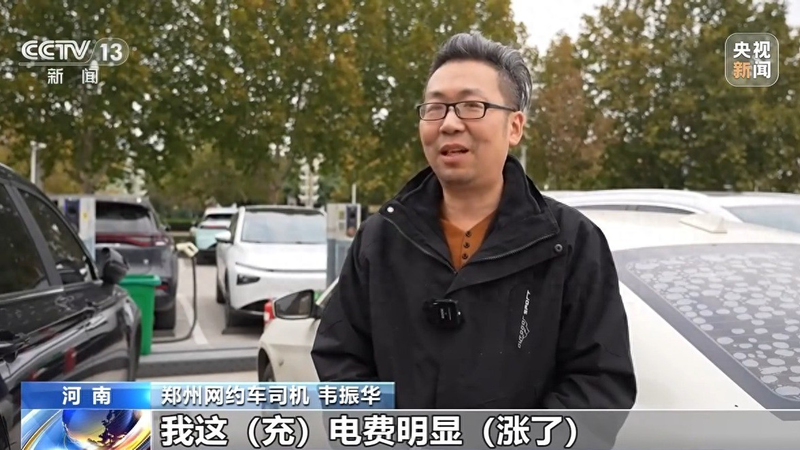
Henan zhengzhou webcom driver wei jinhua: i've been charging a significantly higher charge, which was $1,200 a month, and is now up to $1,500. Especially since august, it's about 20 or 30 percent higher。
The cost of charging a public charging stake consists of both electricity and service costs. Electricity prices have been largely market-based, with no additions to “a levelling-off” or to charging-post operators, with variations in prices over different seasons and periods of peaks, bands, bands, flats, etc. The cost of the service is based on market conditions and is at the discretion of the charging companies. In interviews, journalists found that not only zhengzhou, but also many cities in henan experienced an increase in the cost of charging public stakes。
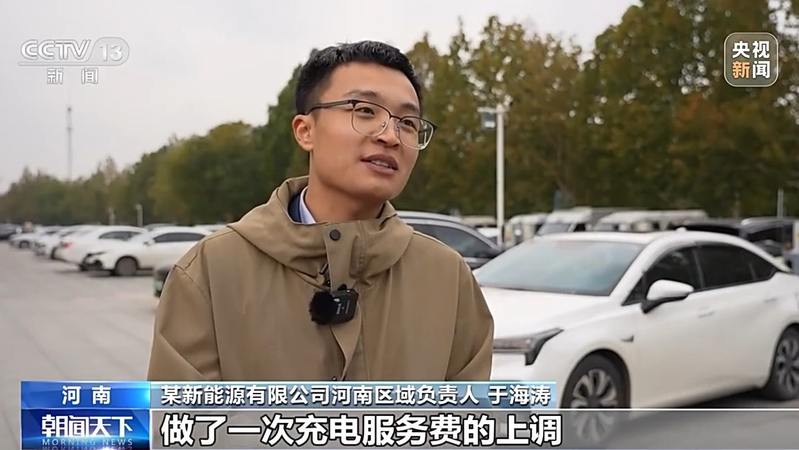
A new energy company, henan regional manager, in haitao: our charging companies have made an increase in charge of charging services, which is about one corner to one quarter more than at the beginning of the year, so the price of charging is felt to be higher overall。
Surveys have shown that in some cases the cost of charging enterprise services has increased by even about 50 per cent. So, why are they making price increases? Some of the charging stake operators told journalists that high-cost inputs for previous recharge pillar construction, as well as long-term low-cost “market grab” strategies, put them under greater operational pressure。
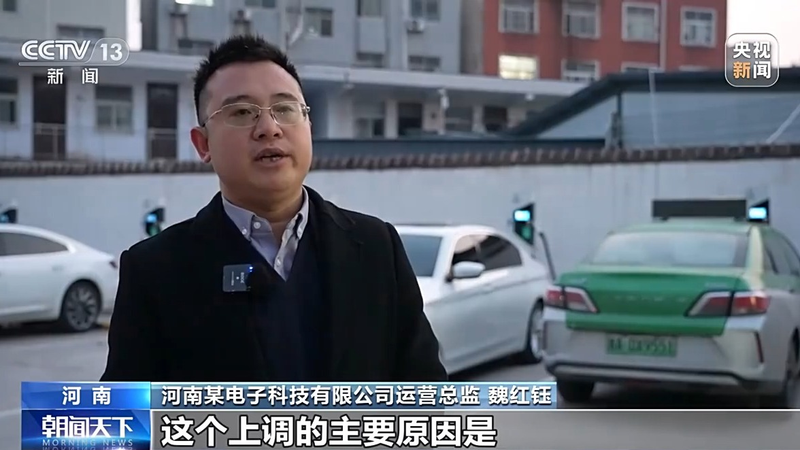
Henan's electronics technology company operating director wei hongxiang: the main reason for this increase is that, as we go into operation, we find that there is a risk of a backside in the revenue from the charging station relative to our construction costs and our operating costs。
The financial accounts of some of the charging operators show that, although the business income is rising every year, it is negative each year. At the same time, in order to attract more users, operators tend to build large power stakes, but the basic cost of high power-charged stakes is relatively high, and in some cases additional corresponding distribution tanks will be required, and maintenance costs will naturally increase. Therefore, the upward adjustment of service fees is the immediate solution for cost recovery。
New energy vehicles are still more expensive than oil trucks
Through interviews, journalists have found that in some cities there is indeed an increase in the cost of charging electric cars, so is this happening in all the cities of the country? Is the cost advantage of purchasing electric cars still present
In a number of interviews, journalists found that the increase in the charging cost of new energy vehicles occurred only in local cities and that the cost of charging most cities nationwide was stable。
New energy car owners in beijing: not much increase, not much change, not much change, and not much difference。
Shenzhen's new energy car owner: the current electricity cost is $1. 27 once, and the overall cost is not particularly high and affordable。
According to data from the china union for the promotion of electric vehicle recharging infrastructure, the increase in our public chargeable stakes between january and october was 728,000, compared with 63,000 in october, representing an increase of 50. 3 per cent over the same period. The increase in the number of charging stakes, while meeting the rapid growth of new energy vehicles, has also increased competition among charging-post operators。
Chen dong, head of a beijing smart technology company: the price of charging is still relatively low, because the industry is competitive, and we have more than 40 charging stations in beijing, and winter is now a charging season, and the overall cost has not been adjusted upward。
According to experts, the volatility of charging costs in most cities is the result of market demand and supply regulation and cannot be judged in absolute terms as good or bad. Most cities have now eliminated the maximum price for services, and operators can determine the cost of charging services according to competitive market dynamics. At the same time, in the face of the question raised by netizens that the cost of new energy vehicles was almost flattened, the experts also made a bill to journalists。
Liu yongdong, deputy secretary-general of the china electricity enterprise federation: for example, we need about 10 litres of oil per 100 km of oil in the industry. We estimate it at around $8, that's $80. On average, if we look at the trams, we need about 15 degrees of electricity per 100 km, and the overall cost of electricity plus services is about $1. 5, then the total of 15 degrees of electricity is about $22. 5 or $25, and we look at $25 and 80, which is a huge difference。
New initiatives are being launched to shape the healthy development of new energy vehicles
New policies, such as the hourly charge for charging facilities, have been introduced to ensure a good charging experience for new energy car owners. The initiative is aimed at guiding the owners of cars to a rational use of electricity, which is more conducive to the health and sustainable development of the new energy automobile industry。
In september this year, shandong began implementing a new residential charge time price policy, broken down into peak valley hours, adding deep valleys and peak hours at a price of 0. 222 per kilowatt hour and a difference of 0. 666 per kilowatt hour. By raising the price differential, the user is directed to avoid charging at peak hours。
Qingdao, the owner of the new energy car in the mok region: it is now charged to deep valley at noon, at just over two cents, to go home for a meal and charge。
Not only shandong, but guangdong, jiangxi, hunan, and shaanxi have successively introduced a policy of charging electricity at the hourly rate for electric vehicle charging facilities for residents, which entails additional costs for owners at peaks and peaks, while in low valleys the owner can enjoy lower prices than before。
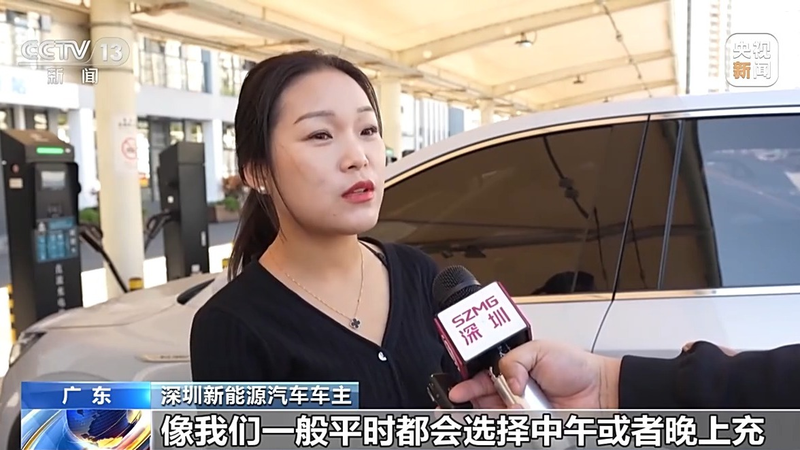
Shenzhen's new energy car owner: it's a peak period. It's now 1. 49 times, and we usually choose midday or evening to charge at a more favourable price。
In addition to the continuing strength of government policy, some charging operators are actively exploring new trends in future developments. There is a need to add new dynamics to business operations, as well as a need to take into account the charging experience of the carowners, who choose to provide a more holistic service in order to “show off” the market。
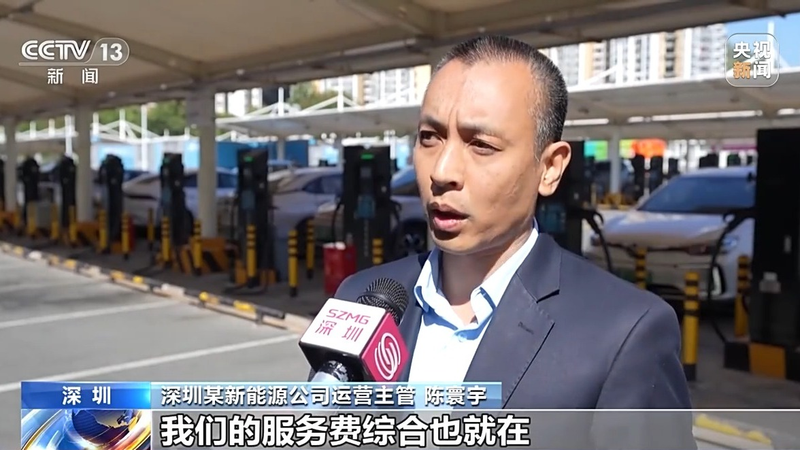
Shenzhen's new energy company's operating manager, chen jung-woo: our combined service costs are just a little bit more than that of the nearby operator, 5% more than that of the nearby operator. Our advantage is that the package is more complete, which solves the problem of driver feeding, rest, and we also have integrated service areas with fast repair, fast washing, and a comprehensive internet service platform。
At the same time, the level of connectivity among charging operators has been strengthened. In hainan, journalists have seen regulatory and operational service platforms linking different operators. There are 165 charging operators, 63 public switching stations, 3358 charging stations, and 100 per cent access to the public charging stake platform throughout the province. The construction of the platform has not only harmonized payment modalities, made it easier for the owner to “find a charge” but also facilitated monitoring of charge fluctuations。
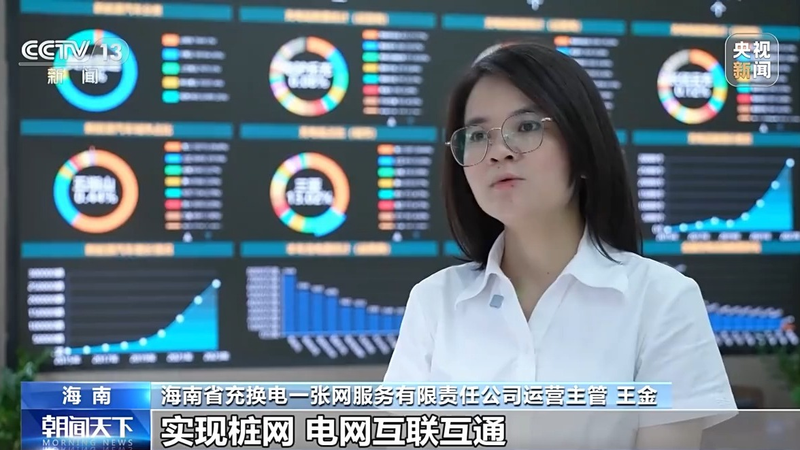
Wang king, chief of operations of a network service limited to recharging and recharging, hainan province: interconnecting the stakes and grids, and providing feedback on the recharging of the charging stations, which are priced irregularly, in a timely manner, to the territorial government authorities。
Experts indicated that both the time-price policy in place and the active attempts and connectivity initiatives of charging firms were sending positive signals and exploring new paths for the development of the whole new energy vehicle recharge industry。
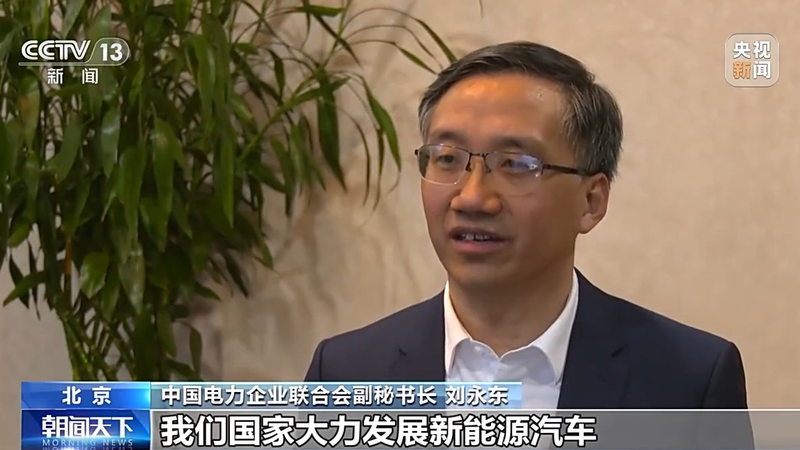
Liu yongdong, deputy secretary-general of the china electricity enterprise federation: our country has made a determined effort to develop new energy vehicles. In this process, including the charging facilities industry, the electricity industry and the automobile industry, we must promote and build around a healthy ecology。
♪ i'll be back in a minute ♪
Editor chen yan-ting