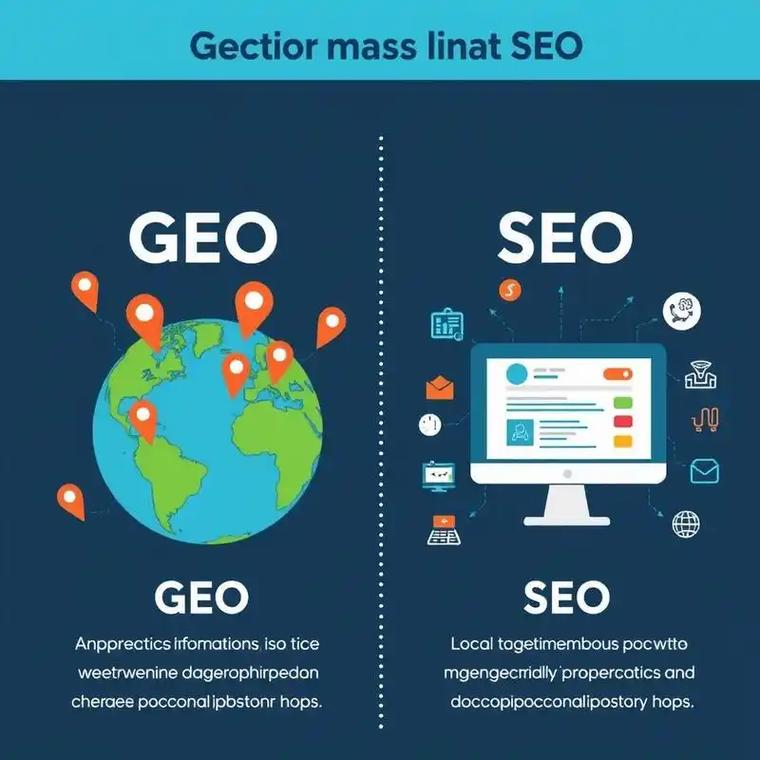
In recent times, whether as a friend of the independent station for foreign trade or as a brother of the content station, or even as an optimist who has just entered the profession, the subject cannot be taken away from the words: ai, sge, or the geo, which is the one who makes a sound of anxiety. Everyone's asking, since google is beginning to answer the questions on its own, is there any way we're gonna make it? Especially when you see that the answers directly generated through ai are at the top of the search results, the stones are hanging up. Today, we are not going to fix the concept of false heads, nor are we talking about the inexplicable technical terms, and we are just going to tell this story from the point of view of practicality and flow realization。
We have to calm down, and many of our anxiety is being led by marketing numbers. People are worried that geo will devour the traditional seo like a flood beast, but is that true? It's like when the video came out, everyone said that tweedy was dead. High-quality graphics still have very high conversion rates and irreplaceable values. Similarly, the nature of the search engine is to connect users to information, and ai is just a more efficient form of information, which is not the source of information。
We need to figure out a core logic, which is where ai came from. Whether they are currently gemini or other language models, they answer user questions because they learn the mass data available on the internet. Who provided the data? It's us, thousands of site directors, content creators. If seo optimized websites provide structured, high-quality content, ai becomes a waterless water. From this perspective, geo is not the ender of seo, but rather an evolutionary form of seo. You used to read your web page to the reptiles, and now you have to not only let the reptiles read it, but also make the big models think you deserve to be quoted。
Let's see an interesting set of phenomena. Although ai does divide some simple, encyclopedia-type traffic, such as “how many calories are contained in apples” or “how is the weather today in new york”, which in the past was actually of low conversion value per se. It's the kind of user that's going to go. However, there has been no fundamental change in the behaviour patterns of users for complex, decision-making or commercially motivated searches。
Let's give you a specific example, assuming you want to buy a laptop for a video clip. You'll probably be searching google for "a laptop recommendation for clipping video." at this point, ai may show you several model arguments. But are you sure you're gonna just look at these cold, cold parameters? Most people won't. You want to look at a specific assessment video, look at a real user's vomit, see how the computer's heat spreads when it's replaying a 4k video. These in-depth experiences, real feedback and personalized views are not currently fabricated by ai, and this is where seo remains strong。
Let's dig deeper and talk about trust. The answer given by ai is often seen as a “corroborated summary” in the user's subconscious. The advantages of summary are that it is fast, that it is not deep enough, and that it is sometimes a serious nonsense. When users are involved in money transactions, health consultations or major decisions, they are instinctively seeking endorsement from authoritative sources. This offers tremendous opportunities for high-priority brand stations and professional stations in vertical areas. If your website is professional enough in a particular subdivision, your content is highly likely to be quoted by ai. This may result in less volume than the previous broad search term, but the accuracy is exponential. The users who come in, they're people who, after reading the ai digest, still want to know more about it, are very willing to change。
So the situation is not about not doing seo anymore, but about doing seo's threshold and direction. The days that used to be on the front page by simply writing keywords, sending out garbage out of the outer chain, making fake originals, are really gone. The optimization of the geo era is more about the content's “goldness” and “uniqueness”。
It is necessary to mention here a concept that is familiar to all but often poorly done: professionalism, experience, authority and trust. In the logic of geo, the dimension of experience is amplified indefinitely. Ai can quickly produce an instruction book on how to fix water pipes, and step one, two, three, four is clear. But ai can't say, "when i screw that rusty nut, if i don't press too hard, it could break the pipe, so i suggest a towel to wring it again." this is a war experience. This detail, which is the key to the ai trail, is the search engine and the most scarce resources that users now have. You have to have a "me" in your article, a real operation, experience, even emotional expression。
Let's think about the composition of the flow. In the past, we looked at "shows" and "hits" and felt like we could eat meat first. Now the logic has become the reference rate and the conversion rate. If the content is selected by ai for the resulting answer and appears as a reference link, this position actually has more gold than the traditional blue link first. Because the user first looked at the answer, had a preliminary understanding of the subject and then clicked on it with deeper questions. This requires a clearer structure, a clearer perspective and more detailed data when we write。
For example, you're writing an analysis of the industry, not just putting words on your head. You have to learn to help ai make a summary. At the beginning or at the end of the article, even in the middle of the paragraph, the core view is extracted in very concise and logical language. So ai, when reorganising the contents, will be easier to identify your core values, thereby increasing the chances of being quoted. It's actually a kind of machine-friendly optimization. It's an upgrade of the seo technology。
There is also the very real question of change in the long end words. We used to dig up very low-competitive long lines for traffic. Now, many of the very simple long end-word needs are met directly by the ai overview. Did the long-word strategy fail? No. The long end words began to evolve towards “situation” and “complicated”. Instead of asking “the benefits of wine”, the user asked “what is the most appropriate french wine under this budget for a girlfriend who likes to drink sweet wine”. This highly personalized problem, ai tends to give only one vague suggestion, and if one of your articles accurately covers this specific delivery scene and provides a real and reliable reason for recommendation, then this flow is not yours。
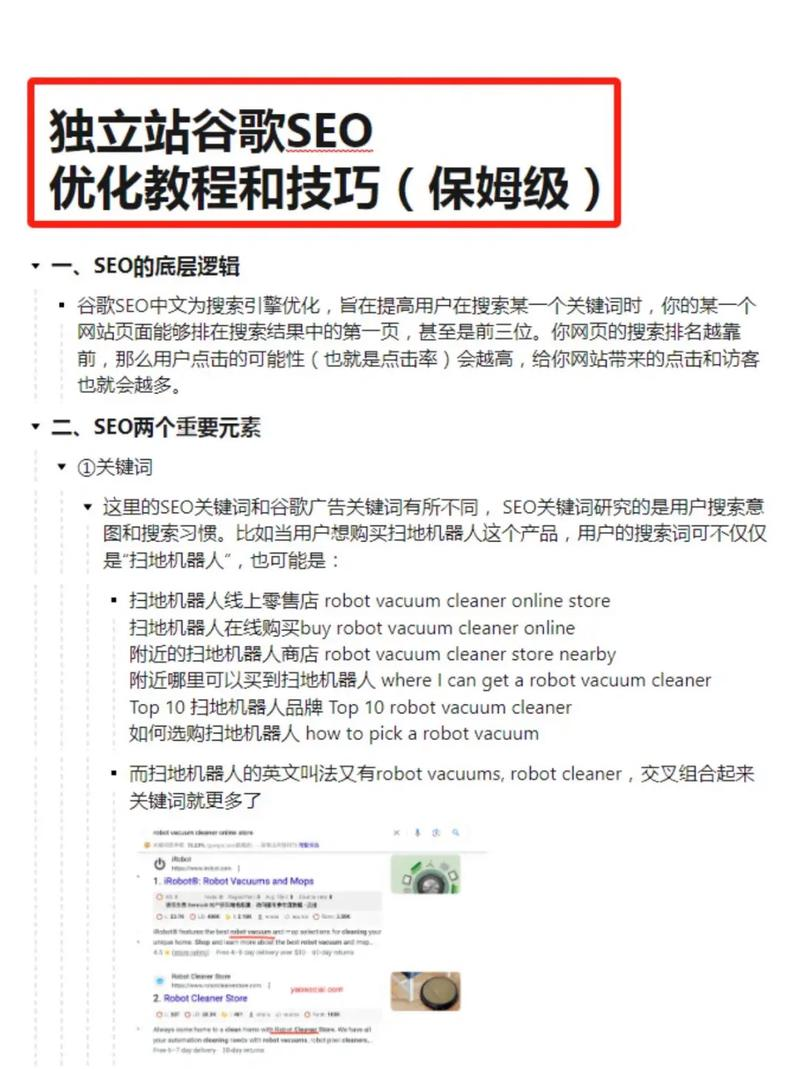
We also found a detail of the data in practice. Those sites that were originally excellent at the moving end, fast load, good user experience, are clearly better suited to geo changes. Because ai chooses the source not only for content, but also for the health of the site's infrastructure. A web site that opens a half-day cycle, even if the content is good, the probability is reduced by modeling as a low-quality source. So the foundation of technology seo can't be lost, mobile end appliance, https security protocols, structured data tags, these old things are the ballasts of these turbulent times。
Many friends who do content often ask how to write "go to ai" articles. It's a simple way to talk, to tell stories. Machine-generated text tends to be logically sound but lacks temperature, precision and surprise. The human language is flawed, has a personal preference, has an emotional ups and downs. When you add the words "we," "i think," "to be honest" in your article, and when you quote a specific client case, or even mention a small episode of your conversation with a client yesterday, these are "fingerprints" that are hard to simulate. This fingerprint tells google that it's a living person sitting behind the screen, an expert who's been crawling around in this industry, not an algorithm that only collages sentences。
Let's talk about data. We do it optimally, and we can't only see traffic in our eyes. In the geo environment, the time spent on the page and the frequency of interaction have become more important than ever. If a user clicks an ai-recommended link into your website, it turns out that the content is completely different from the ai summary or that the layout is a mess, he'll turn it off. This “jumping out” behaviour is fatal to the weight of the website. It's going to tell the search engine: this is not a good source. Don't push it again. So, when we do the layout, we do what we see and get, and what we promise in the title must be given in the text first, not to play the trick of "click more" in this time of scarce attention, and to bring up the most dry goods。
Another area that has been neglected by many is the optimization of multi-modular content. Now that ai is getting smarter, it can read more than just words. Pictures, videos, audio, these are all information carriers. If your article is full of free library material on the internet, ai will recognize you as a single page. But if you're accompanied by your own product drawings, or by a well-produced chart of data, or even by your own recording of a lecture video, these unique visual elements will greatly enhance content authority. Google's current multi-modular model is fully capable of identifying what's in the picture, and the original high-quality picture is a huge breakthrough in the seo differential competition。
And we also have to be sober to realize that, while geo will not replace seo, it's really forcing the business to shuffle. Web sites that would have been able to survive by moving, washing and collecting are largely uprooted in this new era. Because ai itself is a super collector and a copywasher, and it doesn't need another low-end self. Only those websites that truly have the first hand in their resources, have an independent perspective and can solve complex problems can survive this change and live better。
For branders, the current seo strategy should focus more on building brand volume. You're going to have your brand name mentioned in every corner of the internet, not just in your own official network, but in forums, social media, industry news. When ai constructs a knowledge map about your industry, if your brand name is repeatedly linked to the positive vocabulary of "quality," "professional," "recommend" then when users search for related items, ai tends to give priority to your brand. This is in fact a global seo that has long gone beyond changing the web title and description。
Finally, let's conclude by saying that, while we're all calling for wolves, for real hunters, a wolf's coming means a wolf's skin can be skinned. Geo's appearance actually raised the threshold of the flow and cleared out the opponents of the water. What is left to us is a more pure and qualitative competitive environment。
What we have to do is not to confront ai, but to become an information source that ai cannot ignore. Keep an eye on the industry, stick to the depths that even ai looks at, and integrates you as human experience, emotion and judgment into every byte. As long as users need real advice, and as long as business needs trust as the basis for a deal, seo will never die. It's just a more advanced vest, and it continues to rain in traffic through the internet. Don't be frightened by those anxious title parties, sink down, do every page in your hand, solve every user's questions, and the flow will certainly give you the best return。