


Here's to show you the principles of a two-arlet coaxial helicopter! A brief description of the flight details of the three-axis two-patch remotely piloted helicopter is provided here today。
First of all, what's three
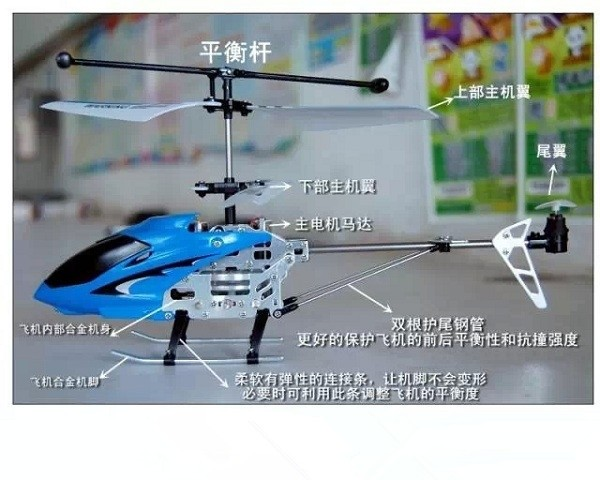
The channel is the remote control of the plane, which means the remote control controls the three functions of the aircraft! One is to control up and down, the other is to move back, and the other is to turn left and right! That's three! Some of the aircraft are now marked on the 3:05 channel, while the other channel is actually the gyro circuit installed by the aircraft。
Double oar structure
Two-storey oars have greater lifts and are more suitable for aircraft with low electric power. This structure is used by small aircraft today, as the speed of the switch is lower. Besides, there's another very important function of double-layered oars: turn
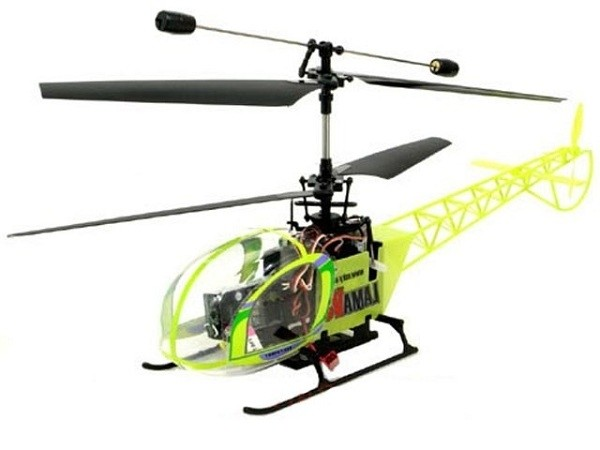
Here, first of all, the rationale behind the flight of the aircraft, which, as we all know, rotates its oars while the helicopters fly, and the spinning leaves form a circular plane, and when the plane is tilted towards the front, there is a push-back that causes the aircraft to fly forward. In the same vein, the aircraft will fly backwards. But how does this plane lean? That's how the wheel works. The aircraft factory installed an agency to operate on the roots of the leaves, which was driven by the wheel. When the oars are rotated, the rudder drives the slurry leaves in a circular flattening or tilting backwards, leading to the flight of the aircraft before and after。
Because these coaxial two-propelling helicopters are now more expensive, in order to reduce costs, they do not use complex steering structures. In the absence of rudders, however, it is difficult for the aircraft to fly back and forth. In order to achieve the aircraft's pre- and post-flight flight, smart engineers placed a horizontal slush leaf on the tail of the aircraft. When the slurry leaves are turning in reverse, the tail of the aircraft will rise up or fall down, and when the tail of the aircraft rises up, the circle plane formed by the propeller will lean forward, and the plane will fly forward, which is the same as the wheel. Through this structure, the purpose of flying forward without a steering plane is achieved
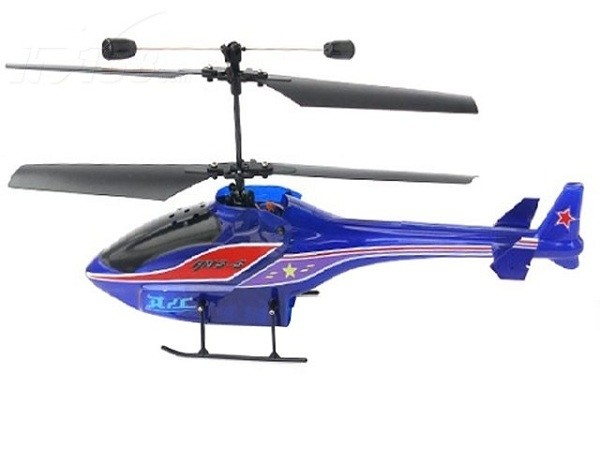
However, there is a problem in doing so. That is, the tail of the helicopter originally contained a small leaf in a vertical direction, the function of which was to drive the shift around the plane. When this little slurry is moving either in direction or in reverse, the tail of the aircraft is pushed towards the end, thus achieving the purpose of the shift. However, now that the tailing machines of the aircraft are being used to achieve the purpose of the flight, how can the function of the left and right shift of the aircraft be realized
As we can see from our careful observation of the coaxial two-propellant helicopter, the opposite direction is the two layers of the plane's slurry. When a layer of leaves slows down, the aircraft turns in the opposite direction. Such aircraft rely on remote controls to control the rate at which a certain layer of the aircraft turns its leaves。
As can be seen from the presentation, the pre- and post-flight flight of the coaxial two oars three-channel remote-controlled helicopters was carried out by the tail oars of the tailings of the tails of the tails of the tailings. The shift to the left and to the left of the aircraft was achieved through a shift between double-slurp leaves. Of course, aircraft rises and drops are achieved through a combination of changes in the speed of double-layer oars。



