In recent days, the baltic dry bulk index (bdi) has risen to its highest level since 2009, driven by strong freight prices for dry bulk carriers. The composite index rose by 2 per cent to 4,651 points, almost 12 years high. The cape of good hope index rose by 3. 3 per cent and recorded 7,438 points, also at its highest level in 12 years. The average daily earnings of sea-sling vessels (mainly transporting 150,000 tons of iron ore and coal) increased by us$ 1,968 to us$ 6,1683. A dry bulk transport market with super-cycles
The bdi is so innovative
Since the beginning of the year, the dry bulk industry has benefited from historically strong markets. In just one year, the baltic dry bulk index (bdi) has more than doubled and shows that the upward trend continues。
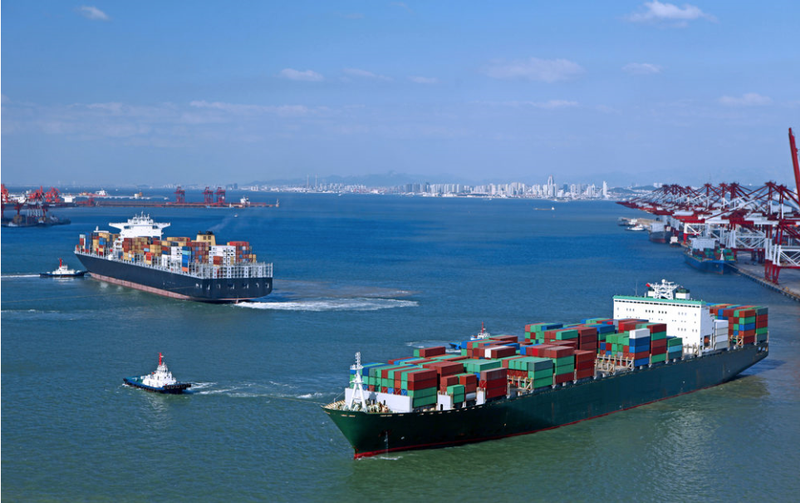
According to industry sources, the recent rise in the dry bulk market is mainly due to continued global shipping tensions, port congestion and the overall rebound of bulk commodities。
Box data show that for the first time since 2008, the weighted average of 5tc of the five base routes of good hope vessels increased by 3. 3 per cent to $61,683 on thursdays。
In fact, in such a market environment, the japanese shipping company k line chartered a good-looking horned ship named seamate (177,775-dwt, constructed in 2010), from hong kong to india, with a spot price of $69250 per day, or nearly $70,000 per day。
According to box data, the last such high price reached 23 september 2008, when it was us$ 62,105 per day, but fell by 8. 7 per cent the next day to us$ 56,724 per day。
In its weekly report on wednesday, shipbrokers fearnleys indicated that seagull ships were stylish, particularly on the western australia-china route. Owing to the limited number of vessels travelling to brazil and the atlantic ocean, sea-shell plates may be affected in the coming days and weeks。
Freight and ship prices are well below the super-cyclical levels
The current level of freight and boat prices, although exceeding prices for most of the decade of the 21st century, is still well below the level of the supercycle。
According to mr. Peter sand, bimco's chief shipping analyst, “the commodity prices have rebounded and are currently hovering or above the 2007 and 2008 levels. This triggered a discussion on the supercyclicality of commodities. However, despite the fact that the current dry-dispersed freight and shipping prices are higher than in the past 10 years, they are far from income from 2007 to 2008 and there is little indication that they will move towards that level.”
In the first seven months of 2021, freight costs remained high compared to the past 20 years, with all boat types earning more than $20,000 per day. However, freight costs are still well below the 2007 and first seven months of 2008。
For the first seven months of the year, the average daily freight rate for the good-looking vessels was us$ 24,970 per day, and for the same period in 2008, the average daily freight rate for the good-looking vessels was us$ 147,475 per day. The freight cost of a portable ship is the closest to its share of revenue in 2008, but the average income so far is still well below the level of the first seven months of 2008, at 55 per cent for the same period in 2008. The proceeds from panama-type vessels and hyperplytic vessels were 36 per cent and 41 per cent, respectively, for the same period in 2008。
Rising commodity prices are not the key to the dry bulk supercyclical. In fact, there is no super-cyclical without trade volumes. Despite the growth in trade in the first half of this year, this growth is not enough to justify the “super-cyclical” narrative。
Compared to 2020, the iron ore trade increased by 4. 2 per cent in the first half of the year to 771 million tons. This was the highest volume of trade in the first half of the year, 0. 3 per cent higher than the record recorded in 2018. However, this is not sufficient to demonstrate a surge in demand. Conversely, as exporters are unable to adjust their production to demand growth rates, the price of iron ore appears to have been driven by insufficient supplies of iron ore。
Dry bulk ship prices were also well below the level of the previous supercycle. A comparison of the price of a five-year-old good-looking boat with that of its august 2008 vessel could indicate a significant difference between the two. In august 2008, the ship's transaction price was approximately $153 million, while it may now be only $38 million. Although currently far below the 2008 level, ship prices remain the highest since december 2014. At present, the cost of new boat construction on the cape is $59. 5 million, $39. 5 million less than in august 2008。
A lot of new shipowners
Recently, the greek shipowner cosmoship management is selling two handysize dry bulk ships to chinese buyers。
According to vessel management sources in bireefs, a chinese buyer had recently purchased a dry bulk vessel named niki c (built in 2011), under the cosmoship flag, which searched 30,000 tons of heavy cargo, for up to $12 million。
In another transaction, it was alleged that the company had sold another ship under the flag, antigoni 32, 700-dwt, at a price of us$ 11. 5 million, also for a handy dry bulk ship built in 2011. At the beginning of 2019, cosmoship bought the ship, which was built at the jiangsu town riveryard, at a cost of approximately $8 million。
The dubai-based container ship transworld group acquired a third small bulk vessel this year, further increasing its share in the dry bulk shipping market. Since its launch in march from the japan shipping corporation's yokoyama kaiun, after purchasing the 38215-ton “tbc passion” ship (built in 2011), again purchased the 36699-ton “tbc praise” ship and purchased 385 million-ton “tbc prime” ship (built in 2011) from santoku senpaku。
Ritesh ramakrishnan, the joint director of the company, stated that this year's three small purchases were consistent with the group's “strong confidence in the bulk ship market”. He indicated that the group would “be a strong global participant” in the area of dry bulk shipping and planned to further expand its fleet to a total of 19 container vessels and 7 bulk vessels。
According to relevant reports, china ocean shipping holdings ltd. Entered into contracts with new ocean shipping co. For four bulk vessels, allegedly for a total value of approximately $120 million, to be delivered between 2023 and 2024. However, chinese maritime agents refused to confirm this information. According to the shipbuilding company, the order for the new ocean was the first bulk ship order in china for three years. The company's last contract was signed in 2018, when it signed two 82,000 tons of karsam bulk cargo (both in 2020) at the western shipyard of the city。
In the case of china light sea, three companies have ordered bulk carriers at the new ocean shipping plant, and two others are jadroplov in croatia and ciner in turkey. It is understood that jadroplov, listed in zagreb, has signed three bulk carriers, while ciner has taken four in one breath, and the new ocean plans to deliver to jadroplov in 2023 and to ciner in 2024。
Strong trends in the dry bulk market will continue
Analysts expect strong trends in the dry bulk market to continue until 2024。
Since last october, the dry bulk market has continued to remain high, with growing market demand for dry bulk and bulk commodities, substantial increases in freight costs and rising ship values and stock prices. This golden age will last at least until the end of this year。
While analysts bimco and arrow predict that the recovery in the dry bulk market will continue until the spring of 2021 and 2023, respectively, the norwegian investment bank (cleaves securities) is much more optimistic。
“we believe that the dry bulk market will continue to maintain strong momentum and that the cape of hope market is expected to restore its historical premium gains compared to smaller tanker markets. The current ratio of new vessel orders to the existing fleet is 5. 6 per cent, and the outlook is therefore very bright at least until 2024. Joakim hannisdahl, research director。
In addition, china's massive stimulus package has stimulated demand. However, the demand for processed industrial products in other countries of the world, with the exception of china, further stimulated the dry bulk market。
Equally important is the pressure on the supply of dry bulk carriers and available tonnage, partly because of the slow growth of fleets and partly because of port and supply chain bottlenecks, all of which push freight costs higher。
In recent days, james marshall, founder and ceo of the singapore shipowner company berge bulk, at a meeting in marine money, singapore, stated that the dry bulk shipping market would still be on fire for at least two years。
He stated that he had good reason to believe that the industry would remain high over the next two years. Marshall said: “some seeds of this high cycle will last for some time.”
Marshall pointed to the rebound of the new coronary pneumonia epidemic, strong demand and strong price increases for coal and steel as one of the causes。
Marshall also noted that a further 30 million tons of iron ore had recently entered the market, most of which had been transported from brazil over long distances。
It suggests that the current market is indeed already very healthy and that the rebound of the epidemic has returned to the market the effect of “turbotening”. Constraints such as logistical strains caused by the epidemic (such as port congestion) and inefficient fleets have instead “spictened the market”。
The shipowner warned that these outbreak factors would only have a short-term impact on what he termed “a strong market”. He said, “the prospects for the short to medium term look rather optimistic. Over the next two years, we will continue to see strong demand.”
Limited impact of the coup d ' état in guinea on the bauxite trade
In recent days, there has been a military coup in guinea. As the world's leading supplier of bauxite, the effects of the change of regime on the bauxite trade and the bulk-ship market are of widespread concern in the shipping industry。
At present, the coup d ' état in guinea has had a limited impact on the supply of bauxite in china. First, the leader of the coup d'état after the seizure of power promised that mining companies would continue to produce and that the border would remain open for the export of mining products; most of the mining projects were far from their capital, and the events in guinea had not currently led to the obstruction of local bauxite mining, transport, etc. Since july, the guinea bauxite mine has been affected by the rainy season and the epidemic, and exports themselves have been limited. According to data from clarkson's study on port anchorage, there was only a decline of 2 per cent in the ship anchorage (in weight tons) from 1 to 20 september at guinea's bauxite export port。
According to statistical data from the clarkson study, the global bauxite trade accounts for only 3 per cent of the total dry bulk trade, with exports of about 1. 5 per cent of guinea's bauxite and about 3 per cent of its tonnage, of which some 73 per cent are exported through the good hope cape bulk ship. In 2020, guinea's main bauxite export port, katougouma, and kasarma, had 293 hangers, representing about 1 per cent of last year's global traffic, and involved 113 agglomerations, or 6 per cent of current capacity. Overall, the coup d ' état in guinea has had a limited impact on the bauxite trade
(all media reporters, lu min min, combined confidence-building maritime, international ship network, search network, maritime online etc.)