The main purpose of the bug-detection lamp
1. Pest monitoring
Agricultural development depends on pest management, which requires detailed knowledge of the type of pest and trends at all stages. The widespread use of vermin signal lamps can provide detailed data for scientific governance, monitoring the types and quantities of pests in different regions in real time on a daily basis. Increased efficiency and speed of management of pest monitoring can be achieved。
Reduced use of manpower
Like the telephotographic worm detection lamp, which, in addition to having all of its features, also has a photo function, can automatically photograph and store worms in the signal light at set time intervals, and can also be manually photographed, with a high degree of flexibility and utility, allowing statistical work on the type and quantity of worms to be done at the remote end, with less frequent access of staff to and from the field, making the operation more time-barred. So people are absent from the scene and have a clear understanding of what is happening in the field。
3. Reduction in the frequency of detection of worms
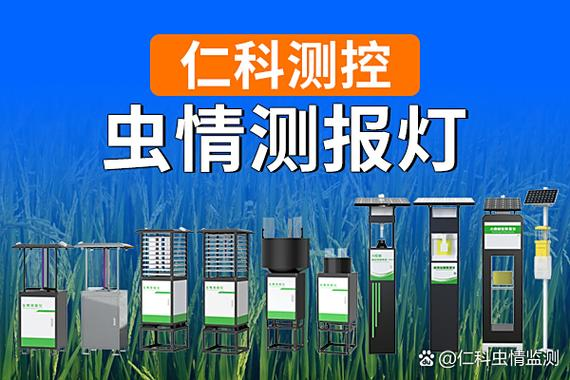
Traditional artificial insect detection requires constant back and forth in the field to personally capture pests, identify them and count them. Naturally, it takes a considerable amount of time, while an insect-detection lamp can automatically capture pests, identify and measure pests and significantly improve efficiency and reduce the frequency of insect detection。
4. Facilitating the timely detection of photometric pests
Insect detection lamps, which use luminous photometric measurements of pests, are lured and eliminated at one point in time when the luminous pest occurs, enabling timely detection of insects and early and effective measures to combat them。
5. Improving forest pest monitoring systems
Forest pests also have an impact on human lives, and the use of pest detection lamps can be used to monitor the relationship between the environment and forest pests. Accurate monitoring, recording and capture of the occurrence, quantity and extent of pests in local forest areas provide strong safeguards for accurate detection and reporting of pests and pests. The use of pest detection lamps can significantly improve pest investigation facilities and working methods and is important for protected forests。
6. Achieving green controls
In addition to reducing human capacity and early detection of the occurrence of pests, the main purpose of the vermin-detection lamps is to achieve green control, which allows for scientific measures to be taken to prevent pesticide misuse and misuse and to achieve drug control by identifying the type of pest and by mastering its pattern。
Software platform for internet-based worm-detection lamps
1. The equipment can be shown on the map where it will be implemented and can be easily viewed by users。
2. Information on the working state of the lamps, such as timing patterns, light control, rain control, temperature control, infestation, heating, door openings, signal intensity, etc., can be seen to provide an accurate view of the real-time performance of the equipment and can be assessed, analysed, and warned of equipment malfunctions。
3. The equipment has both optical and time-controlled modes of choice for users. It is possible to set its own working hours, times of insectization, hours of heating, heating temperature, high- and low-temperature protection thresholds for the heating chamber, time interval for photo upload and image resolution selection。
4. The temperature of air, humidity, heat silo temperature, rain control, temperature control, light control state, longitude values and time reported can be shown in real time。
5. The images of pests collected over time can be viewed, the collected pests can be edited, the number, size, growth cycle, etc., presented to the client in the form of graphs and graphs that allow for the analysis of pests。
6. Air temperature and humidity data show in real time that they can be presented in graphs and contour maps, that they facilitate user integration with pest occurrence, and that they provide more accurate trend analysis and early warning of pest occurrence。
Wireless communication parameters for internet-connected insect monitoring lamps
Equipment integration: the gateway should incorporate 4g communication components, 10/10om network interface, rs-232 interface, rs-485 interface, pwm, usb host interface, capable of providing cable access to various monitoring equipment at the site, and support 1,200w pixel photo camera cable access. Through the accompanying wireless video transmission equipment, the gateway will enable wireless access to video- and high-resolution photo-collection devices at a distance (1 km). Direct access to the 7-hour electrical resistance or acoustic touch screen.
Data storage: gateways support 32g storage space that meets the need for not less than 30 days of monitoring data of all types。
3. Data transfer: the built-in cable and wireless network transmission module, which supports wireless and 2/3/4/5g-wide wireless access to the internet, enables the transfer of monitoring data to the software platform or data core. The re-routing of stored data will be possible once the transmission network has returned to normal, with communication failure and failure to re-route data due to, inter alia, transmission network failure。
4. Terminal equipment management and control: the remote configuration, upgrading, management and control of on-site equipment can be achieved through interaction with platform software and real-time observation of the equipment's state of operation。
5. Positioning function: the gps/bidou/glonass/galileo/qzss/sbas six positioning methods should be built into the location module。