


I'm zhao xiao knife. I'm an eye doctor。
Almost every time the school organizes an eye check-up, new children are seen to have a near-sighted tendency. Is the near-sighted really incomprehensible? It's not like it was five years ago or 10 years ago. Modern medicine is gradually breaking the code of near-sightedness, which has become impregnable. As long as parents take care of them and the children take care of them, there is hope that the near-sighted will be contained。
To prevent close vision, it is important to understand why it happens. We need to know each other better if we are to strike one by one. Today, we turn back the five key points of close vision from the perspective of what can easily lead to rapid near-sighted development。

1. Reconciliation bad
In the near-sighted population, there are widespread anomalies in the regulation. A study of this article shows that 330 people with near-sighted visions are clearly less able to regulate (pra) than normal people. The better it is, the less easy it is to look in the eye, the less easy it is to look in the eye. This is a very common clinical phenomenon。
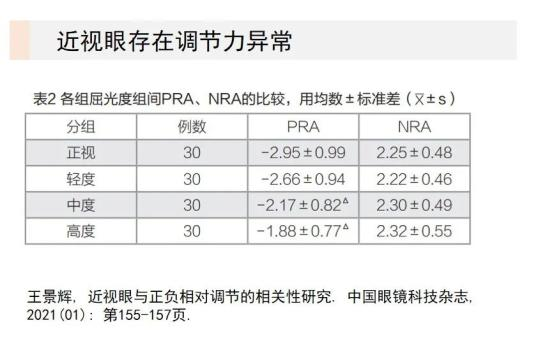
This is due to the fact that a child with a poor ability to regulate looks 15 minutes in close proximity, which is about half an hour for an ordinary child. When we look around, the imaging is behind the retina, and it takes the lashes to get it on the retina. If the hooves are not functioning well, they can't pull on the retina, behind the retina, they give the retina an irritating signal. It's too short to tell you. I'm behind you. I'm driving the eye axis。
So kids with poor regulation are more sensitive and more visible. Many near-sighted children are less able to regulate, including adults. So we have to focus on the children's ability to regulate。

Eye axis length
The long-eyed children are easier to see. We know that the eye axes are constantly changing as human eyes develop. At birth, the eye axis was short and in a state of vision. When external objects enter the human eye during normal development of the axis, the focus is focused on the retina after the subdued system, with a clear view of the object in a remote location, i. E., the direct eye. When the eye axle is too long, the remote object imaging is a blur on the retina before the retina, and we can't see it, that's an axle near-sighted, and most young people are axle near-sighted。
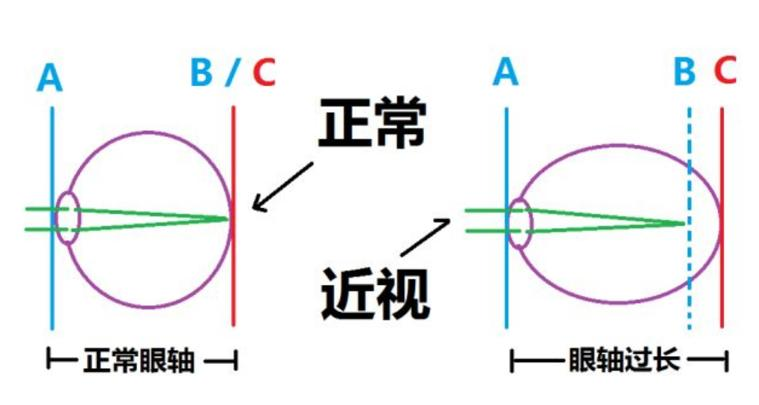
We also know that eye-axis length is the rationale for near-sightedness, so slowing the growth of eye-axis is an important means of preventing near-sightedness。
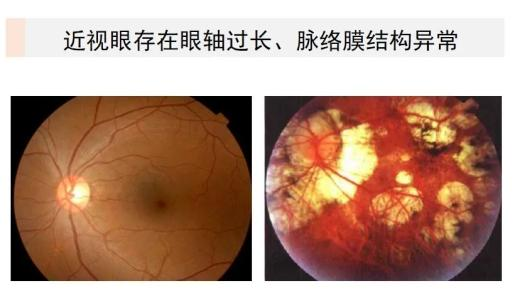

3. Pulse film thinning
When the eye axis increases to a certain degree, the whole eye ball is strengthened and the layers of tissues connected to the eye wall, such as the pulsation and the mirex, become thinner. The development of near-sightedness is further promoted when the pulses are thinning。
This is due to the fact that the pulse is involved in the close vision development of the eyes, which, by increasing the thickness of the pulse, can push the retina forward, draw the focal plane closer to the retina and, to some extent, improve the blurry of the near-vision image, while the thickening of the pulse is a shield for increasing the defence against the near-sightedness. All near-sighted controls, almost ultimately, are focused on increasing the pulse。

4. Magnetic thinning
Existing studies are known to gradually reduce the exterior matrix of filamental cells during near-sighted eye formation. One of the mechanisms for the formation of the near-sighted eye may be the loss of the inner state balance of dopamine caused by the focal signals produced by humans in their work or study, the reduction of blood flow from the pulsation, the remodelling and reduction of the erogeneity of the amphibians and the consequent thinning of the amphibians, which eventually lead to the extension of the axis and the formation of the near-sighted eye。

5. High eye pressure
Eye pressure plays a significant role in the growth of the whole axis。
Eye pressure is the pressure of the inside-out, and the eyeball is round because there's a positive pressure in the eye, and without it, the eyeball would be flat。
The eyeballs are in their eyes, they're fat, they're muscles, they're pressure, we call them internal pressure. With an average internal pressure of approximately 5 mm mercury, the eye-pressed population varies considerably, and between 10 and 21 mm mercury is likely to exceed 21 mm mercury。
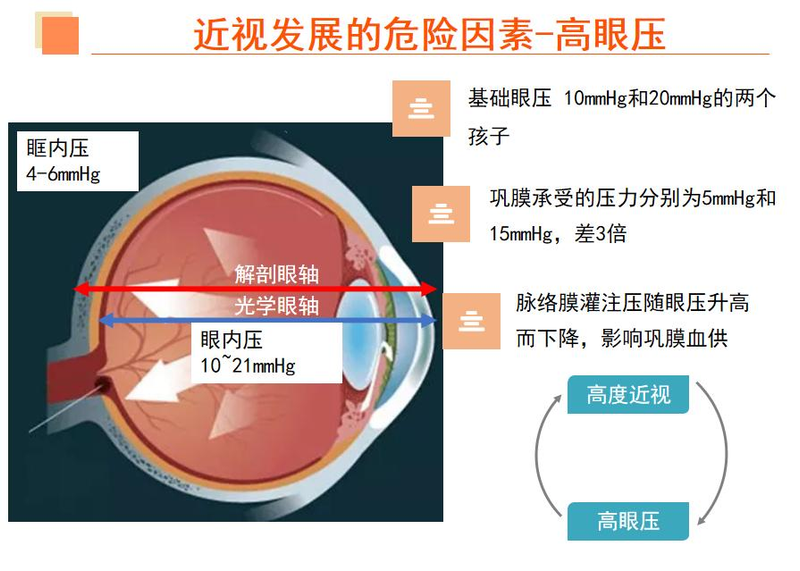
Two stress differentials create a force that puts the diaphragm back. Children with an eye pressure of 10 mm mercury, and children with an eye pressure of 20 mm mercury, feel the pressure at the back of the caps of 5 mm mercury and 15 mm mercury, respectively, which is three times different, and the rate of near-sighted development naturally varies。
And the pulsary is an vascular membrane, where the blood pressure comes to the top, the higher the internal pressure, the lower the relative injection pressure of the pulsation. Low pressure can also lead to a decline in nutrients, ischaemic blood and, in turn, thinning of the membranes。
So eye pressure can affect near-sighted development in many ways. We generally observe high base eye pressure in populations with high near-sightedness, which is also an open-angle glitter. Likewise, we find near-sighted development in high-eye-pressed children. Eye pressure is therefore a more easily neglected issue that requires the attention of doctors and parents。
In general, in clinical observations, we find poor regulation, eye axle length, pulsation thinning, thinning of the filament, high eye pressure, which is a frequent problem in the near-sighted population. On the contrary, we find that it is these changes that promote and accelerate near-sighted development step by step。
One of the driving forces of near-sighted development is actually the location of visual imaging。
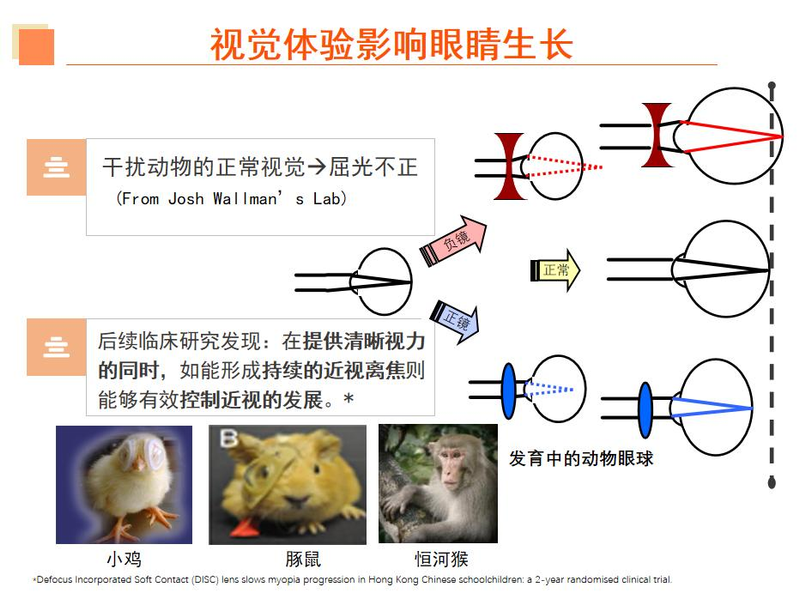
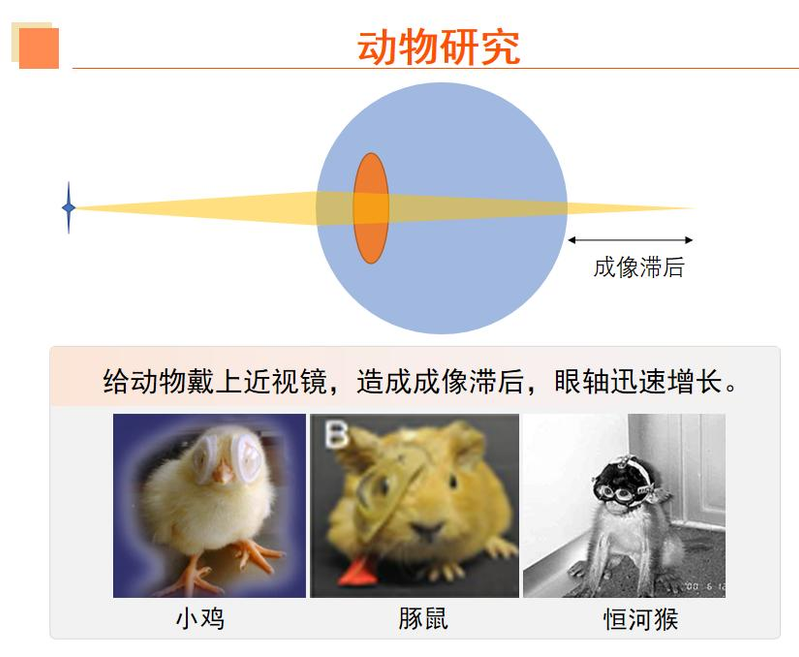
When we interfere with the normal vision of animals, we can put glasses on the little animals to make them look in front or behind. And we found that when we put glasses on a small animal and make it look back forever, its eye axes will grow rapidly, and it will grow hundreds of degrees in a week. When we pass some mirrors, convex mirrors, the eye axes are shrunk, or growth is slow。
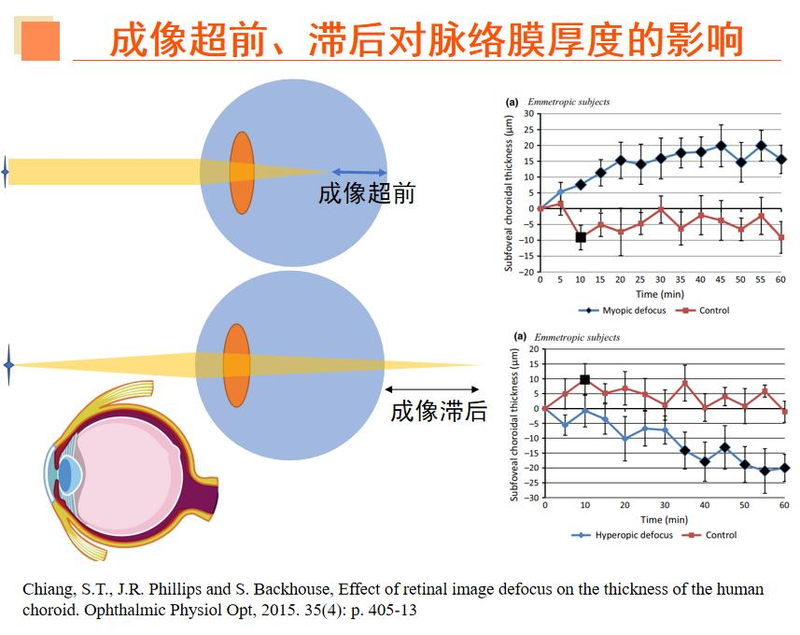
This is a common pattern that we found in a lot of animal experiments. The same is true of people. The study is for 2015. Through some glasses (framework lenses, contact lenses), it also places the imaging in the front and back of the retina, and then allows the subject to continue in this state for approximately 60-80 minutes, measuring the thickness of the pulse. When we were found to be imaging in front of the retina, the thickness of the pulse began to get thicker in about half an hour, and the back was smoother, 60 minutes to a larger position。
When we're imaging behind the retina, the pulse is clearly thinning. It's very much in line with animal experiments and what we're seeing in clinical terms。
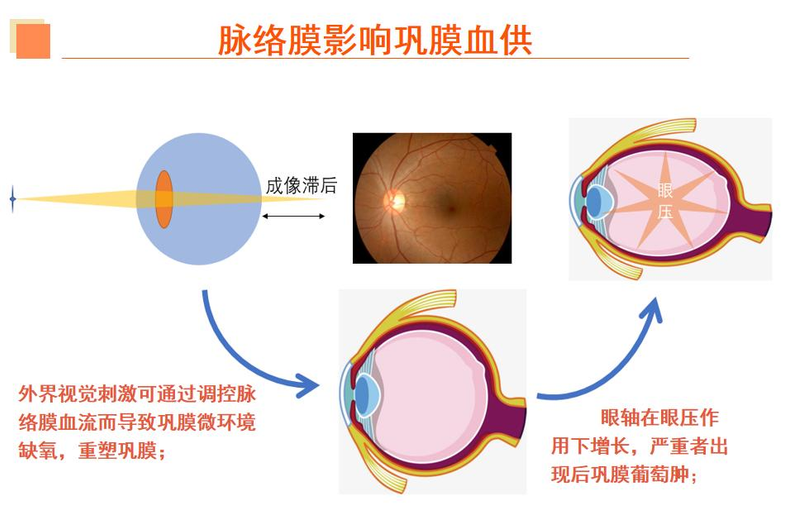
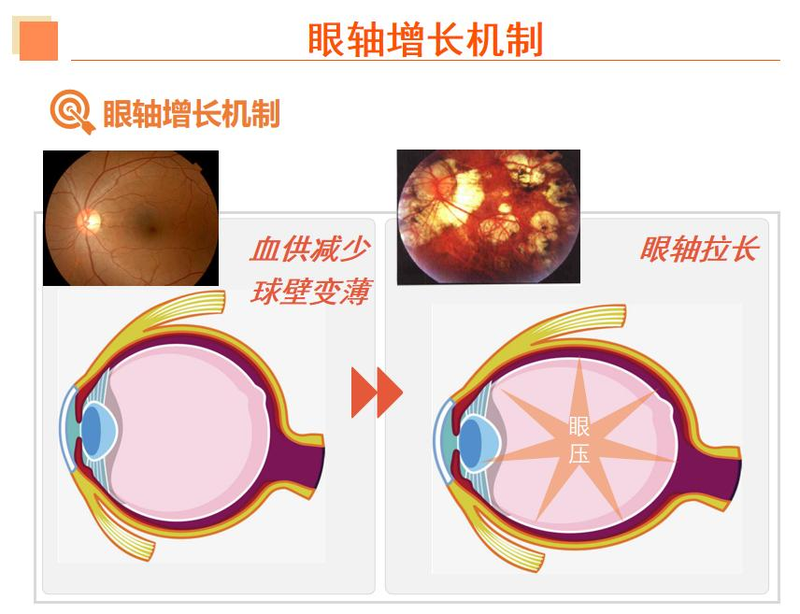
When it's like behind the retina, the pulse becomes thinner, the respiration is short of blood, then the eye pressure increases, and the eye axis grows. That is an essential process of near-sighted development。

After reading today's article, do you have any idea where we're going to get close to our children? Any questions, please leave a message。
I'm zhao xiao knife
I'm an eye doctor
(*the author of this paper, zhao yang, deputy director of optical medicine, beijing peer hospital)



