Detailed components and construction of gas heater products
What are the main parts and structures of the gas heater? Let's find out exactly. The above chart shows the various components of the gas heater, including smoke collectors, shell casings, anti-freeze thermostats (options), dry-burning thermostats, co alarms, heat-heating anti-freeze protections (options), heat exchangers, controllers, burners, sensor needles, ignition needles, distributors, ignition firearms, winders, transformers, temperature sensors, water-mass sensors, etc. In addition, there are components such as water-tips, water discharges, discharge plugs, power plugs, water intakes and gas intakes。
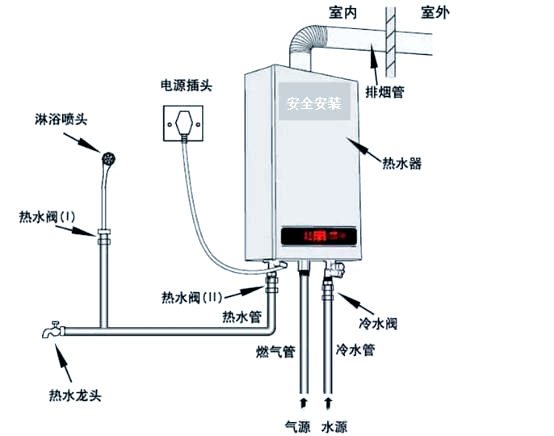
Gas heaters are usually divided into domestic gas rapid water heaters and domestic gas mass water heaters. The main components of domestic gas fast water heaters are “waterways”, “wireways” and “airways”. When installed and used, it is necessary to ensure that water is available, electricity is available, and gas is available. At the same time, attention needs to be paid to the location and connection of the various components to ensure the safe use of water heaters。
On the other hand, domestic gas-capable water heaters consist of components such as inner urchins, exterior drums, thermostats, burners and self-controlled safety devices. The fittings include a pipe, a smokescreen, a cold-water import interface, a temperature/pressure release valve, a pipe, etc. When such water heaters are installed, the location and connection of the various components also need to be carefully checked to ensure their stability and safety。
By understanding the construction and fittings of these gas heaters, we can better understand the rationale for their work and the main features of their installation, thus ensuring safe and effective access to the hot water service during their use。
1. Gas heaters shall be installed in a well-ventilated space and shall not be used in bathrooms or bedrooms。
2. Installation should be easy to operate and repair while ensuring that it is not prone to collisions。
3. Waste gases are generated during their use and must be effectively discharged out of the room through the pipe。
4. The height of the water heater shall be carefully measured at the time of installation in order to operate the panel and the human eye. The water heater shall be placed firmly on a firewall; if conditions do not permit, the water heater and the wall shall be covered with an insulation panel。
5. Water heaters should maintain a level distance of at least 300 mm from gas surfaces and stoves and a net distance from electrical equipment greater than 300 mm to ensure safety。
6. The placement of explosive and other volatile hazardous materials around water heaters is strictly prohibited in order to prevent accidental occurrence。
7. If the water heater is selected for installation in the kitchen closet, consideration should be given to the ease of subsequent dismantling and ensuring that the contents of the closet are fire resistant to high temperature. For use, the door should be kept open or designed in a 100-leaf format to ensure adequate oxygen supply。
8. In order to ensure the steady use of water heaters, the installation of mixed water valves at hot water vents is not recommended when the water supply is too low, given the differences in water pressure from different locations。
Next, we'll also look at the maintenance of gas heaters。
1. In order to ensure the safe use of gas heaters, we need to periodically check the integrity of all pipelines and their interfaces to prevent leaks and leaks. Particular attention is given to rubber hoses that transmit gas, which may leak over time as they create cracks. When checking gas pipelines, soap water should be used instead of open fire, and if leaks are detected, the total gas valves should be shut down and stopped, and professionals contacted to replace damaged pipes。
2. In addition, air access and smoke vents should be regularly cleaned up to ensure that there is no closure to ensure smooth ventilation and discharge of water heaters。
The filters at the water entrance also need to be regularly checked to prevent intrusion of water into water heaters due to congestion。
For the long-term stabilization of water heaters, it is recommended that internal maintenance be undertaken at least once a year。
5. Before the water heater is reactivated after a long period of shutdown, it is essential that a full inspection be conducted to confirm that the components are intact before they can be put into operation。
Information on safe use
Information on safe use
1. In the use of water heaters, it is important to ensure that persons are present at the site and are not absent。
2. In the event of a gas leak, remain calm, and fire or any electrical equipment, such as exhaust fans, is prohibited. The correct approach is to open doors and windows quickly, to allow the gas to excrete naturally, and to call the neighbor's home for professional inspection and maintenance。
3. After each use, make sure that the burner flames are fully extinguished and that the gas valves are closed。
4. It is strictly forbidden to allow water heaters to operate in a malfunction。
5. The use of gas types meeting the requirements of water heaters is strictly prohibited。