Cartoons/gowe
"a 150-dollar spare parts charge $899. It's not fixed." remembering the recent experience of repairing refrigerators, hunan's fury was furious。
In july of this year, ms. Mao found out that the refrigerator was suddenly not cooled. At 9 p. M., she made an appointment for a door maintenance service through a platform. The repair master arrived in half an hour later, after which he called the main plate damaged, and then reported a series of charges: $899 for the main plate, $30 for night services and $30 for testing, totalling $959。
Although it was felt that the “maintenance price was too high”, ms. Fur paid for it, in fear of deterioration of the food in the refrigerator. After the repairs were completed, the master vowed to say, "absolutely fixed, 90 days' bail." the next morning, the fridge had another malfunction. At the same time, the maintenance manager not only changed the reason for the failure of the refrigerator, but also set up a “unrefinable without money” position and began a new round of prices. Following ms. Mao's firm refusal, the parties were divided。
Recent investigations by journalists of the rule of law daily news following indiscriminate charges, transfers of spare parts and fraudulent sales have found that many consumers are caught up in the “maintenance of pit money” during home electricity maintenance。
It's the price
“the first inspection by the maintenance manager said it was `the main plate was damaged', and the second time it was called `the compressor damage', which forced me to question his professionalism.” ms. Mao recalled that after the first repair of the refrigerator had failed again, and she explained to the platform that the platform had sent the same maintenanceist to the door for a completely different reason for the failure. “he said that $500 would be fixed if it was not privately repaired through the platform. So did i change the board yesterday for $899?"
The maintenance staff insisted on “no change without paying” and complained to the platform and went to hell. Finally, ms. Mao had to make an appointment for maintenance only after the official sale of the refrigerator brand, and the upfront expenditure was “dumping”. Even more outraged by her subsequent enquiries, ms. Mao found that the master of repair offered a master plate of $899, which sold only $150 on the internet platform, at a premium of nearly six times。
“this kind of maintenance is nothing less than a fraud.” ms. Mao is blunt。
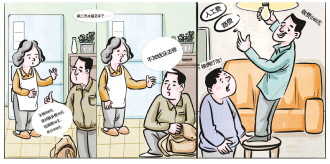
Her experience is not an example. In october this year, a beijing tenant told the industry that there were two light bulbs in the house. Mr. Zhang made an appointment for a maintenance company at a living service platform。
Before the repairs, mr. Zhang communicated clearly with the tenants: if a circuit failure is detected by the maintenance staff, it will have to be processed after its arrival; if the light bulb is damaged only, it can be replaced directly by the maintenance staff. Mr. Zhang predicted that the total cost of replacing the two better-quality common incandescent light bulbs should be around a few dozen dollars. However, the replacement of the light bulb by the maintenance staff resulted in a request to mr. Zhang for a fee of $240, which is well ahead of expectations。
"what's the price for two light bulbs? Why is it so expensive?" in response to mr. Zhang's challenge, the maintenance staff explained that the light bulbs had been replaced as high-end products, that the procurement process had resulted in road and time costs, that the labour costs for installation of the above door had been added and that the two light bulbs had been “reasonable” at a cost of $120 each. Mr. Zhang was surprised to hear that: “the preparation of maintenance materials is part of the maintenance staff. Why transfer this cost to the consumer? On the electrician platform, no more than $30 is the most expensive of the same light bulbs, and can the light bulbs be installed at any price?”
Mr. Zhang asked the maintenance staff for a light bulb purchase voucher and the basis for the labour fee rates, but they were blocked by the other party's statements that “market purchases did not require a certificate” was “never required”. The maintenance staff became emotional, and mr. Zhang feared that the conflict would occur and that, in view of the small amount involved, the costs would eventually be met by compromise。
"it's nothing but a lesson." mr. Zhang concluded that, in the future, home maintenance services would no longer be available until a fee had been established。
In october 2023, the jiangsu province consumer rights and protection commission issued a report on the survey of satisfaction with domestic electricity services in jiangsu province. The results show that nearly 80 per cent of the respondents experienced problems with maintenance costs. Among them, “the fee rate is not transparent and the platform shows a difference between the price and the price actually charged” and “the fee is too expensive and far above the market price”。
Change parts
In interviews, consumers also suggested that even “repaired” household electricity might be problematic。
This summer, ms. Guangdong's air conditioner suddenly stopped cooling, and she contacted the repair master on a platform to handle it. After replacing the spare parts and paying for them, ms. Rowe deliberately retained a comparative photograph of the old and new accessories for reasons of company management. But soon thereafter, the ac failed again. When the former repair master came to the door and checked, it was only vaguely stated that it was “possibly a route problem” and the maintenance offer was out of order。
On balance, the company decided to replace the new air conditioner directly. Subsequently, ms. Rowe took photographs of old and new air conditioners, as required by the company. At the time of the inspection, she had accidentally discovered that the new fittings that had been replaced during the maintenance of the old air conditioners had become “derelict”. When asked by telephone, the teacher told the truth: when he heard that he was going to replace the new air conditioner, he took away the new parts that he had just changed. It is even more distressing that when she asked for the spare parts, she was accused of “a big deal” and rightly said, “everyone did it”. After repeated communication, the teacher reluctantly returned the accessories。
Mr. Xinima's vacuum cleaner maintenance experience was equally distorted. As a result of inappropriate operations, the vacuum cleaners were not properly used, and he selected an evaluation repair shop for consultation online. The shopkeeper preliminarily determined that “probably there was an electrical failure” and made him post a test. When the machine arrived, however, the store suddenly changed its mouth, stating that the damage was serious and that, in addition to the electric power, the batteries and handles had to be replaced。
"how come all of a sudden all these parts have to be replaced when the batteries are good and the machines are able to switch off when they're mailed?" mr. Ma immediately requested that the repairs be terminated and that the machine be returned. When he was determined, the shopkeeper gave in and said, “just change the power”. "it was agreed to be repaired." mr. Ma said that he had taken photographs inside and outside the machine before sending them, “in case he was confused”。
As a matter of fact, after the vacuum cleaners had returned, mr. Ma's machine was removed and the original battery was transferred. “the owner initially argued that i had sent a comparison of the photographs and he had nothing to say, not only sent back the original battery but also paid compensation.” mr. Ma is glad to say, “if there is no evidence, it may not be found”
A survey of journalists found that several consumers reflected similar experiences. As one consumer put it: “some of the maintenance masters pretended to be new and secretly packaged with the old ones, such behaviour has broken the ethical background.”
After the lee ghost sale
It is all the more alarming that many consumers think that they can avoid risk by choosing “official sale”, but they do not expect to hit a carefully disguised “ligu”。
In june 2024, ms. Anhui zhang's parents' refrigerator went on a sudden strike and her father contacted the repair master after searching the brand's “official after-sale telephone” online, temporarily resolving the problem after paying $420 for maintenance. In may this year, however, the refrigerator failed again, and another “official after-sale” teacher contacted by ms. Zhang's mother made an offer of $1,200 when he came to the house for repairs, and then was forced to ask for payment. Ms. Zhang, who was in doubt, called the official customer service of the brand to verify that the parents had communicated twice after a fake sale。
Ms. Ho, who is also in anhui, fell into the trap of “false official”. In march of this year, her television system went out of order, and during a search on the internet, the telephone number on the top of the page led her to believe that it had been sold officially by the city. After the contact, she asked to add a corporate social account to send a failed photo, and ms. Ho specifically asked her to drop her guard when she said, "we're professional brand maintenance."。
When the communication was made, the other party promised “the maintenance fee of $220 and the cost of the materials to be calculated and not refunded”, ms. Ho agreed. However, after only a few minutes of inspection, the master claimed that “television is not worth repairing and requires a multi-screen change of 1,000”, ms. Ho decided not to repair and requested a refund of $220, but was refused. "teacher didn't fix it at all. I can take it, but the maintenance will have to go back." it was only when the refund dispute broke out that she found out that the other party was not an official brand sale and that there was no solution to the problem。
Journalists have found that when the browser searches “a brand after-sale maintenance telephones”, the search results are preceded by advertisements from third-party maintenance companies, and that the use of 400 starting numbers, similar to official formats, is highly confusing. Several consumers have stated that they were deceived by telephone calls after being sold by such “ghosts” until the failure of maintenance and the absence of a door to complain were incidentally linked to a true official customer service。
“i thought it was the official sale, and i didn't think it was the lee ghost. When does the consumer choose to repair his home electricity to stop worrying about being slaughtered? It's not like it's gonna happen. In the interview, one consumer made such an impression。
There's a lot of confusion in the market for household electricity maintenance
Expert recommendations: enhanced qualification, fine-tuning and enforcement
Recent investigations by journalists of the daily journal of the rule of law have found that the market for home electricity maintenance is marred by a number of problems: the absence of a uniform fee rate, the arbitrary pricing of the maintenance manager and the lack of a fee basis; the unauthorized operation of some maintenance staff without informing them of the facts; the replacement of spare parts with new and second-hand practices; and the emergence of a large number of maintenance companies or self-employed individuals on the internet that are posing as official sales, leading to numerous consumer disputes。
Why is the market for household electricity maintenance in high frequency? How can it be effectively regulated? The journalist interviewed the vice-president of the faculty of economic law of the university of political science and law of china, as well as a member of the pool of experts of the daily law journal, chen si, a partner of the law firm da cheng (shanghai) in beijing, and luxiang in beijing and jinan。