[thesis] post-sales services remain a difficult proposition for the industry, especially with capital-driven enterprises focusing more on profit growth than on service quality。

I've been working on it
Undeniably, lo yong-ho will always be a self-confined subject, and as long as there is one thing that has to do with you, one profession or one person, it will certainly become a topical subject, with a focus on the eyes of all. The electricity industry is famous for rhoyongho, and this time rho yongho has led the discussion。
In the absence of the king, while focusing on the issue of “aluminium copper” in the electricity industry, the topic was hotly searched by the social media after the sale of the gold air conditioner。
Is the after-sale service a lucrative business? In the case of rhoyongho, it is true that this is a decrease of nearly a thousand dollars in relation to an air conditioner in the market, and indeed a sharp gain. It should be noted, however, that after-sale services for foreign brands are a special case and not for domestic electric brands。
In the case of after-sale services in domestic electric brands, after-sale services in the country are not expensive, even like the air conditioning industry, for 10 years, that is to say, after free sales. On the other hand, electrical appliances are already very cheap in themselves, with a single p-air conditioner in the mainstream brand approaching a thousand dollars, with 65 inches of colour power less than 3,000 dollars, 500 litres of refrigerators at a minimum of 1,500 dollars, and, for consumers, there is virtually no need for maintenance services if they are purchased or used for more than three to five years, as they are less expensive to buy。
As a result, seven major gold central air-conditioning units encountered by rhoyongho cost approximately 15,000 per year, at least twice as much as the domestic brand of the same product. It is also not unreasonable for rhoyongho to pay for the maintenance of the ac。
The concept of after-sales services in foreign brands differs from that of china, based on the importance it attaches to the acquisition of raw materials at the manufacturing stage, the higher requirements of raw materials and spare parts that are generally selected, and its deep-seated accumulation of manufacturing process techniques, so that confidence in the quality of products is strong that there are few failures in the life cycle of their own products, and therefore less reliance on after-sales services。
In general, foreign brands do not establish a system of after-sales services themselves, but contract dealers or third parties to complete after-sales services. However, after-sales services are priced by branders, and foreign brands are certainly priced by their overseas markets, so it is natural to be higher than domestic ones。
At the same time, products sold in foreign brands are priced free of service fees, which, while guided by brands, are normal one to three times higher than domestic brands. Maintenance services in europe and the united states are even more expensive than the purchase of new products. As can be seen from the fact that rhoyongho is complaining this time。
In the case of domestic e-services, there are four main types of services that are currently concentrated in the market, namely, self-built service teams with brands such as haile, grie, may, and haishin; a system of after-sale service networks established by large retailers such as kyung-dong and suning, which also provide services in the purchase of home electricity by consumers; a third-party, home-to-home service chain for the cities of dao dynasty, luban, man-sensei, woodpecker, and fast-tracking; and a third-party post-sales service, such as blue-to-home, shanghai-based, and guangdong。
The point is that the manufacturer's offer is one thing, and the real maintenance master is the same when it comes to the operation. In the case of haile, guly and america, the system of self-building services for manufacturers is the right track, and they do not rely on services to make money, but rather to ensure commitment to users and address their concerns in order to increase the repurchase rate and brand value of their products。
The third-party service system for home appliances is relatively complex, and well-known ones are more regulated for branding purposes. It is difficult to guarantee the quality of some of the after-sale service shops in society. Those impersonating brand licences that profit from high-priced accessories, minor problems that are described as faults, non-transparent fees, etc., amount to a pot of rat shit。
There is a strange phenomenon of capital-involving brands of household electricity, digging around for growth, and resources to safeguard post-sale services that do not produce direct benefits and growth。
It is not clear to industry that the dominant brands of electricity are now listed companies. They're all working for capital. The result of capital control is the need for growth. Only growth can satisfy the desire for capital to invest in you. This has resulted in the creation of a so-called market value management for listed companies, which has to be protected against growth。
Although the household electricity sector has entered stock development, and size growth has become difficult, capital leaves you alone, as long as you must. In other words, sales cannot grow and profits must be guaranteed. Not going to sell now can only be achieved by increasing profits. Thus, it is not difficult to find that the growth in sales by mainstream listed companies has not been as expected, or even declining, but that profits have been increasing。
So how did the no-gain increase in sales actually come about? The industry is not aware of this, and there has been a decline in the distribution of new products by domestic electric companies for almost a year or two, virtually no branding, no company activities, and no industry fairs. Why not save the money
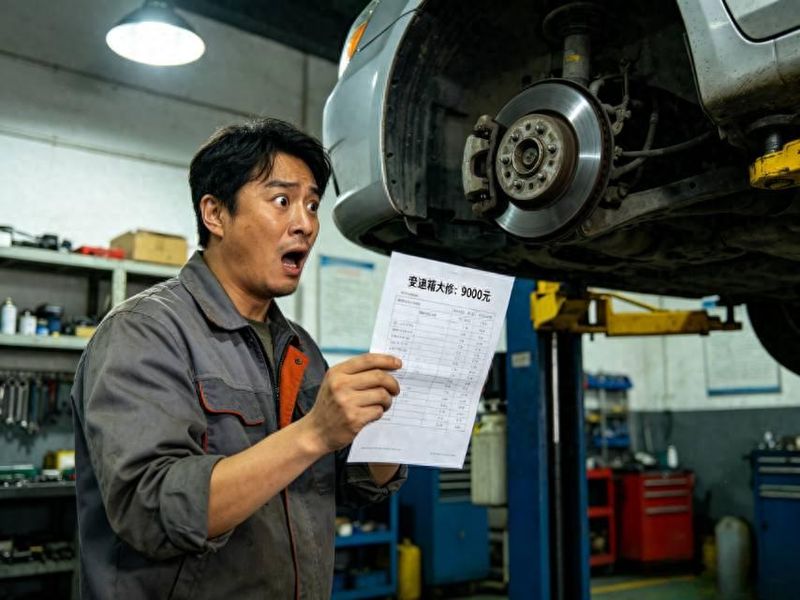
Now, for the sake of cost savings, the producers are not even increasing their r&d costs, and will they invest in after-sales services? It's pretty good not to cut again. I'm counting on it. It's a wall with curtains -- no way! So after-sales services are still a difficult proposition for the industry