On january 27, yang guangcheng (journalist zhang xuelong), li kai zhong, a professor at the faculty of agricultural sciences and technology of jilin, and a master of agronomy, have long been working on the research and teaching of cold rice. In recent years, he has chaired several important topics such as the jilin department of science and technology, “innovation and new varieties of pre-choose rice based on the choice of targeted genomes”, the jilin department of education, “research of green health foods in the long white mountains”, the jilin department of finance, “innovation and numeric crop selection of pre-cooled precious facility in rice”, and the ministry of state for science and technology, “interim trials and demonstration of jico rice 512 and nine rice 69 for high-yielding anti-paddy varieties”. In academic research and breeds, he has developed, as the first adult, such approved varieties as “gico rice 518” and “gico rice 512”, won two prizes for the advancement of science and technology in the province of jilin, and has published a number of specialized papers on the selection of varieties, planting techniques and industrial analysis。
Professor li kai-chun
Target anchors: precise alignment of rice position capacity in the cold
Prof. Li kae-chon is closely focused on the orientation of applied undergraduate skills in schools, integrating substantive skills such as cold-field rice, low-temperature stress management, smart water fertilizer management and light-simplified farming into the curriculum system, in response to the core competencies of the first line of jobs such as “high-yielding cultivation, green pest control, seed production” in the rice industry in jilin and the cold northeast. He stressed the need for students to have the capacity to independently complete the mapping of field management and technical issues during the whole reproductive cycle of cold-water rice before graduating from school, and to avoid moving away from the practical indoctrination of industry and to give practical expression to the orientation of the “grader-in-of-service” application。
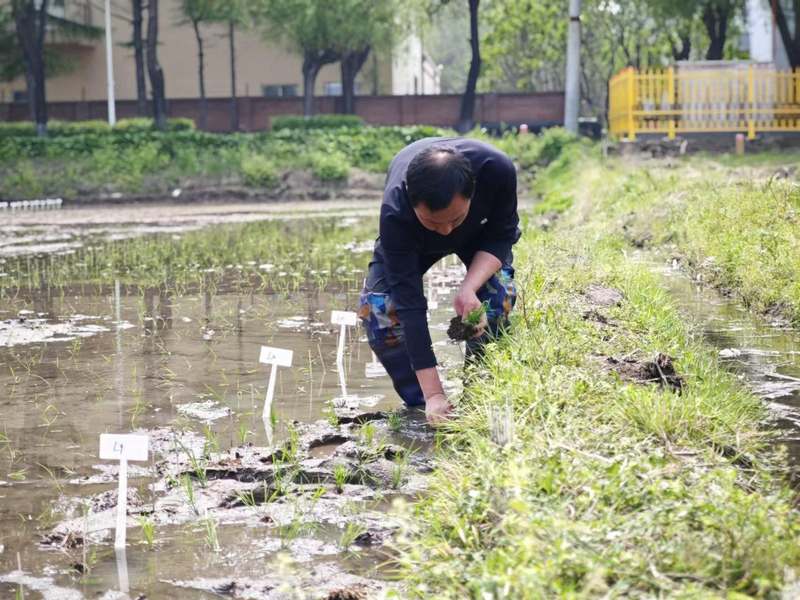
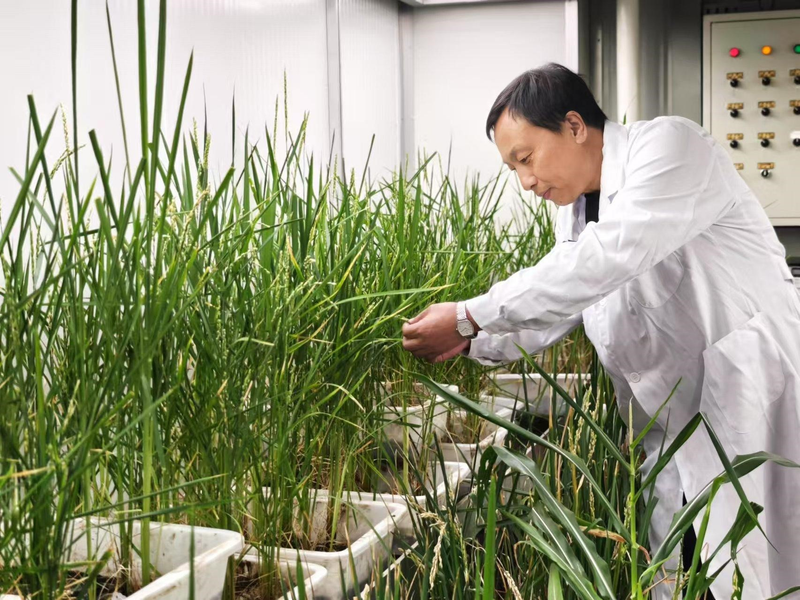
Professor lee kai-chung is planting cold rice
Content restructuring: integration into frontier technologies and home-grown cases
In the design of teaching content, prof. Li has adhered to the principle of “practical adequacy and rigidity” by streamlining and reshaping the physiology of traditional crops, focusing on the actual pains in the production of cold rice, introducing new technologies in sectors such as “rhode rice environment optimization integration techniques”, “digital twin applications for rice processing”. He also organized a manual on practical techniques for the application of cold-water rice to capture local high-yield cultivation cases in jilin and typical green-control scenarios, to promote a seamless interface between teaching content and production and to enhance the applicability and age of the curriculum。
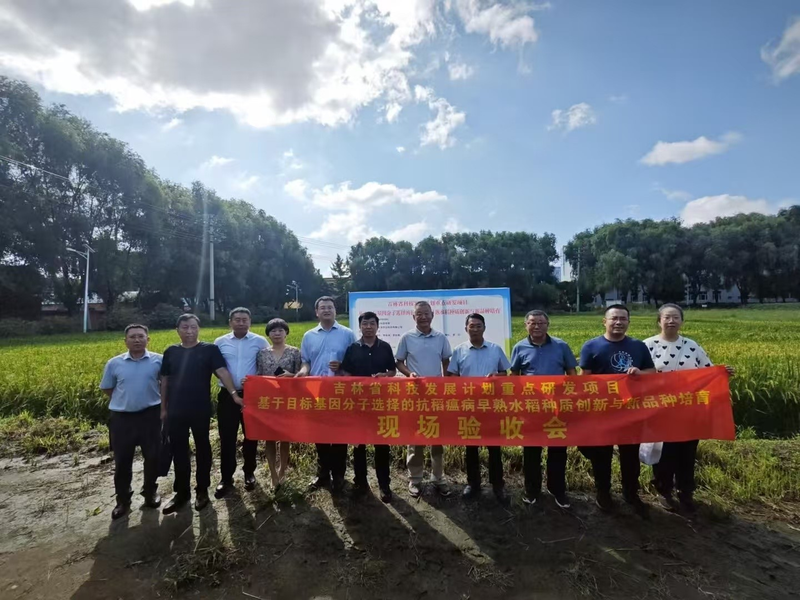
Professor li kai-chung and his team
Innovative approaches: introduction of the “field project-driven” teaching model
In order to fit the teaching needs of the applied undergraduate “doing secondary school”, professor li kai-chon designed and implemented a field project centred on the design and landing of the “strategic rice production programme”. The courses were broken down into four main practical modules for the screening of varieties, seedlings, water fertilizer management, pest control and training, based on practical training bases within the school, leading students to contract pilot fields, and completing data monitoring, programme adjustments and problem solving in real production scenes. The transformation of the teacher's role from one of lecturer to one of field mentors has effectively enhanced the practical skills and integrated application of students。
Practical empowerment: building a parenting platform for the santea + lessons
Prof. Li kaegzhong has been active in the integration of experimental fields in the school, cooperative research fields with local production resources, and in the construction of a three-stage progressive system of practice “one-size-fits-all hands-on training positions — hands-on exercise”. Through the introduction of the “1+x” criteria for professional certification of food production operations in family farms, the examination of points for rice farming skills, and the organization of students to participate in genuine projects such as the validation of varieties, technical promotion, etc., have been effective in enhancing the employability of students and their competitiveness in employment。
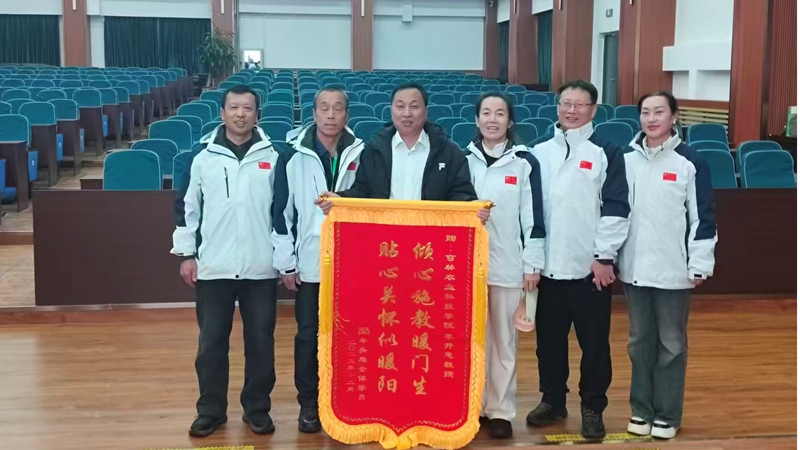
Professor li kai-chung and his team
Evaluation reform: development of a “business-based, multi-dimensional” appraisal system
In terms of evaluation modalities, prof. Li has developed a comprehensive evaluation mechanism that combines process evaluation with terminal evaluation, with 60 per cent of process evaluation, focusing on field operational norms, the usefulness of project reporting and teamwork. The final evaluation, in the form of “on-site hands-on + technical defence”, required students to independently complete management programming and exercises for a critical reproductive period, significantly reducing the weight of purely theoretical writings and reflecting more objectively and comprehensively the compatibility of students' applications with their jobs。
Child-rearing: infiltration of the “seed spirit” and food security watch
In keeping with the educational philosophy of the lyde tree, the farmer and farmer, prof. Li has integrated scientific stories from agricultural scientists, such as yuan long ping, in field teaching, and directed students to develop a sense of the spirit and responsibility of craftsmen, taking into account the industrial needs of “anti-resisting production” of cold rice. In the teaching chain of seed testing, pesticide use and so forth, he emphasized the ethics of good-faith planting, green production, and focused on the development of “technology, agriculture-friendly, bottom line” applied agricultural talent to achieve organic harmonization of skills transfer and value orientation。
Prof. Li kaegzhong, with his deep scientific research and continuous teaching innovations, has demonstrated the practical path of “integration” in applied undergraduate education. As a result of systematic educational reform, he has not only helped enable students to improve their job skills, but has also trained a number of new and productive farmers in the cold-water rice industry。