Chapter i. Section i of the commons of electric cars
Electric vehicles (evs), including pure electric vehicles (bevs) and hybrid vehicles (hevs), are motor-driven, use power batteries (excluding lead-acid batteries) and have external recharge plugs. Fuel cell vehicles (fcev) are also a type of electric vehicle and are also electric driven vehicles。
I. Mixed cars
1. Modular hybrid characteristics
The term hybrid power is derived from greek and originally refers to “two or mixed sources”. It is defined in the automobile industry as vehicles equipped with two driver types (energy types) and two energy collectors. Different vehicle manufacturers usually achieve two driver-type combinations based on internal combustion and power mixes of fuel tanks and batteries as energy sources。
The advantages of combined power are mainly low fuel consumption, which can be supported by all the negative operating ranges of internal combustion engines. In addition, the power characterization curves of the electric and internal combustion engines used can be better supplemented, as the higher twister of the electric engine can best be supplemented by the smaller twister of the internal combustion engine (within the low-turn speed range). The motors and generators were cancelled because the power sets could function as motors and generators. In addition, brake energy recovery systems can have a positive impact on reducing brake wear (to minimize the existing brake wear)。
2. Types by total power distribution
Mixed power vehicles can be divided into four categories based on the deployment of the transmission device: serial hybrid power, combined hybrid power, hybrid hybrid power and interpolated hybrid power。
(1) serial hybrid power. Serial hybrid power is also called an add-on electric system, close to a pure electric system。
Maintenance diagram
Synthetic structures are powered by electric motors that drive only generators and not directly vehicles. Thus, electric motor power in the chain structure is generally greater than engine power in order to meet vehicle requirements. So, in general terms, a serial mix structure, i. E. An electric motor + engine = a cascade。
As shown in figure 1-1, hybrid vehicles using a hybrid hybrid vehicle-driven programme include an electric power plant and an engine. It is characterized by the direct impact of the engine only. Since all components are to be installed sequentially, this structure is called a cascade. An engine-driven generator capable of providing energy for electric drive transmission and storage. Control of electrical energy currents through electrical and electronic devices. The size of generators and electrical storage units is determined on the basis of the battery and charger strategy, range of action and power. Owing to the complexity of the structure of the additional generators, the manual gearbox was eliminated. A very flexible configuration of components in a cascade hybrid power. The greatest drawback for serial hybrid vehicles is the need for two energy conversions, which results in reduced efficiency. Engines and generators must be designed at maximum power. More emissions and more fuel consumption are generated when the internal combustion engine is as efficient as a combined hybrid vehicle。
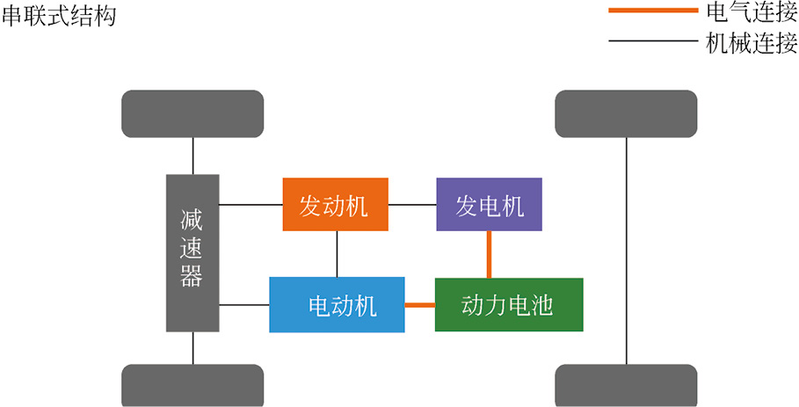
Figure 1-1 blending power structures
(2) combined power。
Maintenance diagram
Combination structural vehicles are driven by motors or electric motors alone or jointly. Convergence structures retain transmissions and, therefore, generically, mix structures, i. E. Ordinary cars + electric motors = combined. As shown in figures 1-2。
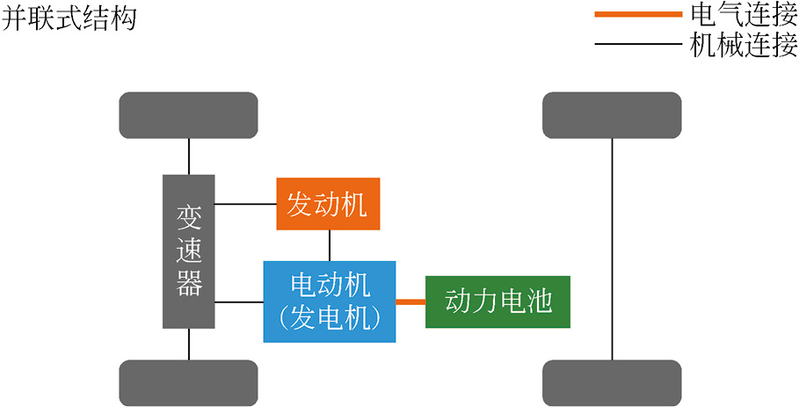
Figure 1-2 combined power structures
The components of combined hybrid power transfer units are shown in figures 1-3. Unlike serial hybrid power, motors and electric generators in combined hybrid power systems are mechanically connected to the driver. Drivers can be used not only separately, but also simultaneously with two power transmission systems. Since the power can be transmitted to the moving system simultaneously, the system is referred to as a hybrid power system. Since the power of the two engines could be superimposed, they could be designed to be smaller and lighter. This would result in greater savings in weight, fuel consumption and co2 emissions. The maximum drive power can be obtained by other means, increasing power through the internal combustion engine when the power is the same, and even reducing fuel consumption. Electric generators can also be used as generators and can therefore be collectively referred to as “electrical motives”. Electricity generation during the slide phase or during brakes, which is stored in high-pressure holding batteries under the control of electrical devices for power supply, while also reducing fuel consumption. Combined hybrid vehicles are cheaper than some hybrids。
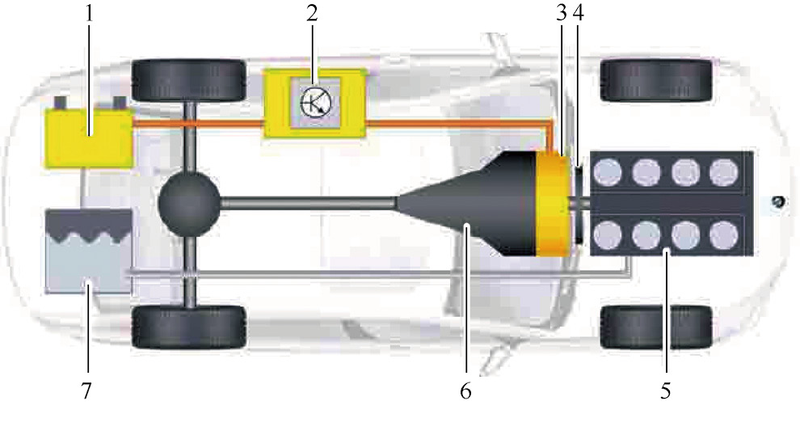
Figure 1-3 components of combined hybrid power transfer units
1-high-voltage batteries; 2-electrical devices for power supply; 3-electricians; 4-compressors; 5-engine; 6-speed containers; 7-fuel tanks
(3) mixed hybrid power。
Maintenance diagram
As shown in figures 1-4, while motors and electric motors work together, engines can also charge generators to batteries, no longer require a dual function as a single electric motor in a combined structure, and theoretically it can achieve a motor-driven generator-driven motor model. Two power units can also drive separate vehicles。
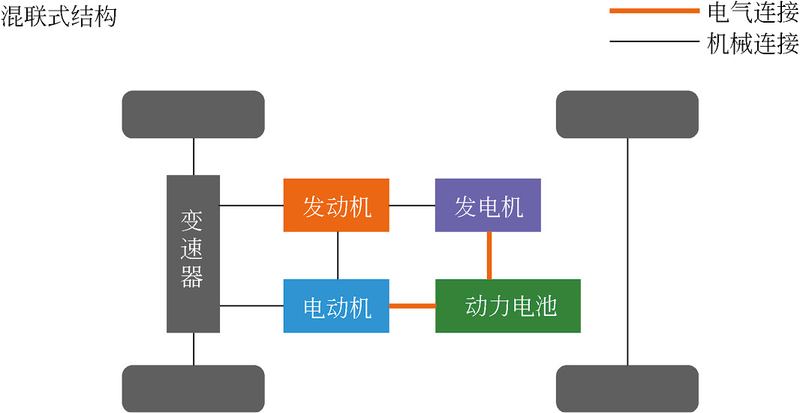
Figure 1-4 mixed structure
The system is also referred to as a hybrid power system of a cascade or power branch because it can be transmitted in a cascade and a combination in such a hybrid power transfer device. As shown in figures 1-5。
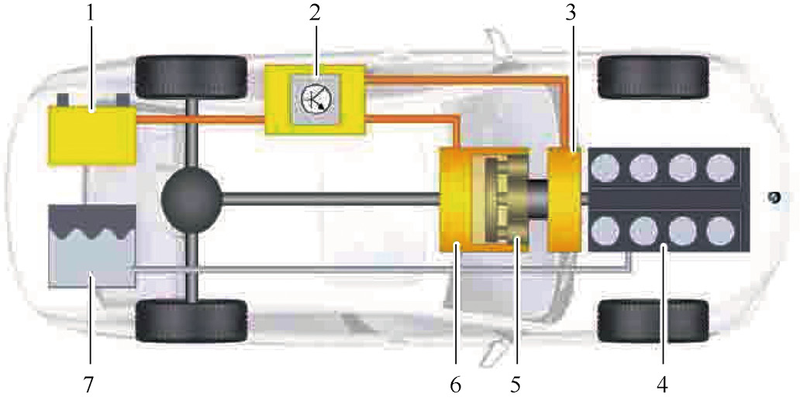
Figure 1-5 components of power branch hybrid power transfer devices
1 - high pressure batteries; 2 - electrical devices for power supply; 3 - generators; 4 - engines; 5 - planetary gear boxes; 6 - electric units; 7 - fuel tanks
Provide the following mode of operation for different driving conditions。
1 generators driven by internal combustion engines to charge high pressure batteries。
2 a generator driven by an internal combustion engine, using the electric power drive that it produces (serial hybrid power)。
3 as in the case of electric generators, engines are mechanically connected to the driving axis. The vehicle is driven by two transmission devices simultaneously (joint hybrid power)。
In this hybrid hybrid power transfer device, only one clutch is required to complete the transition of both modes of operation. A vehicle using a power-link hybrid power transfer device may operate at a certain speed in a pure electric mode. In addition, a good combination of two transmission devices allows the internal combustion engine to remain within its optimal operational range. The disadvantage of power branch hybrid power transfer devices is that they are complex and costly to control. Power branch hybrid power systems are usually used only in a full hybrid power。
(4) plugged hybrid power. Plug-in hybrid vehicles are hybrid vehicles that can be recharged externally and can be recharged with batteries through a live power plug, except that because batteries are not easily removed like electric bicycles, specialized charging stations are available and required。
Maintenance diagram
Plug-in hybrid vehicles have basic functional characteristics of ordinary hybrid vehicles and pure electric vehicles, and are somewhat different from ordinary hybrid vehicles (figures 1-6)。
The batteries of the plug-in hybrid vehicle are relatively large and can be charged directly externally, can be operated in a pure electric mode, and the battery will run in a generator-based hybrid mode when the battery is depleted and charged to the battery in due course。
The battery capacity of an ordinary hybrid vehicle is relatively small, it supplies and recovers energy only at start-up/stop, and it cannot be recharged externally and can not travel at long distances in pure electrical mode。
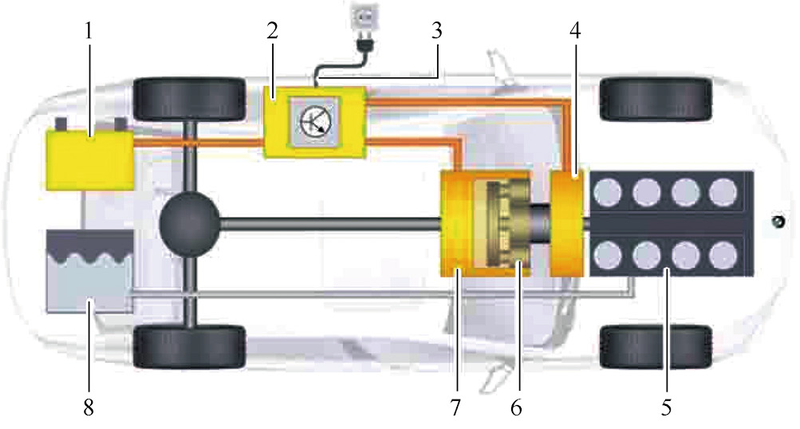
Figure 1-6 plug-in hybrid power systems
1-high-voltage batteries; 2-power electronic devices; 3-power plugs; 4-generators; 5-internal combustion engines; 6-planetary gear boxes; 7-power units; 8-fuel tanks
Ii. Pure electric vehicles
Definitions
Maintenance diagram
Purely electric vehicles are vehicles that are fully powered by chargeable batteries (e. G. Lead-acid batteries, nickel cadmium batteries, nickel hydrogen batteries or lithium ion batteries) and are motor-driven. Its power systems consist mainly of power cells, motors and motors (figures 1-7), which generate electrical power from the grid or from the replacement of batteries。
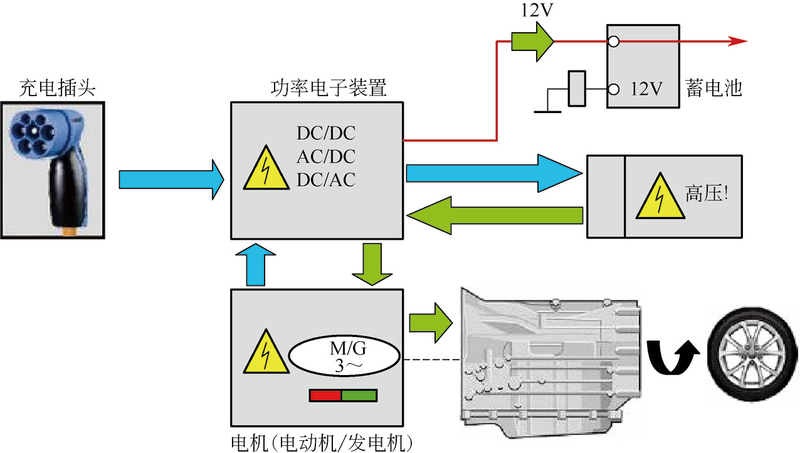
Figure 1-7 pure electric car system
Composition of pure electric automobiles
The structure of pure electric vehicles, compared to that of fuel vehicles, mainly increased the power-driven control system and eliminated the engine. When the vehicle is moving, the power is exported by the holding cell (electric current), operated through the controller-driven electric generator, which is exported by a rectangular transfer system that drives the wheel forward or backward。
Maintenance diagram
The basic structure of pure electric cars is relatively simple (figures 1-8) and consists mainly of power cells and electric motors. Power cells, transformers and motors are electrically connected; mechanically connected between electric motors, brakes and wheels。
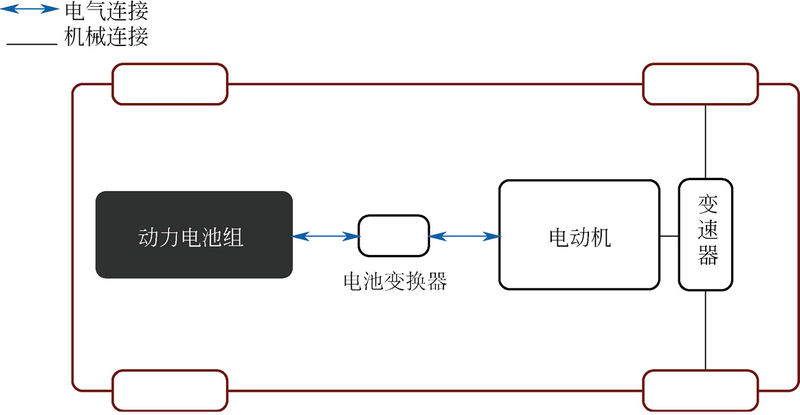
Figure 1-8 purely electric car structure
(1) power system. Power systems include power cells, battery management systems, vehicle chargers and auxiliary power sources. Power cells are power sources for electric cars and are energy storage devices。
(2) a power system. The driver system is the efficient conversion of electrical energy stored in the battery to the motor energy of the wheel, which in turn drives the vehicle, and enables the regenerative brake to occur when the vehicle slows down or descends。
The driver's electrical system consists of the driver's generator, the driver's motor controller and is connected to the other systems of the vehicle through high-pressure wires, cooling pipes and electrical and dispersive heat。
(3) whole vehicle controller. The whole vehicle controller is the control centre for the electrical system. It processes all input signals and sends information on the operational status of the electrical control system to the whole vehicle controller. Corresponding control instructions are given to the electric controllers on the basis of an accelerator and brake signal entered by the driver to initiate, accelerate, decelerate, and control the motors。
(4) auxiliary systems. The auxiliary systems include vehicle-mounted information display systems, power transfer systems, navigation systems, air conditioners, lighting and frost-fixing devices, water scrubbers and radios, etc., which are used to enhance vehicle manipulation and member comfort。
Fuel cell vehicles
Fuel cell vehicles (fcvs) are vehicles powered by electricity generated by vehicle-borne fuel cell devices. Using hydrogen as a fuel, in the fuel cell, it reacts with oxygen in the atmosphere, producing electrical power to drive the motor. Electric motors drive the motor vehicle forward by driving the mechanical moving structure in the vehicle, which in turn drives the mechanical work related to the front or back bridge of the vehicle。
In 2017, at the guangzhou car fair, a fuel cell concept car (figures 1-9) was introduced in modern form, carrying modern fourth generation hydrogen fuel cell technology with a maximum power of 119kw and a maximum twist of 300n m. The fuel cell reactor density of the new vehicle also increased by 30 per cent, with the official announcement that its maximum re-flight mileage could reach 800 km。
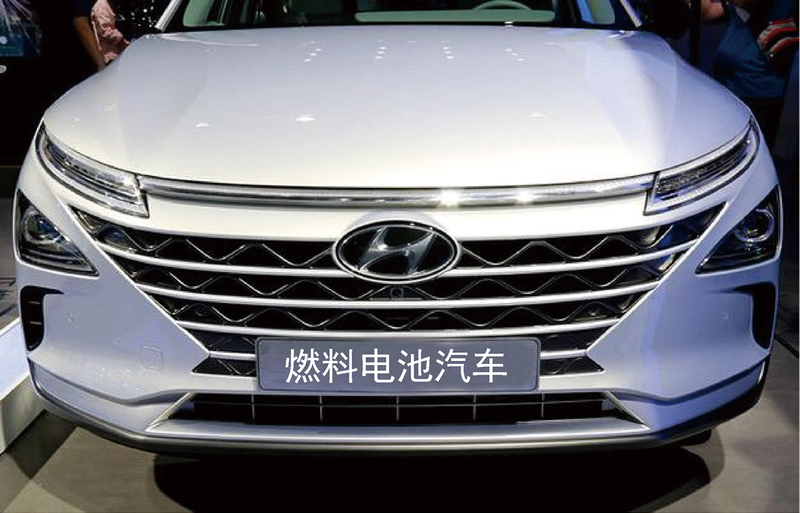
Figure 1-9 fuel cell vehicles
Iv. Solar electric vehicles
Solar electric vehicles are directed to the sun by solar panels, under the control of an automatic sun-tracker, receiving solar light and converting it to electrical power, powering the electric power and driving the electric vehicle。
Biadi f3dm is a mass-produced vehicle equipped with solar cells. The biyadi f3dm vehicle is equipped with solar panels, which absorb solar output at low voltage, which is converted to high voltage and is stored in a storage cell to power the electric power。
Ford introduced a solar vehicle in 2014 (figures 1-10), charging batteries through solar panels at the top of the vehicle, which can only be charged during the day. The particular feature of the solar panels on top of the car is that it is equipped with a core focusr that acts like a magnifying glass to guide the sun to the top。
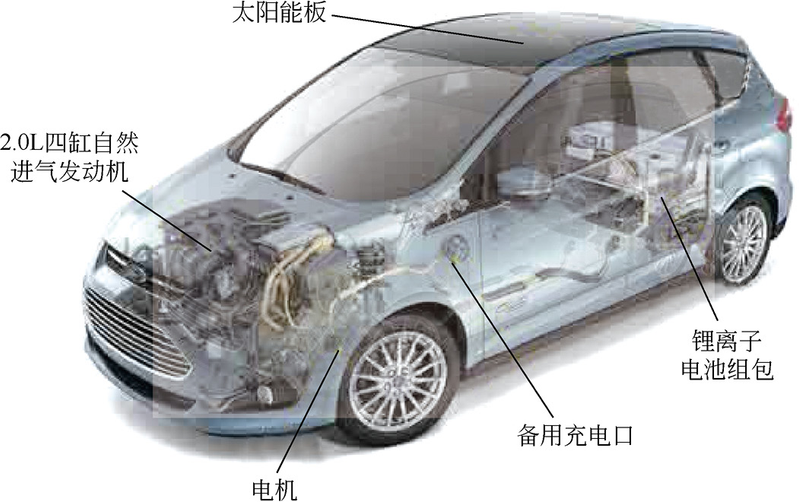
Figure 1-10 ford solar vehicles