The so-called repurchase of national debt is an operation whereby investors lend money through the repurchase market. In essence, repurchase of the national debt is a short-term borrowing, in which the investors who repurchase the money receive interest on the loan and the investors who repurchase the money pay interest (but need to hold sufficient bonds as collateral)。
Both the shanghai stock exchange and the shenzhen stock exchange may repurchase the national debt, as follows:
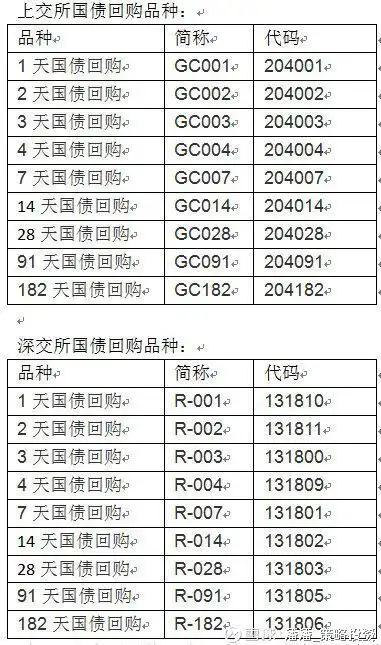
Note: 100,000 yuan for the type of loan returned; 1,000 yuan for the variety of debt paid back。
In 2017, the exchange amended the rules for repurchases of national debt, which were formally implemented on 22 may 2017. The main changes are three points:
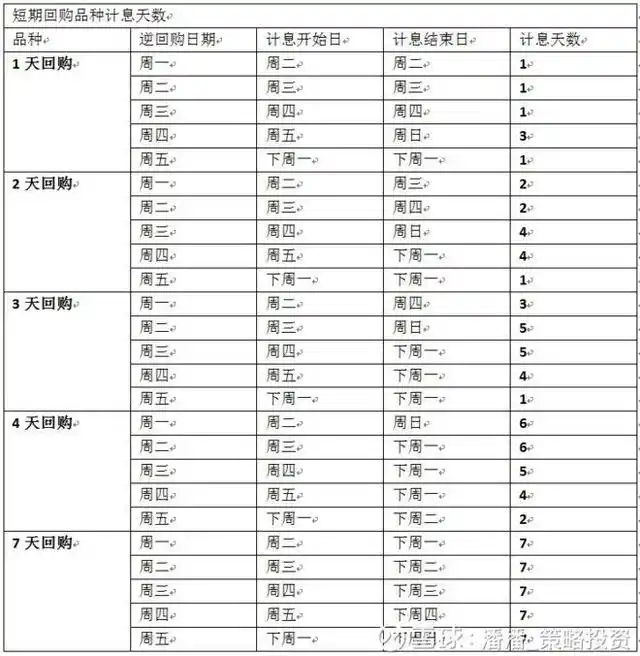
1. Change the number of interest-bearing days throughout the year from 360 to 365 days。
2. Interest-bearing days are changed from nominal days to actual days spent on funds. The number of days actually spent on funds is the number of days from the second transaction on the day of the reverse purchase to the natural day prior to the date when the reverse purchase of funds is desirable. On thursdays, for example, if a one-day repurchase of the national debt takes place, the nominal funds will only take five days, but the funds will not be available until monday, and the actual interest-bearing days will run from friday to sunday, to a total of three days; and on 28 september 2017, to a total of 10 days, if the extended leave is taken, such as the penultimate date before the 11th anniversary of 2017, for a one-day repurchase of the national debt. If, on a normal friday, three days of repurchase of the national debt, the actual interest-bearing days begin next week, and the reverse buy-back funds are available next tuesday, the actual interest-bearing days are only one day。
3. Modifications were made to the calculation of the repurchase price。
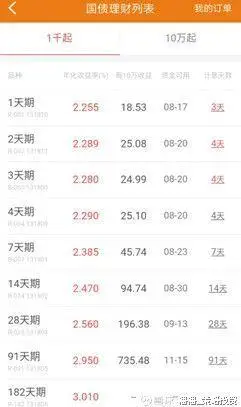
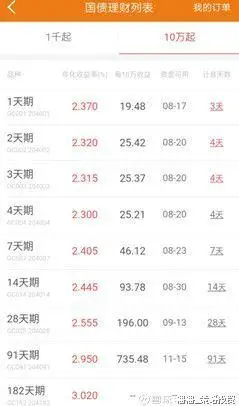
Some issuers have special pages for counter-purchases of their national debt, such as chinese securities. If you do not remember the table above, you can log in to the watanabe securities to see the number of days of interest for a given variety before you repurchase the national debt. The route is: china's securities raise and pay - >commerce - >cif - >see all the treasury's debt management property (the following is an interface at 11:08 p. M. On 15 august 2018, which is thursday)。
There are some advantages to repurchase the national debt, such as:
A simple operation requires the sale in the trading software of a type of repurchase of a national debt and the automatic return of the funds to the securities account with interest on the principal of the funds upon the expiration of the buy-back date。
2. The risk is extremely low, the investors who buy back have some market access conditions and need sufficient bonds as collateral for doing so, and the entire transaction process of the buy-back operation is strictly regulated by the exchange, and the risk of non-receipt of principal interest from the reverse buy-back operation is extremely low in the event of default by the borrower in the event of a small probability situation, supported by a voucher settlement provision account。
3. Liquidity is high, with a daily average of around $700 billion in debt buy-backs for one day in 2018。
4/ less transaction costs, such as one day, two days, three days and four days for the repurchase of the national debt at the rate of one per 100,000, two per 100,000, three per 100,000, and four per 100,000 for the repurchase of seven days. Assuming that the value of the repurchase of the national debt is 3. 65 per day, the real gain from the repurchase of the repurchase of the national debt of $100,000*3. 65/100/3665 = $10, less the fee of $1 would be $9. When the price of repurchases of the national debt is lower, the commissioning fee would divide a portion of the gain from repurchases。
5. Certain points of return are higher (after transaction costs) and generally end of month or end of season。
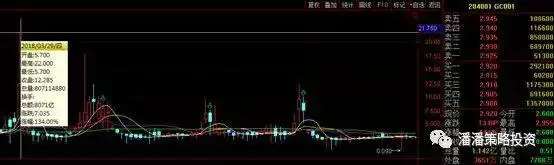
On the one hand, we can derive higher short-term liquidity gains from short-term reverse buy-back varieties, and on some trading days when the annual gain on reverse buy-backs is higher, we can specialize in reverse buy-backs with idle funds, without considering other operations. For example, on 29 march 2018 (on thursday) the value of the repurchase price of the national debt was 22, or 66 per cent per annum (the actual three days spent on funds), equivalent to 1 million principals and approximately $1798. 2 per day. On september 28th, 2017, the price of repurchases of the national debt was 14. 5 (ten days of actual spending) and the annualized rate of return was 145%
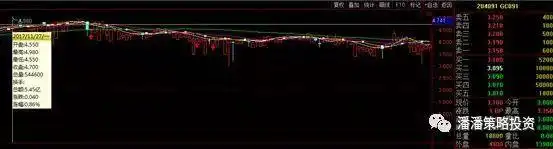
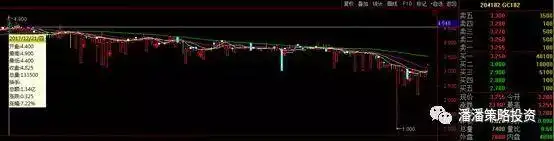
On the other hand, there are times when we can replace short- and medium-term banknotes with short- and medium-term repurchases (e. G. 28-day repurchase of national debt, 91-day repurchase of national debt, or 182-day repurchase of national debt). For example, on 27 november 2017, the 91-day repurchase price of the national debt amounted to 4. 98 per cent, and on 21 december 2017, the repurchase price of the 182-day repurchase price amounted to 4. 9 per cent. If at this point we have some funds that need to be managed in the medium term, we can do direct short- and medium-term reverse buybacks in the trading software, without having to go to banks to buy short- and medium-term property。