I. Nine days off. What's going on out there
The domestic market was suspended from 14 february to 23 february, and the international bulk commodity market was not suspended for nine days, until the first day of the festival, when a number of people were shocked to learn that it was open。
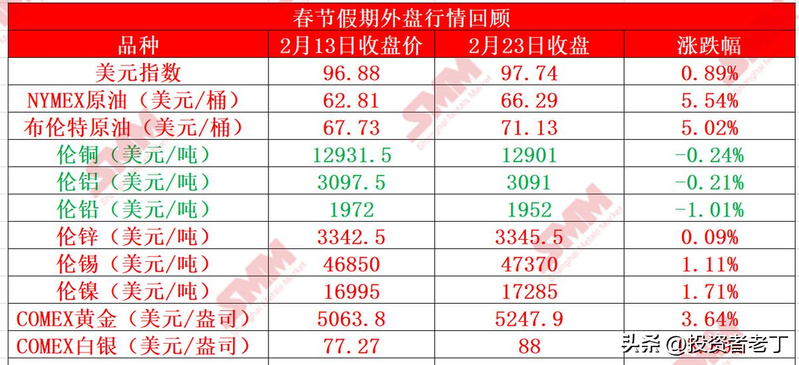
Gold was on the last trading day before the festival, and the gold futures were collected near $1,100/g. The international gold price was just set at $5,000/ounce. At the beginning of the holiday, there was a wave of retrenchment in the market, and cash gold fell to $4841 on 17 february. But then it started a violent rebound. On 20 february, real-time gold in london surged by more than $117 a day, repositioning it at $5,100. By the first day after the festival on 23 february, the spot gold had jumped directly, over $5170 on the plate and had risen by more than 1 per cent in the day. The price difference between the internal and external discs ranged from 45 to 50 yuan/g, and the domestic price of gold went through 1,500 yuan/g。
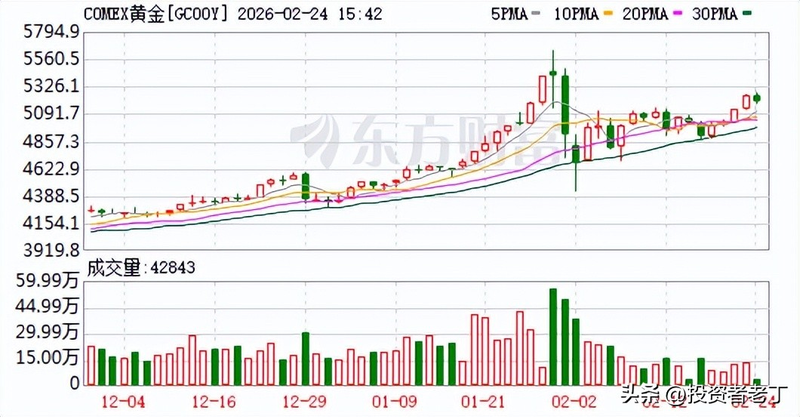
Turning back to the line of gold, the turnover broke $4,000 on 7 october 2025, $4,500 on 22 december, $5,000 on 25 january 2026 and $5,500 on 28 january. From 4,000 to 5,500, it took less than three months, with an increase of $500 in 72 hours and a sharp increase in the market value of the gold market of over $3. 5 trillion. Then, despite a sharp round of reversals, the price at the end of the spring holidays remained stable at over $5,100. Since the beginning of 2026, international gold prices have increased cumulatively by about 20 per cent。
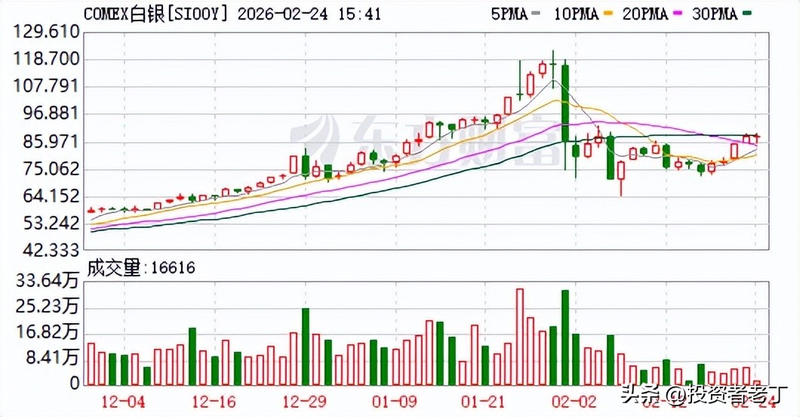
The volatility of silver has increased, with silver crossing $90 per ounce on 14 january and global silver market value surpassing $5 trillion for the first time. This was followed by a one-day collapse of 26. 9 per cent on 30 january, the largest drop in history. However, silver and silver rebounded during the spring festival and the openings rose by 3 per cent and broke by $87 after the festival on 23 february. The platinum and platinum also increased by 5 per cent and 3. 75 per cent, respectively, during the holiday period, and the entire precious metal plate was a first-and-after-step trend。
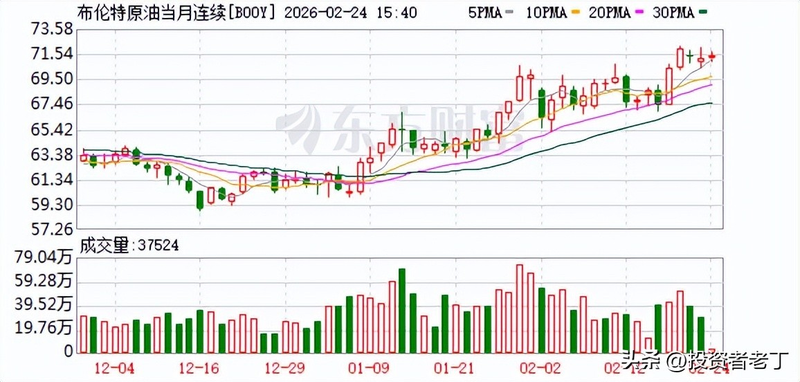
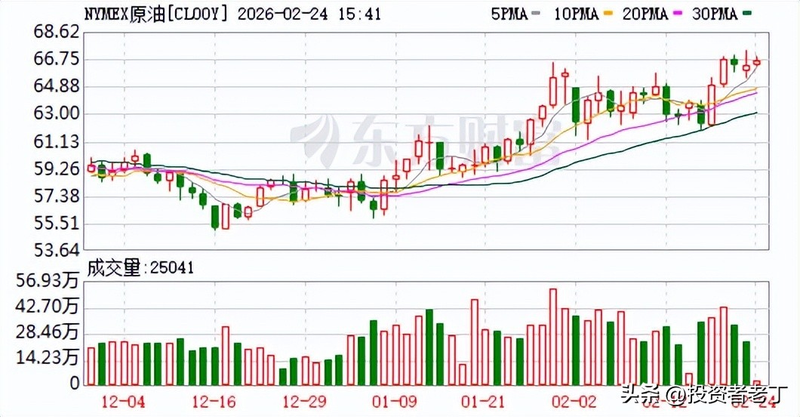
Then we look at the crude oil, before the spring season, where the wti crude oil convulsed between $62 and $65 per barrel and brent operated between $66 and $69. On 29 january, brent stormed to $69. 6, a six-month high. During the holiday period, oil prices were also out of the throttle of their first fall and then rising, influenced by the situation in the united states and iraq. Wti fell in the vicinity of $60 during the leave period, then rebounded under geo-risk catalysts and then the offer returned to above $64. Prior to the comparison, oil prices as a whole remained in a dominant position。
In other words, nine days of spring, precious metals and crude oil have moved out of a pattern of adjustment and pull-up, and then the domestic market faces a gap that needs to be filled。
Ii. Why precious metals and crude oil rise
While precious metals and crude oil fall into different commodity groups, there are some common driving forces behind this round, as well as separate logic。
Their common driving force is the continuing escalation of geopolitical risks. The biggest variable during spring is american-iranian relations。
Trump has publicly stated that he is considering a limited military strike against iran, that two united states fleets are deployed within the iranian strike, and that tensions have increased in the strait of hormuz, which transports approximately 20 million barrels of crude oil per day, accounting for 31 per cent of the global flow of crude oil by sea, and that the global energy supply chain is directly paralysed in the event of an incident。
The russian/russian side has not stopped, and russia has accused ukraine of attempting to attack putin's residence, and there has been no substantial progress in the us-russia tripartite talks. Together with the precarious situation in venezuela, which has been accompanied by multiple geographic hotlines, venture capital flows into gold and crude oil, pushing up both prices。
Besides the logic of precious metals themselves, the core is mistrust of the united states dollar。
Gold rose from $4,000 to more than $5,000, not because of short-term speculation, but because it was a long-term narrative that was becoming clearer, or because global confidence in the dollar's credit system was now shaking. The united states dollar index fell sharply from 109 to 97 in 2025, falling by nearly 11 per cent, the worst annual performance since 2003, and the united states fiscal deficit continued to widen, with public debt exceeding $36 trillion, with interest spending already exceeding military spending. At the same time, the fed's independence was beginning to be threatened by political intervention, and the market was concerned that monetary policy was becoming less predictable。
Against this background, central banks around the globe are almost all accelerating their purchases. The central bank of china has increased its gold reserves for 14 months in a row, and world gold association data show that global central bank net purchases exceeded 1,000 tons in 2025 for the third consecutive year. Central banks are motivated to buy gold in order to reduce their dependence on the dollar and find safer anchors for their own reserves. When the central bank of a country continuously buys an asset, the signal is very strong。
The rise in silver is underpinned by the overlapping of industrial demand. The consumption of silver by the photovoltaic industry has continued to grow, global consumption of light-voltage silver and silver was much higher in 2025, and gold price increases have driven the valuation of precious metals because of the dual properties of precious metals and industrial metals。
In the case of crude oil, in addition to the geohazard premium, there are two short-term factors driving prices。
One is winter storm. In january 2026, the united states experienced a wide range of extreme weather conditions, with severe disruptions in crude oil production, with a peak of approximately 2 million barrels of production being cut off each day, and sudden contractions at the supply end directly pushing up spot prices。
The second is the addition of sanctions. The united states treasury imposed sanctions on the iranian shadow fleet, while trump announced an additional 25 per cent tariff on countries trading with iran, directly threatening iran's crude oil exports, which, as the fourth largest oil producer of opec, were to export more than 1 million barrels a day. If this supply is cut off, the balance of the global crude oil market will be broken。
The combination of geopolitical warming, the weakening of dollar credit and short-term supply shocks together constitutes the driving logic behind the upward trend in the price of this round of precious metals and crude oil。
Iii. Implications for the general
The rise in commodity prices sounds like a financial market matter, but it's more direct than many people think。
The most visible is the price of gold, which has already exceeded 1,500 yuan/g in domestic gold. Some high-end brands have been converted to over $2,000. Over the past year, the price of gold has increased by approximately $400/g. If you're going to buy wedding rings, gold bracelets and life money, it's almost 40% higher than a year ago. The business of the gold shop during the spring season was still booming, but the consumer's choice was clearly shifting to small grams of heavy jewellery and investment gold bars, and sales of large pieces of gold were declining. Gold consumption is shifting from decoration properties to investment properties。
This is certainly good news for those who already hold gold, and there is a lot of money on the books. But the volatility of gold prices is equally alarming. Within three days, from 28 january to 30 january, gold prices fell sharply from $5,500 to below 4800, with a 26. 9 per cent drop in single-day silver prices and a high risk of short-term recovery. If you hold in-kind gold or long-term configuration gold funds, the long-term logic of gold prices remains unchanged. But if you want to make a profit in this position, you have to see if you can afford to lose more than 10% a day。
The impact of crude oil prices would be wider, as it was the basis for all costs。
China is the world's largest importer of crude oil, importing more than 10 million barrels per day in 2025, with an external dependency of more than 70 per cent. For every $10/bunk increase in oil prices, china's crude oil import cost is about $35 billion more a year, which will eventually pass through the industrial chain layer to end consumers。
The most direct route is the price of finished oil. The domestic oil price-fixing mechanism for finished products is linked to international oil prices, which will be adjusted for petrol 92 and petrol 95. While oil prices have recently been relatively moderate and have not been significantly higher than the cost of refuelling, a clear upward pressure on domestic oil prices could be felt directly by those driving if the further escalation of the american-iranian conflict leads to oil prices exceeding $75 or even $80。
Indirectly channel deeper. Crude oil is the source of the chemical industry, and the prices of plastics, fibres, rubber and fertilizers are related to oil prices. Higher oil prices mean higher production costs such as fertilizers, membranes and diesel fuel in agriculture, higher transport costs for logistics and higher costs for industrial manufacturing such as raw materials. These cost increases will eventually be passed on to consumers in the form of higher commodity prices, pushing up overall inflation levels。
The current price of crude oil, which is close to $65, remains relatively manageable compared to the extremes of $120 at the time of the 2022 russian-uu conflict. Unless a full-blown conflict in the middle east leads to a break-out in the strait of hormuz, oil prices are not likely to be out of control, and opec+ still has a large spare capacity, and if oil prices soar too fast, there is a high probability of increasing production。
Gold rose to more than $5,000, crude oil shrunk repeatedly in geohazard risk, and nine days of springtime condensed the core paradox of 2026 in global capital markets, namely that the old order was already loosed, but that new anchorages had not been found, making physical assets the most honest haven in the transition period。