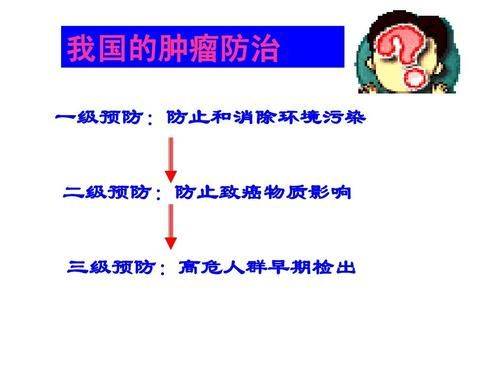
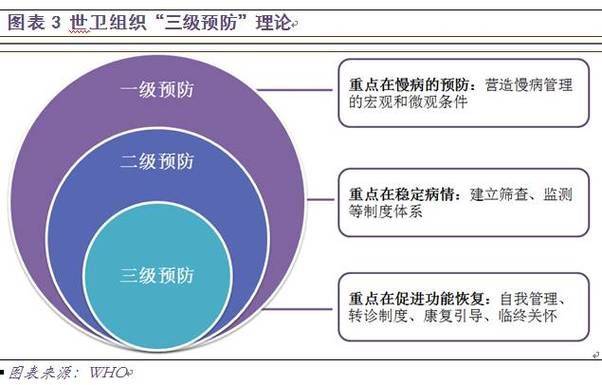
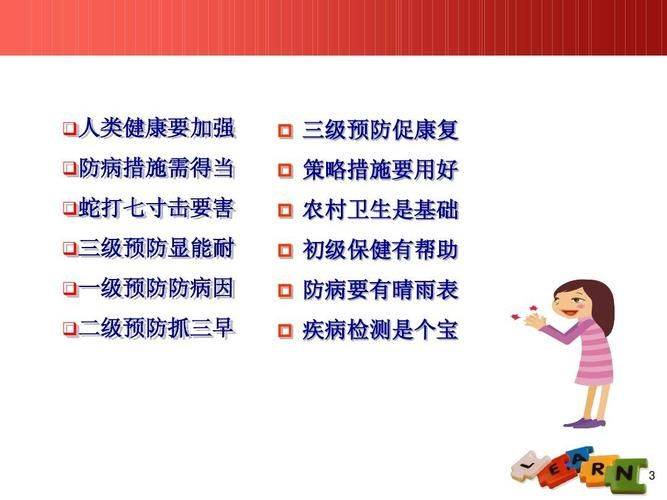
Primary prevention, secondary prevention and tertiary prevention are three important levels of disease prevention. The first level of prevention focuses primarily on measures for the causes of the disease, including health promotion and health protection; the second level emphasizes early detection, early diagnosis and early treatment; and the third level focuses on the rehabilitation of patients with illnesses, preventing deterioration and complications。
First level of prevention:
Health promotion: health education, health literacy, health awareness and self-health capacity. For example, there are health lectures on the importance of healthy lifestyles such as a proper diet, a proper level of exercise and a stop to alcohol。
Health protection: specific measures to protect the population from the causes of disease. Examples include improving environmental health, providing safe drinking water and food, improving occupational protection and reducing the damage to workers caused by occupational hazards。
Immunization: immunization against certain infectious diseases and prevention of their occurrence through vaccination. Examples include vaccination against hepatitis b and against influenza。
Chemical prevention: prevention of diseases using substances such as drugs, nutrients and biological agents. Examples include supplementing folic acid to prevent neural malformations and using aspirin to prevent cardiovascular disease。
(b) good lifestyle: to keep regular hours, to ensure adequate sleep, to avoid staying up late and overworking. (c) rationally arrange diets, balanced intake of various nutrients and reduced intake of high calorie, fat and sugar foods。
Secondary prevention:
Periodic medical examinations: periodic and comprehensive physical examinations allow for the timely detection of potential diseases. For example, the elderly and middle-aged are regularly screened for blood pressure, blood sugar, blood resin and tumor markers。
Disease screening: targeted screening for specific groups. For example, women undergo mammograms, cervical smears to detect breast and cervical cancer at an early stage; men perform prostate antigen tests to screen for prostate cancer。
Self-censorship: teaching people how to perform self-censorship in order to detect physical anomalies in a timely manner. For example, women perform breast self-examination, observe breast appearance, touch or not, etc。
Timely diagnosis: once an abnormal condition has been detected in the body, medical treatment, detailed examination and diagnosis should be carried out in a timely manner. The doctor makes an accurate diagnosis based on the patient's symptoms, signs and findings。
Early treatment: treatment should begin as soon as possible after diagnosis of the disease in order to improve treatment and reduce the risk of disease. For example, early lung cancer patients are treated through surgery, with a high survival rate over five years。
3. Three levels of prevention:
Rehabilitation treatment: includes physical therapy, physical therapy, occupational therapy, etc., to help patients recover their physical function. In the case of fractured patients, rehabilitation training is provided after the operation to facilitate the recovery of physical function。
Psychological support: psychosocial problems such as anxiety, depression, etc. Are often experienced by patients with illnesses, and psychological support and counselling are important. Psychological counselling, psychotherapy, etc., can help patients to adjust their mentalities and actively face the disease。
(b) prevention of complications: closely monitor changes in patients ' condition and take measures to prevent complications. In the case of diabetes patients, there is strict control of blood sugar and prevention of complications such as diabetes kidney disease and diabetes。
Patrony treatment: patients with incurable illnesses are provided with palliative care to alleviate their symptoms and improve their quality of life. For example, late-stage cancer patients are treated with palliative care to alleviate pain and sleep。
Regular follow-up: regular follow-up visits are made to check on the patient's recovery and the changes in his/her condition and to adjust treatment programmes in a timely manner. In the case of high blood pressure patients, regular follow-up and the dose of pressure relief drugs is adjusted to the control of blood pressure。
Primary, secondary and tertiary prevention together constitute the complete system of disease prevention. First-level prevention is the most active and effective preventive measure aimed at preventing the occurrence of diseases at their source; second-level prevention enables the early detection of diseases, provides timely treatment and reduces their harm; and third-level prevention focuses on the rehabilitation of diseases and the prevention of complications and improves the quality of life of patients. In practice, the three preventive measures should be applied in a comprehensive manner, taking into account the characteristics of the different diseases and the needs of the population, in order to achieve optimal prevention。