Fca trade terms detailed: delivery carrier complete analysis
The fca (free carrier) is one of the most common trade terms in the incoterms-2020, and applies to maritime, air, land and multimodal transport. This paper will provide a detailed analysis of the core elements of the division of responsibility between buyers and sellers under the fca terminology, the timing of the transfer of risk, the absorption of costs, and the distinction between fca and fob。
1. Principal obligations of the seller points
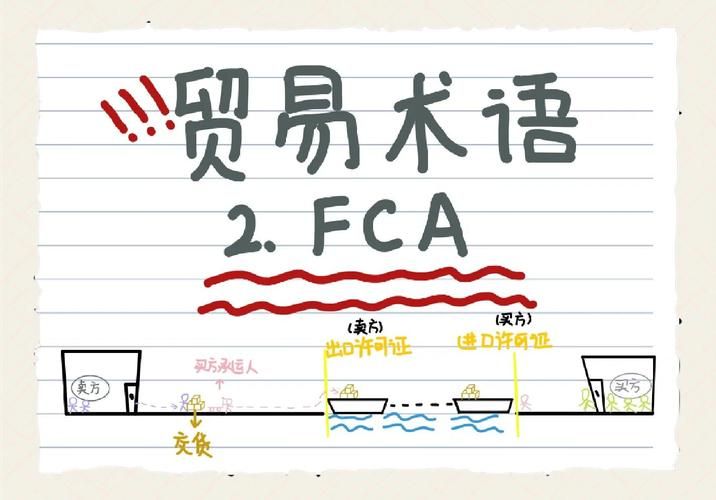
According to incoterms 2020, the risk is transferred from the seller to the buyer when the goods are delivered to the carrier at the agreed place. This point is one of the most important features of the fca terminology。
Ii. Typical application scenario for fca terms iii. Detailed comparison of fca and fob terms
Applicable modes of transport
All modes of transport (maritime, air, land and multimodal)
For sea or inland transport only
Risk transfer points
When the goods are delivered to the first carrier
Crossing of shipboard (or loading on board)
Responsibility for loading
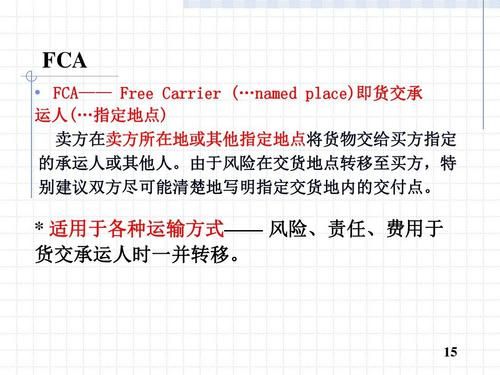
Seller responsible for delivery of goods to designated locations people
The seller was responsible for loading the ship and bearing the related costs
Applicability of container transport
It's the preferred term for container transport
Traditional bulk transport is more appropriate
Practical recommendation: in modern container transport, fca is more advantageous than fob, especially when the goods are delivered to the carrier prior to loading the ship (e. G. At the container yard)。
V. Case studies on the practical application of fca terms
Background: china exporter company a entered into an fca trade contract with german importer company b, which agreed to deliver the goods at shenzhen salta port。
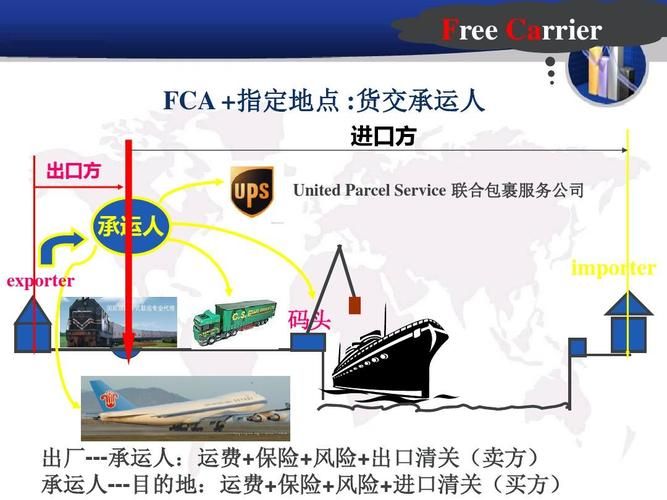
Delivery phase: company a delivers the goods to the salta port freight station and gives them to the international freight forwarder designated by company b for risk transfer: once the freight forwarder signs the goods, the risk of transport shifts to the subsequent liability of company b: company b is responsible for arranging the distribution of costs for maritime transport, insurance and customs clearance of german imports: company a covers all costs incurred prior to delivery, and company b covers all transport and related costs from the port of saltfield to germany
Important update on incoterms 2020
An important revision of the fca term in the latest version of incoterms 2020 is that when a negotiable bill of lading is used for maritime transport, the seller and buyer may agree that the buyer instructs its carrier to issue to the seller a bill of lading that has been loaded. This change addressed the difficulty for sellers under traditional fca terms to obtain bills of lading already loaded on board ships。
Q1: what difference does fca and exw make
A: the main difference is in the duty to clear exports: the seller under the fca is required to clear exports, while the buyer is responsible under exw。
Q2: is the fca term suitable for cross-border electricians
A: suitable. The fca is the ideal option, especially through international couriers (e. G. Dhl, ups). The seller delivered the goods to the courier company upon delivery。
Q3: how can delivery disputes under fca terms be avoided
A: recommendation: 1) specify the gps coordinates of the place of delivery in the contract; 2) require the carrier to issue a time stamped receipt certificate; and 3) video recording of the delivery process。
Glossary of international trade terms
Knowledge of foreign traders