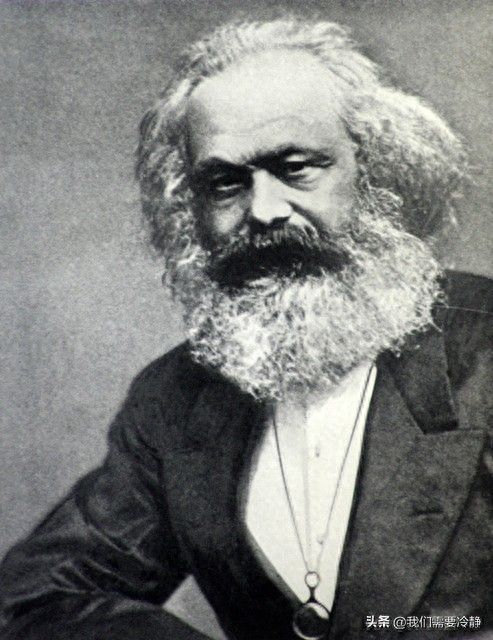
Lukach described the attitude towards marx as a touchstone for intellectuals。
Sartre asserted that marxism is the backbone of contemporary culture。
Derida put it bluntly: without marx's legacy, mankind has no future。
Countless thinkers countercopy the same fact: over two centuries, the appeal of marx philosophy has never faded。
Professor wu xiaoming of the university of jordan wrote "marx philosophy and the contemporary world - my philosophy explore " , a complete record of his decades-old drilling path, a layer of misreading, and an answer to a central question: why is marx still the long nightlight that shines on modern-day dilemmas, after a wave of empiricalism, cynicism and modern existentialism
I. Early years of error: the second international community reduced marx to empirical science
The majority of the people were exposed to the marx philosophy's first error zone, which wu xiao was also trapped in the morning。
He first studied marx, the second international theoretical framework set up by tomelin and plehanov, and learned marxism as a purely intellectual theory and an intellectual science。
In this reading system, the economic decision theory is the core base: merlyn directly equates marxism with mechanical materialism, dividing it between two areas of history / nature; and plehanov argues, for example, that marxism's philosophy is the exclusive heritage of felba, and even attempts to use mathematical formulas, empirical science, to project all historical patterns。
The deeper the tillage, the thicker the confusion:
If marx is simply applying mechanical materialism to the realm of history, what is the difference between him and an empirical scholar? If productivity, geography, and so on, could simply lead to the entire human history, where should the human practice and the creativity of history be placed
Wu suddenly found that the popular reading contained a fatal flaw -- a theory of restatement. It divides the living and holistic history of humankind into the objective elements of coldness, and it obscures the very foundation of marx philosophy: the theory of existence。
The simple spelling of felba's “sensorship” and hegel's dialectic does not make a real marx; this extra reading, which dwarfs and distorts marx's ideological revolution from its roots。
Ii. The light brought by lukach is still not out of school. Cage
When confused, history and class consciousness opened a new window of thought for u. S. S。
Lucachi broke the second international “economic decision theory” monopoly, reintroducing hegel's “activity” principle of “generality”, putting back human historical practice to the centre of interpretation and tearing to the thick fog of empirical interpretation。
After reading in depth, the limitations are clear: lucachi has never really crossed the hegel border。
The hegel philosophy itself is a closed school system, and all lukach's statements about criticism, alienation and generality have been bound by this framework. This led to two extremely divisive interpretations: on the one hand, the utopian abstraction of lukachi, and on the other hand, the empirical science of the second international ice-cold machine, which seemed to be in opposition to each other, and on the other, all tearing down the whole “practice” concept of marx, both falling in the traditional form and two-dollar rivals。
Even in lucachi's late year, devoted to the introspection of social existence, it was simply the passivation and degradation of the very penetrating mind of the early years, which failed to reach the boundaries of marx's idea of going beyond all forms to school。
So, professor wu has set the course for life: in addition to all the additional explanations in the world to come back to the original marx text, the term “practical” is deeply ingrained in its real existence。

The original is the source: reading “practice” before reading the fundamental revolution of marx
Prof. U xiaoming has focused all his attention on the " deutsche ideology " , the outline on felbaa, and has torn the text away from the german original in detail。
The core vocabulary in the text, gogenständlich, is translated in the early years as a uniform “objective”, and the new edition of the man's digest has been amended to be object-oriented, with a difference of one word between two completely different philosophical perspectives:
Marx's complete definition of practice: sensitive, object-oriented activities。
In the classical german philosophy, “emotional” is a purely passive acceptance, and “activity” a purely spontaneous mind, which is naturally fragmented and seemingly contradictory. And max made a landmark link:
Human beings have never been bystanders of the world. Our productive work, social interaction and daily life are all sensory practices; while transforming the world to which they belong, they are also constantly shaping themselves, and the entire history of humankind is born in the object of intergenerational practice。
This is where max transcends the critical divide between ferbaha and hegel:
Iv. The true contemporary nature of marx: standing on the other side of the whole world and going to school
Many people have a simple definition: marx philosophy = felbahian materialism + hegel dialectic。
Prof. Wu xiaoming put it bluntly, it was the most lazy and superficial error。
Marx is not a classical philosopher between kandeh and hegel, known as “after hegel”, not just in time order, but a complete leap of the ideological hierarchy: marx has completed the transcendence of the whole of the platoic tradition。
The bottom logic of thousands of years of schooling is that, outside the real world, it presupposes a set of eternal, abstract, pure ideas / objective patterns to explain everything
And max's practice of pulling the roots back to the historical reality: there is no abstract truth, abstract history, and the world and truth are constantly being generated and opened up in the objectism of generations。
This transcends the irreplaceable contemporary value of max:
To this day, shape thinking, modern logic still dominates modern society -- isolation of individual atomized individuals, the proliferation of tools, labour alienation, fragmentation survival -- all of these are the dilemmas of the era that gave rise to these ideas. And marx has long given a fundamental way out of the dilemma: based on sensory practice, seeing all abstract ideologies as false。
In order to fully exploit the value of the time, marx cannot be read in isolation and in isolation, and it is necessary to engage in a deep critical dialogue with the leading contemporary existential thinkers:
With heidegger, the idea of the existence of the “present face” with nietzsche to explore the human path after the “super-sensual world collapse”; in a two-way dialogue, to wash away the hundreds of years of supercomprehensible readings and re-emerge marxburn’s real intellectual power。
V. The light of the long night, the hope of the end
Now it's easy to simplify max into a theory of response, an empty slogan, or a dichotomy school label, while ignoring its original power to face modern trauma。
Professor wu xiaoming's decades-old philosophical quest tells us:
Marx's enduring “attractiveness” is never the text of a book, but it is rooted in the times of each of us, and it is the way of thinking that leads us out of the fog of shape and into the real world。
There's light in the mind。
It leads mankind to explore never again。
In the long night of modernity, which is still full of confusion, marx is a beacon of thought that deserves our constant re-reading and continuous recourse。

Did you have a simple understanding of objectistic history as "economic decision-making"? What's the difference? How do you understand what marx says: “practice is a sensory object”? Welcome to your reflection on what life and work anxiety you think max's theory of practice can answer