Western economics source review series 009
I. People and time
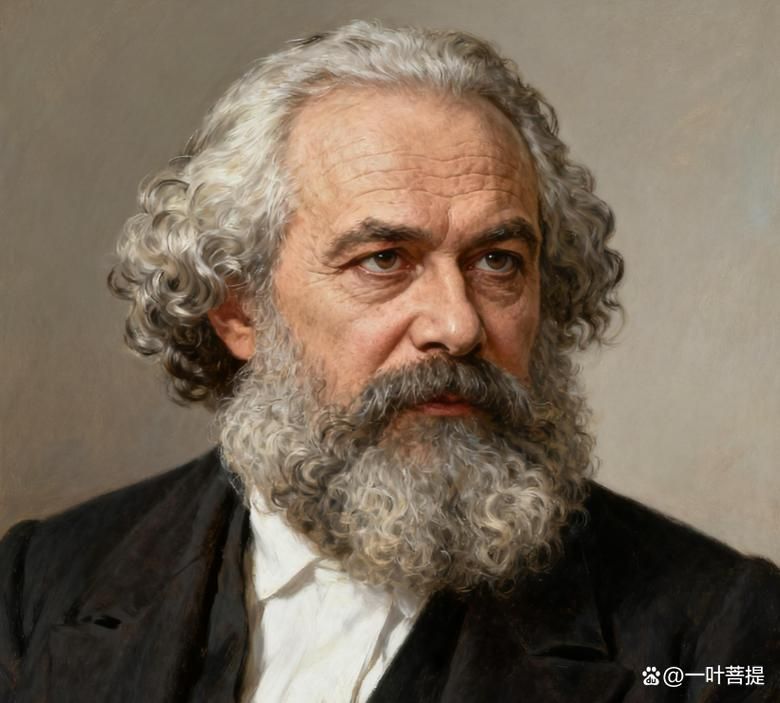
In 1818, marx was born in the city of trier, prishtine province. The father was an enlightened and educated lawyer, and there was a spirit of rationalism and the french revolution。
Max was 17 years old in law studies at the university of bonn and later at the university of berlin. There, he joined the young heggers — a group of young intellectuals who tried to use hegel's dialectic to judge reality. This experience has shaped marx's life-long mindset: everything is in a contradictory movement, understanding a thing and finding its internal contradictions。
In 1843, max went into exile in paris, where he met engus. Engus is from the factory owner's family, but he has a good look at the working class. His 1845 edition, the status of the british worker class, was one of the most direct sociological records of the industrial revolution. The cooperation between the two changed the course of the nineteenth century's ideological history。
Max's work in economics took almost 40 years. In the 1840s, he began a systematic study of political economics by reading the works of smith, ligatu and others. In the reading room at the british museum in london in the 1850s, he wrote his books day after day. These notes were later consolidated into the economics manuscript 1857-1858 and the economics manuscript 1861-1863, with a total of more than millions of words。
In 1867, the first volume of capitalism was finally published. Since then, he has continued to revise the manuscripts of volumes 2 and 3 until his death in 1883. Engus later collated the finals for publication。
Max is an amazing reader. He understands greek, latin, french, english, and the scope of reading covers philosophy, economics, history, natural sciences. However, he was in a very difficult material situation - during his exile in london, a family often spent its days on clothes and several children died as a result of illness. While he struggled in poverty, he wrote a giant book that tried to explain the logic of capitalism as a whole。
Ii. Comprehension of major studies and the core perspective of the role of work
The starting point of marx's economic analysis is his inheritance and development of li gato's labour values。
According to li kato, the value of the goods is determined by the amount of labour required to produce them. Max accepted this premise, but raised the key question: if labour creates value, what determines the value of labour itself
This inquiry leads to a fundamental distinction between labour and labour. According to marx, it's not "labour" that workers sell, it's "labour," it's the ability of labour. The value of labour is its ability to create value, while the value of labour — wages — is determined by the value of goods needed to sustain workers and their families。
The key here is that the value of the worker's work is greater than the wages needed to sustain him. The difference is the residual value. Capitalists occupy the residual value by buying and using labour. That is what marx means by "exploitation" — not a moral accusation, but a structural description。
Capital accumulation and expansion of reproduction
From the point of view of residual value, marx advanced a theory on the economic dynamics of capitalism。
Capitalists do not consume the whole of their residual value, but rather reinvest part of it in production and buy more productive resources and labour — that is, capital accumulation. Accumulation has led to the expansion of production, technological advances and increased labour productivity. At the same time, however, it also leads to capital concentration: large capital absorbs small capital and eventually leads to monopolistic trends。
The internal driving force of capital accumulation is not the personal greed of the capitalist, but the structural pressure of market competition itself. Without accumulation, they will be eliminated by rivals — one of max's most sober observations of capitalism. He did not think that a "better person" would solve the problem, because the root of the problem was structural, not personal。
Periodicity of the economic crisis
According to max, the existence of inherent contradictions in the capitalist economy inevitably leads to cyclical crises。
It is rooted in the tension between the socialization of production and the privatization of possession: production is a large-scale social collaboration, but the distribution of production results is based on private property rights. Workers ' wages are sufficient to buy only part of the product, and the remainder requires capitalist investment or export to absorb it. When investment shrinks or exports are blocked, there is a surplus of production — production of goods and services, but no one can afford it。
Max was not the first to describe the economic crisis, but he was probably the first economist to attempt to extrapolate the necessity of the crisis from within the capitalist structure. He saw the crisis as a "self-correction" mechanism of capitalism — one that had eliminated excess capacity and cleared the way for the next round of accumulation, but which had also caused enormous social waste and suffering for the working class。
Economics in the context of historical materialism
Marx's economics is embedded in a larger philosophical framework: historical materialism. In his view, the economic basis of a society (production methods and productive relationships) determines the upper structure (legal, political, ideological). Within this framework, economics is not a "value-neutral" technical discipline, but a central clue to understanding the transformation of society as a whole。
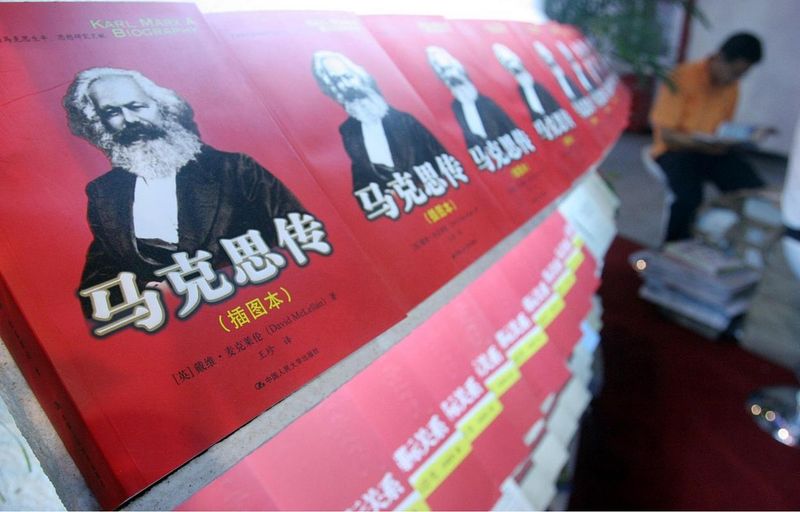
The significance of this framework is that it requires that any analysis of economic phenomena be carried out in the context of the underlying social relations. Prices are not just the intersection of supply and demand curves, but are the expression of specific production relationships. Wages are not just the market pricing of labour, but rather the expression of power relations between labour and labour。
Iii. Theoretically boundary and tension
Marx's economic theory was one of the most controversial systems in the history of ideas of the nineteenth century. It's tension, which can be seen in several dimensions。
Limitations of labour values. Marx values theory is based on the assumption that the value of all goods comes from labour. But this assumption has been fundamentally challenged by the emergence of marginal utility schools — why do one litre of water and one litre of gasoline have similar labour inputs at very different prices? The answer lies in scarcity and utility, not just labour input. Marginalism redefines the basis of value in terms of "subjective effect" and is much more flexible in terms of analytical tools than labour values。
Insufficient estimates of technological innovation. Marx predicted that capital accumulation would lead to the absolute impoverishment of the working class and that capitalist contradictions would remain acute until they collapsed. Since the end of the nineteenth century, however, technological progress had significantly improved the real living standards of workers and the establishment of social security systems had eased labour conflicts. Capitalism has shown far greater adaptability than marx had anticipated。
Transition issues. When the third volume of the capital act discusses the average of profit margins, it faces a logical dilemma: if goods are exchanged for labour value, the profit margins should vary across sectors; however, competition in reality leads to convergence. Is the process of transformation from value to production price mathematically compatible? This question has given rise to academic controversy over the following 100 years, and to date there has been no complete unified answer。
Economics and politics. Another tension in marx economics is that it is difficult to read as a purely technical analysis. Both residual value theory and crisis theory point directly to the conclusions of systemic change. This often puts marx economics in an awkward position in academic discussions: it is both an economic analysis and a political agenda; it is both a social science and an ideology of social movements。
On the other hand, it must be recognized that some of marx's insights have lasting analytical power. His prediction of the trend towards capital concentration — the continuing annexation of small businesses by large enterprises — was validated in the development of monopolistic capitalism in the twentieth century. His analysis of the cyclical nature of the economic crisis provided an important intellectual resource for subsequent macroeconomic cycle studies. His emphasis on power asymmetries in labour relations continues to be central to the economics of labour and institutions。
Iv. Comparison with the chinese experience
Marx's relationship with china's modernization process is very special and complex。
At the economic level, marx's theory of labour values and residual values forms the basis of an understanding of economic theory in the planning economic era. China's pre-reform and opening-up economics textbooks largely follow the soviet version of the marxist political economics framework, based on the theory of labour values as a value theory, and the theory of residual values as a critical weapon of capitalism。
Since the reform and opening up of the economy, china's attitude towards marx economics has evolved profoundly. The introduction of market mechanisms went beyond the analytical framework of traditional marx economics in practice — prices were no longer set uniformly by the state, but rather by supply and demand; and the private economy was transformed from “supplement” to “essential components”. This does not mean the end of marx economics, but its repositioning: from the only paradigm of economics to one of many theoretical schools。
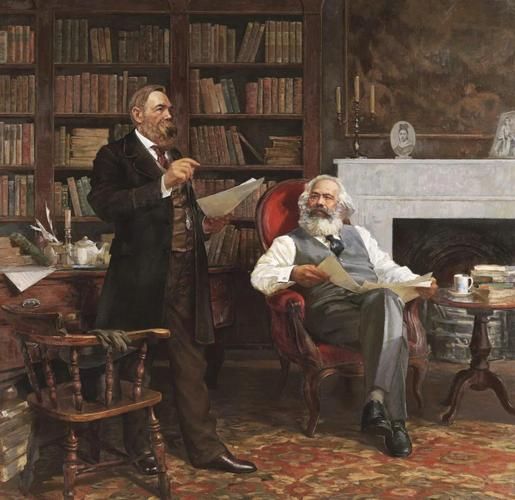
One of marx's core insights — the profound impact of the economic system on the fabric of society and the fate of people — was obtained in china's reform practice. How changes in the land system in the context of rural reform reshaped the economic behaviour of farmers, and how the restructuring of property relations in the context of the reform of state enterprises affected the stratification of urban society, the interaction of the economic base with the upper echelons was evident in china's 40 years of reform。
Marx's discussion of the inherent contradictions in capital accumulation is also relevant in the current chinese context. Rapid economic growth is accompanied by widening income disparities, uneven rural-urban development and changes in the share of capital and labour in income distribution — issues that can be taken into account in the marx analytical framework. China's "common wealth" goal in recent years is in part an institutional response to the classic proposition that capital accumulation leads to distributional imbalances。
But china’s development experience also constitutes a powerful revision of some of marx’s specific assertions. Max believed that socialism had to be premised on highly developed productivity, but it was precisely at a stage when china had begun socialist practices and had achieved a leap in productivity with the introduction of market mechanisms. This path goes beyond the original marx analysis and enriches the practice of marxist economics。
Concluding remarks
Marx is an economic thinker who can't bypass future generations。
He's not an easy writer. Capitalism is a rich volume, full of hegel-style dialectic reasoning and extensive empirical material. But it is precisely this heavy complexity that makes his writings worth repeating。
His insinuation of the inherent contradictions of capitalism was far-reaching in the nineteenth century. Residual values, capital accumulation, economic crisis, class relations — these analytical tools are still being used in various variations, whether or not users call themselves “marxists”。
He also made mistakes. His predictions of the rate of collapse of capitalism were too urgent, his estimates of technological advances to change labour relations were too pessimistic and his judgement of the efficiency of market economy allocation was too negative。
But these errors did not constitute grounds for denying him. The value of a thinker is not whether he is right in every sentence, but whether the questions he raises are sufficiently deep to be taken seriously by future generations, even if they disagree with his conclusions。
The question of marx is always there: who gets what behind the enormous wealth created by the market? Why? Is this distribution reasonable? Can it be changed
These questions are worth asking in london in 1867, and today they are。