Raymond allon's opium of intellectuals was a milestone in liberalism in the twentieth century. Alon has shifted the french problem from “compulsory power” to a methodological criticism of intellectuals. He noted that it was intellectual “spirital self-serving” that made them accomplices to totalitarianism. Alon wanted to warn the world that the true evil was sometimes not in the whips of the secret police, but in the “concepts” of the intellectuals who were enthroned in grand concepts and had taken the initiative to defend them。
Alon's criticism of intellectuals is not only an anatomy of the french intellectual community, but also a philosophical discovery of how intellectuals coexist with totalitarianism。
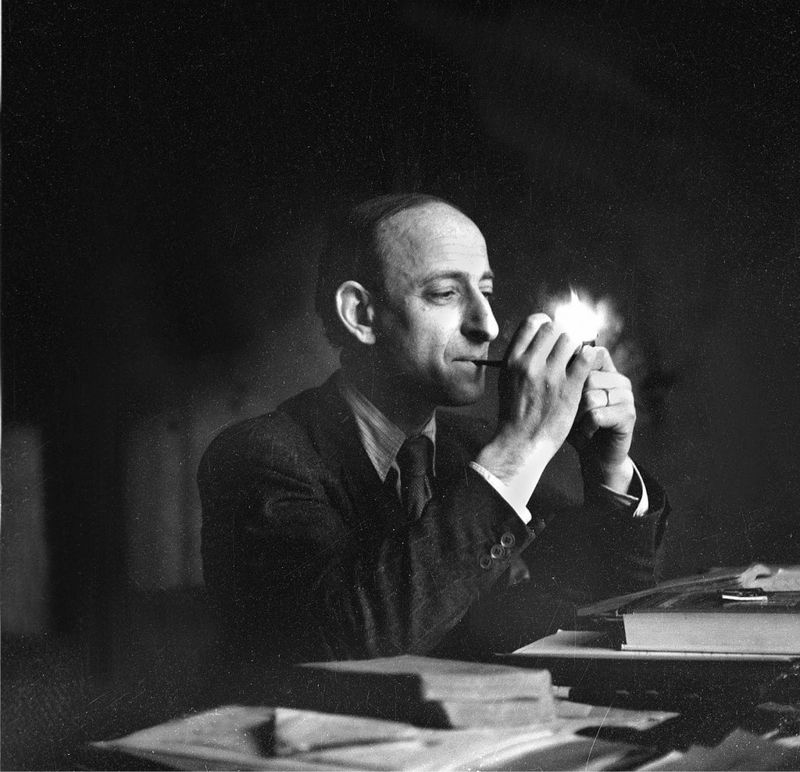
Raymond aaron
I. The three opiums of intellectuals
The book, entitled “intellectual opium”, is derived from a quote from marx — “religion is people's opium”. Here in alon, the intellectuals who claim to free their people also consume “ideological” opium themselves。
One, a left myth
In france, an intellectual who calls himself a “leftist” means that he is concerned about the bottom, against injustice and occupying the moral high ground. The “left” becomes a moral advantage that does not require a logical test and is no longer a value. The left has absoluteized “rebelism” by treating “opposing the existing order” as a political correctness of conditional reaction, without any regard for the object and consequences of the rebellion。
In aron's view, the “left” in the french context is no longer a value judgement, but rather a moral aesthetic and political correctness。
When the left is no longer a value judgement but a political correctness, it leads to double standards on the part of intellectuals – who amplify and vehemently criticize europe’s tiny institutional flaws, but remain silent about the soviet union’s great catastrophe and try to justify it. The leftist intellectuals believe that the criticism of european society is a “leftist charisma”, while the soviet union is accused of being “defensible for europe”. In their view, defending the european capitalist system was a disgrace, while opposing it was a moral perfection。
Such distorted values make them ignore the facts and lose their basic logic. By doing so, they merely make themselves look like a critic rather than a hymn, thereby winning the praise and moral honour of the people — they fight only for their own honour, without paying any attention to the facts themselves。
The myth of the revolution
Alon noted that the myth of the revolution by leftist intellectuals was the most dangerous dose of opium。
Left-wing intellectuals created a “perfect revolution” against “dirty improvement”. They incited people to believe that improvement was submission and betrayal, while revolutions could solve all problems once and for all. They are obsessed with the revolution, portraying the “revolutionary outcome” as a perfect utopia and thereby rejecting any gradual improvement at the moment。
Alon stated that there was no reason to believe that a violent, blood-stained revolution could bring about a just society more than a moderate institutional repair. The left glorifies the revolution precisely because its outcome is always the “future” and never achieved, thus avoiding all the tests of the moment。
Alon noted that the “revolutionary myth” could not breed an ideal state, but led to a totalitarian empire that continued to devour people. It is a fundamental methodological error for left-wing intellectuals to remain silent about the revolution's “all wrongs” for the purity of the revolution, and to endorse their utopian state with the violent law of “breaking to rebuild”。
Myth of the proletarians
Left-wing intellectuals have acted as proxies for the proletarians, not because they believe that the proletarians are right, but because they believe that the proletarians have been given a historic theology of the “messiah” – they suffer the most and revolution the most, so they are the only group that can save humanity。
Aron said that there was no “proletary class” in practice, because in the real world the interests of the working class were diverse and complex, and their revolutionary claims varied and there was no homogenous proletarian group. The proletarian class in the eyes of leftist intellectuals is more of a leftist intellectual imagination than a class。
Ii. Ignorative criticism of intellectuals
Before aron, criticism of intellectuals was mostly at the moral or human level, and the breakthrough was that he shifted criticism of intellectuals to the methodological level。
Aron points out that the myths of the left, the myths of the revolution, the myths of the proletarians all point to a common feature -- the intellectuals defend an absolute idea that becomes the opium of the intellectuals. Infinite adherence by intellectuals to seemingly grand ideas pointing towards liberation has led them to justify violence, to decorate it and to rationalize the interpretation of disaster. It is precisely because of the intellectuals ' pure pursuit of ideas that totalitarianism moves towards complicity。
The danger of revealing “historical determinants”
Alon pointed out that intellectuals and totalitarians colluded in a distorted historical philosophy — they believed in the ultimate significance of history as a single, inevitable and monopolized minority. This “historical decisiveism” convinces intellectuals that they are not defending atrocities, but “historical norms”. They believe that the present suffering is the necessary ladder to the future paradise, and that today's suffering is worth it for the future paradise。
Alon stated that leftist intellectuals had a clear double standard, and that they could not objectively view the shortcomings of a completely different european and soviet character. The failure and crime of the soviet union, which they can always justify by “historic inevitability”, and the shortcomings of western democracy, which are considered to be “fundamental depravity of institutionality”, reveal the logical duality and personal cowardice of the soviet union, which they do not dare to judge because of the real danger it poses。
Intellectuals are also very good at offsetting the “disturbation of immediate violence” with the “optimistic vision of the future”. This “optimism for the future” became a powerful opium, allowing them to accept openly the crimes of the soviet union, but they would be inexorably angry if they were committed on their doorstep. Alon pointed out that such a good vision of the future could not at all offset the torture that a person is suffering at this point in time, a vision that is simply the powerful opium of european intellectuals。
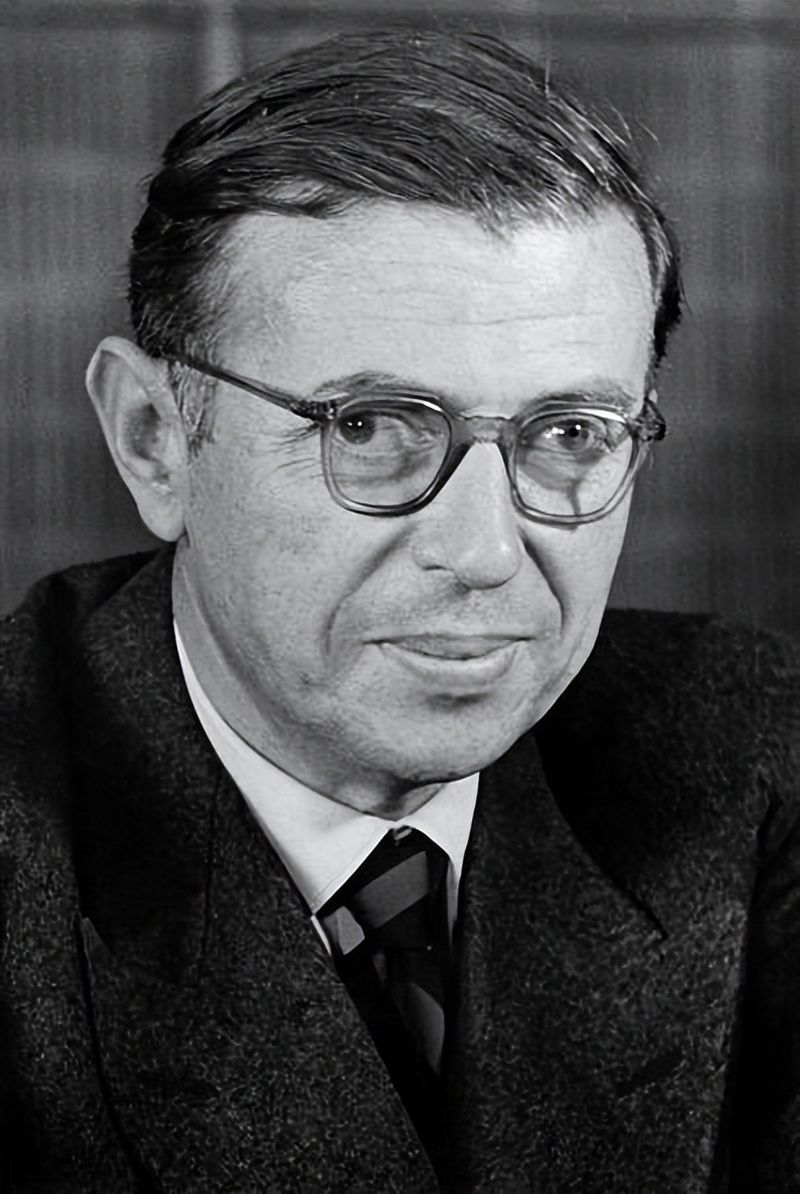
Sutter
Iv. Fighting left-wing thinking with one hand
In the field of social sciences and history, alon believes that there is no one-size-fits-all iron law, but only a broad range of trends and possibilities. Whether politicians or intellectuals, there is always a “mission not to hand yourself over to any historical decision-making theory”。
Social change ultimately depends on “the defence of progressive improvement, day after day, without romance” and “the worst option is to cut off your hands to preserve the purity of a soul.” this perfectionism is the moral childishness of intellectuals. A mature liberal must be able to make suboptimal but least bad choices in an imperfect system。
Arlong criticized intellectuals, mainly sartre and meloponti. Because sartre and melobonti have always defended the soviet union morally, they see it as a successor to historical progress. In alon's view, sartre, as a philosopher, ignored the basic fact that he had memorized revolutionary violent poetry and developed an extremely sophisticated “historical philosophy” to justify cruel facts such as the moscow trial, the concentration camps and so on。
Actually, aaron was sartre's classmate. As an elite of parisian leaders, alon has been fighting the whole of paris’s leftist intellectuals with almost one person’s strength, and it is in paris, full of leftist ideas, that he has written this book to justify “truth” and to justify “freedom”。
Today, the voice of aron is particularly important as european leftist intellectuals re-emerge. His ideas always point to fundamental pursuits — do you use the same criteria when criticizing your opponent? How much blood and fire will you have to experience for the glorious future you promised? How many lives do you expect from utopia? Is it just a projection of your moral superiority that you defend? When we rethink aron with the force of logic, we will see his powerful power of reason