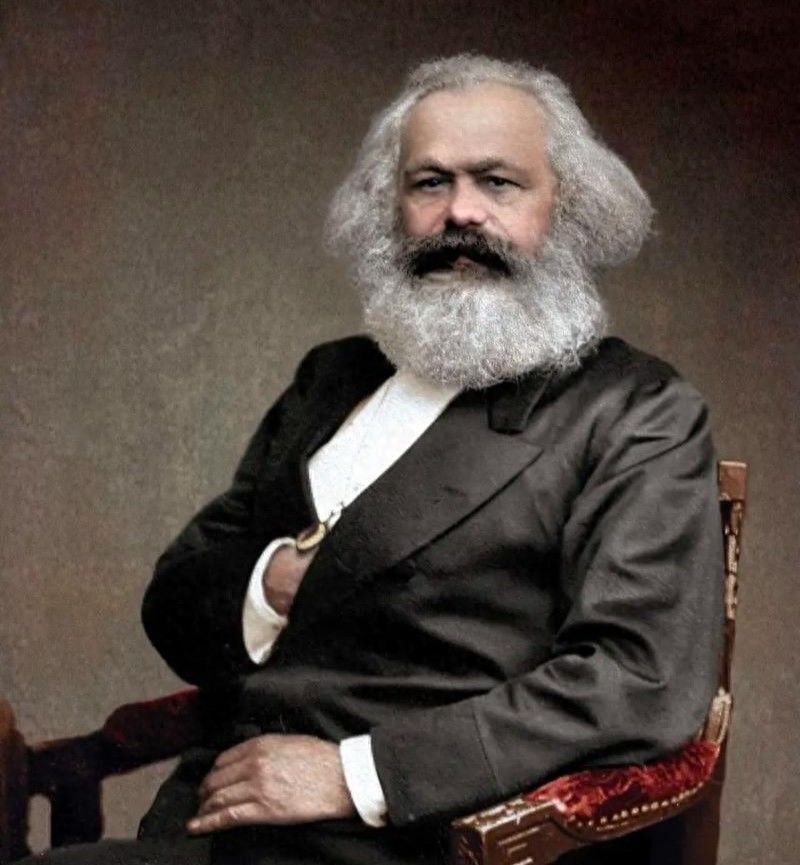
Max was definitely the number one player if we were to find a man in the 19th century who was the best in social terms。
Born in 1818, died in 1883, german, with a complex professional status: philosophers, economists, revolutionary theorists, social observers, plus “first researcher of capitalism”. Others study society, at most a fur; when marx does, he shows you the bottom logic。
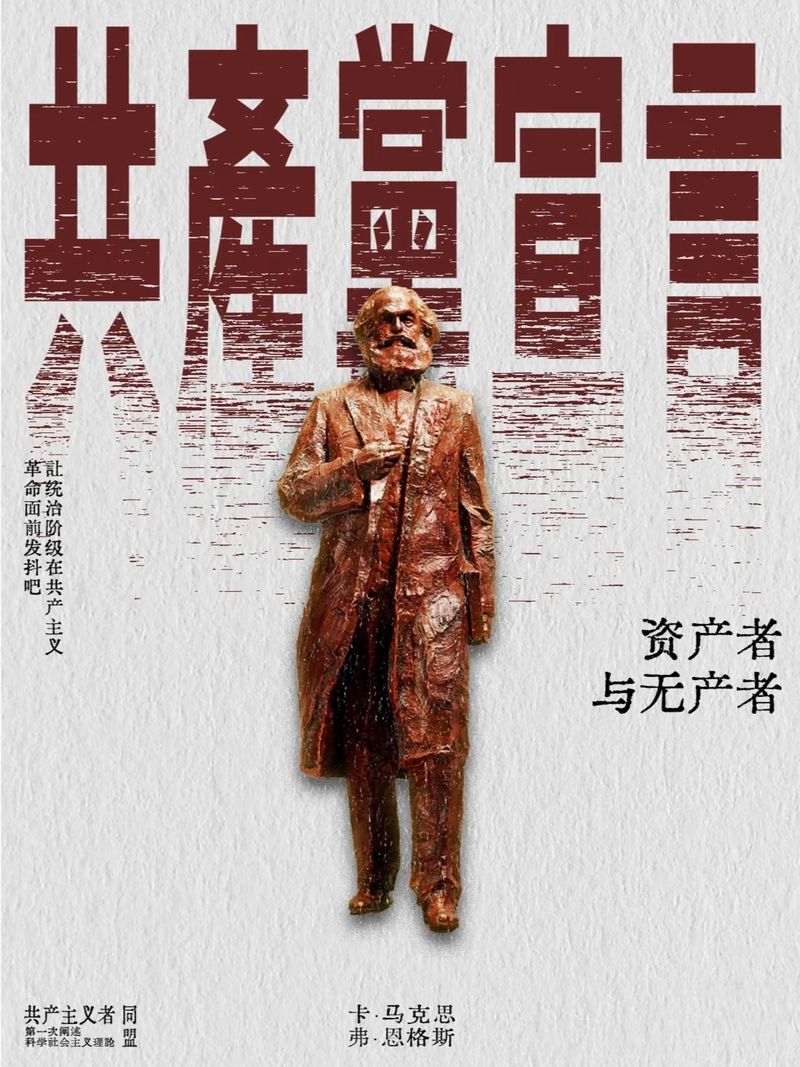
First, the communist declaration。
It's not very long, but it's very strong, like the thunder of the 19th century。
The opening sentence, “a ghost, a ghost of communism, roaming europe”, is still very cinematographic today。
Others started with the words, “it's a nice day today”, and max began with the words, “beware, ghosts come”. Who can handle this
Where's the communist manifesto
It's not just a slogan, it's telling you: history is not from heaven, nor is it written by anyone。
History is driven by class struggles。
The human society is not “all of us together and in peace”, but it is a society of interests, contradictions, conflicts and changes。
It was a fiery view at the time, which was tantamount to a sudden rise to say, " guys, the stage is not because the actors are doing well, but because the backstage is fighting。
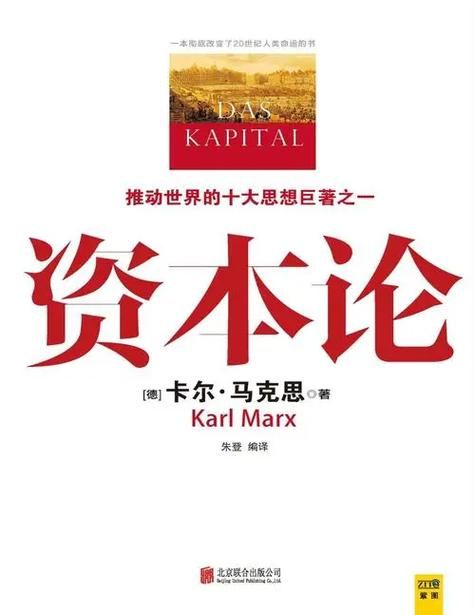
And in the capitalism, marx switched directly to the “economic deep-divine model”。
If the communist manifesto is like a battle speech, the capitalism is like a sophisticated dismantling machine that shows you the logic of capitalism。
Commodities, values, residual values, labour, capital these words all sound like the hardest part of economics, but max is biased in making them sound like a detective。
He asked:
Why do workers work so hard that those who really earn money are often not workers
Why do you often hide unfair distribution behind what seems to be a fair exchange
Why does capital roll up like snowballs
The most classic here is the “residual value” theory。
To put it simply, the workers often produce more value than the wages they receive, the difference between which is taken by capital。
In this case, many of the seemingly normal phenomena suddenly smelled like “usual”。
It's like you've worked hard to make a table, and then people end up taking the pot and telling you, "let's work together and win."。
What marx saw was this structural problem。
Of course, max is not simply “criticizing society”, he is actually trying to explain how society changes。
He believed that capitalism had strong productivity, but also had contradictions: the more it developed, the more it became acute, the more it flourished, the more it became concentrated。
It's like a high-speed machine with a smooth surface and a high-temperature alert inside。
So max's strength is not because he yells, but because he sees it。
And more interestingly, marx's mind didn't stay in the book。
His theories later profoundly influenced the historical processes of the twentieth century, with revolutions, political parties, workers' movements, national systems ... All seeing his shadow。
This points to the problem: the idea of real power is not to write it down, but to run into reality and blow the wind。
But if you think marx is just serious, straight, always wrinkled, that's not entirely true。
His life is in fact a “hard-core intellectual” — long-term research, recurrent writing, financial constraints, a pile of information, a typical type of “building himself up as an old cadre for truth”。
His greatness is not just the power of theory, but the fact that he really spent his whole life asking, "how does this world work?"
In summary:
Max is not just telling you that the world is bad, but telling you why it is, and how it may change。
This is the most striking part of the communist manifesto and capitalism: they do not just make you “know”, but force you to “think”。
And once you start thinking, the world will never be that easy to fool you。