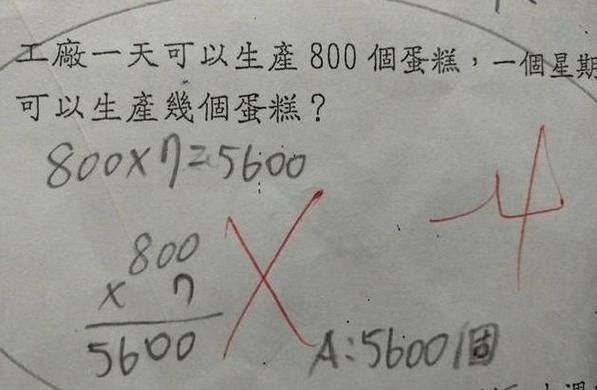
"uploadid": "v02a62g10003d9dip4q7d52qlij80", "duration":372. 901, "sourceprovider": "readttt", "contanttype": 1, "extra": ""audio text":"today we talk about mathematics learning, and, well, whether we should advance the knowledge behind it or build on the concepts and logic that we currently have. It's really important, so let's just start. Let's start with a discussion about why many parents think it's a good way to get a child to learn math early. In fact, most people understand this early learning, which means that i studied first grade math first, and, um, third grade back the fourth grade formula. I feel like i'm moving faster than anybody else, and i feel like i'm moving. But why is it that many children who have good grades in mathematics in their lower grades are unable to keep up? That's because the math of the lower grades, the hard-back formula does get high marks. But by the fourth and fifth grades, the title changed slightly so that children who write formulas alone would not change. Well, the real problem is that there's no logic behind math from the beginning. So there's more holes in the back. Speaking of which, let's go deep, let's say, what is really early mathematics, or, um, why early mathematics is not about catching up, but about digging into basic concepts. The real early learning is what you're learning now. It's not that you're going to learn what's behind it. It's just that you have to let the kids know not only how it works, but also why. There's no other algorithm, and then there's a connection between the algorithm and what was learned. I see, in particular, how can parents help children build this foundation when teaching them math? First of all, there's the logic of numbers, not just the speed of children's calculations. You can use a set of numbers to let him try, different paths. Well, for example, you can make him count backwards, or you can take it apart and tell him to find a connection between numbers and numbers, instead of asking him to write it down. That way the child will feel more flexible about numbers. Yes, and then there's the quantitative aspect. When it comes to words, don't rush the child into the equation. You can let him draw first, um, the numerical relationship of the subject is expressed in graphics or lines or squares. It's true that the algorithm came out of the picture. If you don't let him draw, he'll go straight to the formula, he'll skip the understanding. And let the child finish the question and say the whole thinking. He said he'd find himself in the process. Well, maybe this place is actually going a long way around, and it's gonna work more than ten more questions. In the same vein, let's go back to what parents can do in their daily lives to really help their children lay the foundations of mathematics. For example, it would be difficult to single out a topic on a daily basis. Let the kid get this whole thing figured out, and then let him tell him what his idea is, or what else, or what to do with it if we change the conditions, and it's more effective than letting him paint 10 things blindly. Is this really so amazing? It's very useful, starting with a child's exposure to math, and you're giving him the habit of drawing. No matter how simple this is, you can make him draw axes. Well, maybe you're drawing a bunch of sticks, and if you use it, you're drawing a line. At first, he may have drawn slowly, but slowly after he reached the senior grades. He'll be quick to see a more complex application, and break it apart. If the child is not used to drawing, he can easily panic when he encounters longer problems. If the child makes a mistake, parents usually tell him what you're doing wrong. Well, is there a way to really help kids understand? The kid made a mistake. Don't tell him the answer. You can follow his steps and see which part of him went wrong. Whether it's a miscalculation, or whether it's a miscalculation, to find the source of the problem and to fill him with this loophole so that he doesn't fall into the same trap again. So there's a lot of opportunities in life for children to exercise their math at any time, right? Yeah, like when you buy something, you can ask him how much it's gonna cost. Well, or how much would the two buy together be less expensive than each other? This problem, which does not have a fixed pattern, is the best way to exercise his ability to dismantle it. Is there anything special about parents who choose their children's studies? It's like an exercise book that's full of computational questions, and then every one of them is blank. It's just for kids to practice speed. Well, the kind of thing that really helps a child to think, is the kind of thing that leads him to draw, and, well, to show him that there's a lot of ways to think, and then ask him if there's any other way. The other question is, how should parents guide children when they have problems before they really learn to think independently? The point is to lead himself to the question, and ask him, for example, what conditions did you read? And what does that have to do with anything? Where do you think the first step should start? Let him complete this idea one step at a time. He's more impressed than you're going to tell him the steps. Well, let's think about it, if the kid's been doing this, with a deep understanding, with a mathematical learning approach based on logic. What will he do when he gets to his senior grades? At first you might find out. His grades were not as high as those of other children because he was dead. Well, he's probably still drawing slowly, slowly deduced every step. But in the fourth and fifth grade, you'll find his advantage. So the way it looks slow, there's something back there. That's right, that's right. He doesn't have to die hard. He'd use the same logic as before to understand it by analogy. Well, he wouldn't panic if he met some new ones he hadn't seen, because there were a lot of ways in his head that he could use. Yeah, it's like growing a tree, you deep-rooted. The tree behind you will grow tall and steady. We're actually talking a lot about the nature of math learning today, and, um, early learning isn't really about me running. It's that i take every step of the way. It's easy to learn after that. Well, that's our share today. Thank you for listening. I'll see you next time。", "ttts m"https://tosv. Byed. Org/obj/tos-tingtoutiao/ai podcast m== sync, corrected by elderman == @elder man