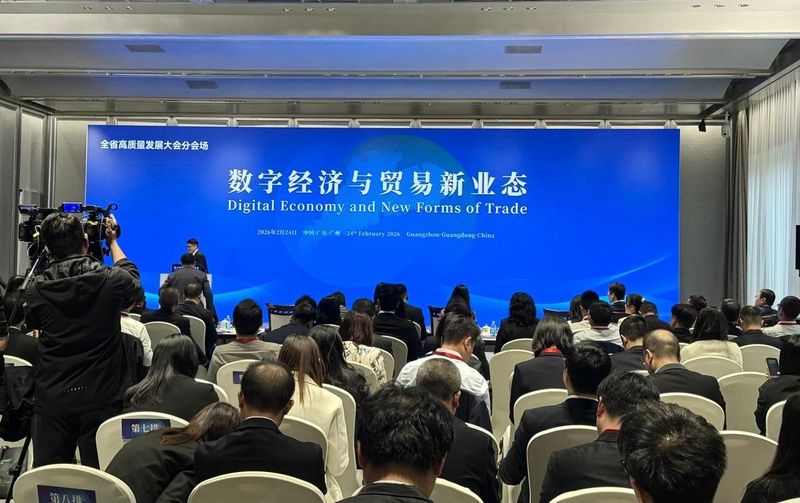
According to general secretary xi, “the digital transformation of the world economy is on the rise and the new industrial revolution will profoundly reshape human society. We must both encourage innovation, promote the deep integration of the digital and physical economies and focus on the risk challenges posed by the application of new technologies, strengthen systems and legal systems, and focus on education and job training. We must build on our own development and fully harness the potential of innovation, while opening the door to encourage new technologies and the dissemination of new knowledge for the benefit of more countries and peoples.” at present, the global economy is undergoing a period of new and old dynamic energy conversion, one of the main directions of which is to continuously upgrade the position and role of the digital economy in economic development and to play its leading, leading and transforming role in the traditional economy. In the case of china, achieving this goal will require further increased openness to the outside world to accelerate the development of the digital economy through greater openness。
Broadening openness is a necessary requirement for accelerating digital economic development
The digital economy is an economy supported by new technologies and industries. Economic growth theories generally attribute the sources of economic growth to factors such as capital, labour and technology, which are new features of the capital, labour and technology that affect the growth of the digital economy compared with traditional economies。
The first is the new characteristics of the capital element. During the first and second industrial revolutions, the passive nature of capital as an object of human conquest and transformation, the third industrial revolution, while leading to the information management of the digital manufacturing and production processes, did not fundamentally change the character of capital as an “institution”. The fourth industrial revolution would be a process-wide and cross-cutting intellectualization. What is intellectualization? The difference between intellectualization and automation is that the former have the ability to learn autonomously. With intellectual development, capital acquires “life”, so that in the age of intellectualization, competition between firms and firms and between countries depends not only on the quantity of capital, but also on its intellectual and qualitative ability to learn。
The second is a new change in the status of workers. Competition in the job market takes the form not only of competition between people but also of human capital and intelligent robots. The competition between human beings and machines, which took place at the time of the first industrial revolution, brought about a fundamental change in the nature of competition with machines, not only in terms of physical labour, but also in the area of intellectual labour, in which machines can replace not only the “hands” but also the “brains” of human beings。
Thirdly, innovation will have multiple, multiple, multinational, multi-level, distributed innovation features. Under the digital economy, the pace of global innovation will increase dramatically, the generation, spread and expansion of new technologies will increase more rapidly, and predictions of the direction of technological progress will become more difficult than ever before, requiring a significant increase in human capacity to use and learn from new technologies. Innovations in the digital economy have completely new characteristics, and the pace of innovation has increased dramatically, with a large number of innovations shifting from fruit-picking to restructuring. In an innovative mode of harvesting fruits, a new generic technology emerged at an early stage because of its prematureness and limited scope of application, the benefits of which can only be small streams, and when universal technologies are upgraded and diffused, their benefits will turn into huge streams, which will revert to small streams as the potential for technological diffusion disappears. Reorganization innovation is a hybrid of existing plants and the generation of new varieties, which will be introduced as new varieties into the stock of original varieties, so that, in turn, the variety of plants will grow and show exponential growth. Innovation in a reorganization manner has increased significantly. The development of digital technology has greatly facilitated the reorganization of innovation and has facilitated the shift of innovation paradigms from fruit-picking to portfolio innovation。
These new characteristics of capital, labour and technological innovation determine whether the digital economy will be a lifelong learning economy and whether the enhancement of the learning and innovation capacities of society will be the key to a country's ability to gain advantage in economic competition. While the factors affecting this capacity are complex, the stock of knowledge capital that a country can use or mobilize is undoubtedly decisive. Enhanced international cooperation, together with the use of both international and domestic knowledge pools, is the most effective way to expand the pool of knowledge capital available to a country. Moreover, the fourth industrial revolution was characterized by restructuring innovation, an innovative model that opened up new space for china to strengthen international cooperation and to avoid, to some extent, trade frictions resulting from industrial upgrading. Thus, from an innovation perspective, greater openness was a necessary requirement to accelerate digital economic development。
Increasing the level of digital economic development in international competition and cooperation
We already have a realistic basis for promoting the development of the digital economy through greater openness. The country has a better traditional industrial base, and as the digital economy develops, the trend towards industrial upgrading is evident. A comprehensive comparison of 22 countries across the globe, based on the six dimensions of globalization, innovation capacity, networking, digitalization, intellectualization and greening, has revealed that china's digital economy, while still at a gap with developed countries in a number of key areas and links, is well established and is generally second in line. In recent years, the country has achieved a series of major scientific and technological achievements in the field of digital technology, reaching an advanced international level and occupying a certain position at the forefront of international science and technology。
These advantages provide the basis for a two-way opening in the digital economy. The fourth industrial revolution would reshape the global division of labour, which would shift from a chain-based division of labour to a networked division of labour. The previous division of labour between the brains of developed and developing countries would be broken, the advantage of international competition on the part of developing countries based on low labour costs would be significantly weakened, and the leadership and leadership of developed countries in global innovation would be reduced. China should take full advantage of this change in the process of expanding openness, following this pattern, and adhere to a two-way open strategy, taking advantage of the intellectual resources of both developed and developing countries, and enhancing the comparative advantage of learning. On the one hand, china should strengthen cooperation with developed countries and jointly promote innovative development in the digital economy. On the other hand, cooperation with developing countries should be strengthened. China's digital economic development was in the lead in developing countries. The benefits of innovative development could be achieved through partnerships with developing countries, and its participation in the development of the digital economy could be enhanced。
While we are faced with a favourable situation in order to expand openness for digital economic development, we are not without challenges and are concentrated in two areas。
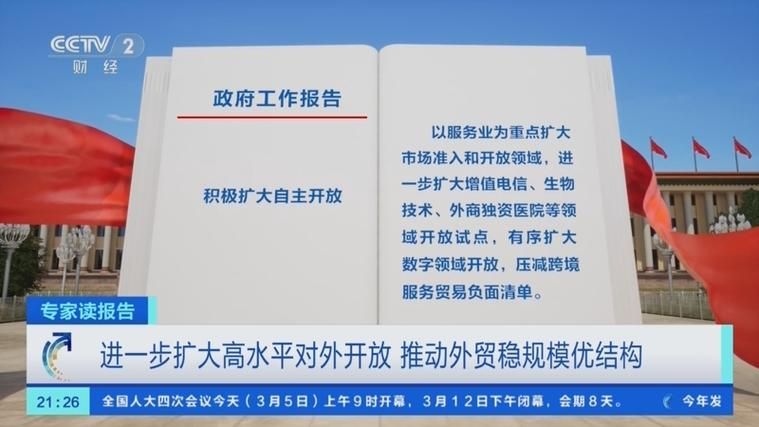
First, opening up in the context of the digital economy is an all-encompassing opening that includes not only manufacturing, but also services, and one of the major challenges facing our country in further expanding it is how to increase the international competitiveness of services in international competition. China currently has the largest share of exports of services and construction directly related to commodities in its services sector, with clear comparative advantages, knowledge-creating and knowledge-intensive services with less obvious competitive advantages, and needs further improvement. This means that the task of enhancing the learning and innovation effect of services remains daunting, despite the fact that the development of services in our country has created forces conducive to enhancing the impact of learning and innovation. Services related to the fourth industrial revolution have a strong learning effect, and their learning and innovation impact needs to be enhanced through better integration of manufacturing and services. Education, r & d, etc. Are knowledge-creative industries, with special emphasis on incentives to increase investment in education and r & d, and in r & d, on basic research, which is a learning process that leverages other types of learning。
Second, the decline in the manufacturing position of developed countries would make the global digital economy more competitive. Western countries have been world leaders of manufacturing for more than 100 years, and manufacturing is the main engine of growth in western countries. Since the 1990s, the competitiveness of manufacturing in developed countries has been challenged with the deepening of economic globalization, the shift in the global division of labour and the acceleration of the industrialization process in developing countries, and the declining share of their industrial products in global exports has led to a decline in their innovation and overall economic development. After the outbreak of the international financial crisis in 2008, western developed countries proposed a revival of manufacturing, which was intended to revive the economy by reshaping the country's competitive advantage, finding new economic growth points and revitalizing the economy, but the real results were not clear, and their international market share, despite signs of stabilization in recent years, has yet to show a strong rebound. In order to revive the economy, some developed countries not only attract more capital inflows through domestic economic policies, but also seek to upgrade their manufacturing competitive advantage through the re-engineering of international competition rules, which could pose a challenge to china's digital economic cooperation with developed countries。
In order to respond effectively to this challenge, it is important to promote the active participation of developing countries in the process of reform of international economic and trade rules and the establishment of trade rules and mechanisms that are more inclusive and more conducive to the potential of the digital economy. On the other hand, the important role of “one-way” construction should be fully realized, cooperation with the countries concerned in the “one-way” digital economy development should be actively pursued, a strategic interface between digital economic development should be achieved, new markets should be nurtured, new technologies should be developed and the industrial transformation of countries should be promoted. (by zhang zhiqi, a researcher at the institute of industrial economics of the chinese academy of social sciences and director of the centre for industrial and enterprise competitiveness studies of china)