Since the beginning of the twenty-first century, the intelligent economy is driving the transformation of the world economy and society. According to general secretary xi, “the next 10 years will be the key to the transformation of the world economy's old and new dynamics. A new wave of scientific and technological revolutions, such as artificial intelligence, big data, quantum information, biotechnology, and industrial transformations are gathering strength, generating a vast number of new industries, new business patterns and new models that have revolutionized global development and human productive life.” rapid growth in the intelligent economy poses challenges to macroeconomic management, and a comprehensive and accurate understanding of these challenges and effective responses are undoubtedly important for improving macroeconomic governance capacity。
Characteristics and manifestations of the intelligent economy
The smart economy is an intelligent, digitized, networked economic performance system that uses artificial intelligence technology as a strategic resource and key production factor, infrastructure for large data, cloud computing and modern information networks, spearheaded by the artificial intelligence technology industry and focused on the organic integration of artificial intelligence technology with traditional industries。
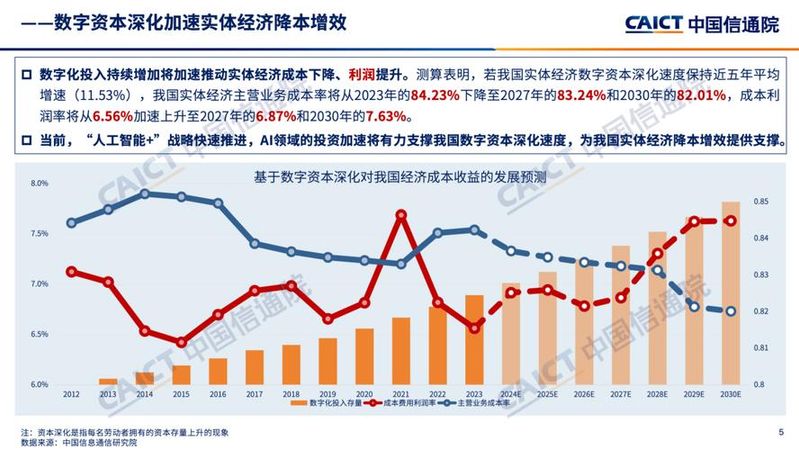
The development of the intelligent economy is currently characterized by the rapid development of modern communication technologies and the significant increase in the autonomous depth of learning and machine computing capabilities of the intelligent economy; by the powerful penetration and substitution functions of artificial intelligence technologies, both at the micro, meso or macro level and at the production, circulation, consumption and distribution stages, which are ubiquitous and even impervious; by the external economic, endogenous growth and marginal gains of the intelligent economy; and by the improvement of the effects of virtual reality technologies and simulation experiments, which have altered the original operating patterns of microeconomic agents and changed the macroeconomic operating cycles, which have greatly enhanced macroeconomic early warning and control capabilities。
The rise of the intelligent economy has been characterized by the organic integration of artificial intelligence technologies with sectors and industries, which, in short, has evolved rapidly in recent years, namely, “artificial intelligence technology + industries”, including intelligent manufacturing, intelligent finance, intelligent agriculture, intelligent transport, intelligent logistics, smart cities, smart consumption, smart medicine, intelligent education, etc. Specifically, artificial intelligence + finance refers to the full application of digital technology for system re-engineering and re-engineering of financial services processes; artificial intelligence + cars, which make it possible for unmanned driving, mainly with the main objective of vehicular mobility, safety and reliability; artificial intelligence + industry, which is represented by the expansion of manufacturing automation to flexible, intelligent and integrated production patterns that can change batches, monochemical production patterns and achieve flexible customization; artificial intels + agriculture, which is mainly the full application of artificial intelligence, computers and networking technology, technology for physical networking, 3s (rs, gis, gps), wireless communication technology, which achieves the intellectual management of agro-visual remote diagnosis, long-range control, and early warning of disaster; artificial intelligence + logistics, which enables the logistics system to significantly reduce the automated operation and efficient optimization of natural and social consumption through the use of advanced technology such as bar-coded, radio frequency recognition, sensoring, gps, gps, and global positioning, information processing and self-res。
Emerging issues for macroeconomic governance in the context of an intelligent economy
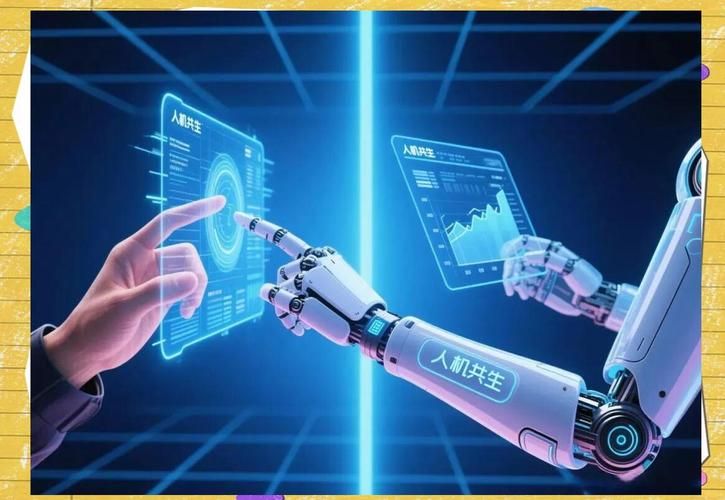
Under the conditions of the intelligent economy, new problems and challenges arising from the intelligent economy will arise, raising new issues for economic governance in china and throughout the world. For the time being, the main elements are:
The rapid growth of the intelligent economy may deepen and widen the digital divide between regions. The convergence of artificially intelligent in-depth learning functions with the positive feedback effect of the network economy will have a stronger matthew effect, leading to a further widening of regional disparities. How to break path dependence and bridge the growing digital divide while advancing smart economic development is a new issue for the government sector. More effective macro-policy measures are needed in finance, education, science, technology and innovation, and in promoting east-west cooperation and openness。
Technically, data, algorithms and algorithms are the three elements that underpin intelligent economic development, which without big data has no intelligent economy and must maximize information-sharing. Just as smart driving must be based on the effective use of geographic information systems (gis), information system sharing is a sine qua non for intelligent economic development. Through a rational and effective system, decentralized individual information can be consolidated into structured social information, historical data can be used as a basis for decision-making and information about economic activities can be used effectively. Data-sharing could be achieved, for example, by shortening the patent protection cycle, opening up national databases in relevant sectors, providing pro bono technical coaching and building science and technology parks, and accelerating the spread and spread of patented technologies。
New policies to support the development of new technologies, new industries, new organizations and new business practices. Under intelligent economic conditions, the organization of enterprises is fragmented and borders open, and the enterprise is transformed from vertical command and control-based to decentralized, network-based organizations centred on experts, smart technologies. A matrix structure has emerged that has led to the mainstreaming of microeconomic and cross-border cooperation. How to encourage and support innovation, entrepreneurship, the development of venture investments and microfinance are new challenges for macroeconomic governance。
Encrypted digital currency poses a huge challenge to reshaping the international monetary and financial system. The internet has changed the financial ecology, and virtual banks have put enormous pressure on traditional banks. Encrypted digital currency based on block chains, cloud computing, large data is a greater challenge. Once successful, the newly published encrypted digital currency libra on facebook in the united states is not only a challenge to the financial sector, but also a destabilizing one. We need to accelerate our research on the digital currency and the operating system of the new financial system, from digital currency to digital central bank to digital finance and the development of digital monetary and financial systems without borders。
The need for access to high-end core technology is even more evident in terms of openness and international cooperation. Open access is an important mechanism to channel a country's participation in the international division of labour and specialization of production, as well as an important channel for technology innovation countries to provide technological spillovers to technology imitators. Under the conditions of an intelligent economy, who is mastered of the “gravity of power” — the high-end core technology — holds the key to winning. To this end, while considering how to strengthen innovative capacity and open cooperation, it is necessary to be self-reliant, to tackle the difficulties and master the victors; on the other hand, it is necessary to pay close attention to the spillover effects of openness and its impact on china itself, and to explore institutional development, including strengthening intellectual property protection. (author: jiyushan, fellow, centre for state-owned economic research, jilin university, china; jeanne, professor, maxist school, shanghai university)