National development plan for digital economic relations. The resolution of the central committee of the communist party on the 100-year achievements and historical experience of the party, which was considered by the party at its nineteenth sixth plenary session, states that “the real economy should be strengthened and the digital economy developed”. In his thirty-fourth collective study at the central political bureau of ccp, general secretary xi stressed that the development of the digital economy is a strategic option for taking advantage of the new technological revolution and new opportunities for industrial change. So what does the digital economy have in mind? What are the prospects for its development? What does it mean for the chinese economy? How do we develop a digital economy
What is the digital economy
According to the “xiv-5” digital economic development plan, the digital economy is the main economic model following the agricultural and industrial economy, with data resources as a key element, modern information networks as the main vehicle, ict integration applications, full factor digitization as an important driving force for a new, more equitable and efficient economy. The digital economy in general is a relatively broad concept, with different boundaries from different perspectives。
In terms of the development path, the digital economy comprises both digital industrialization and industrial digitization. Through digital industrialization, key technologies and core industries can continuously transform data generated in consumption, production and services into factors of production, thus providing new services and applications; through digitalization of industries, the digital transformation of traditional enterprises, priority industries, the digitalization of agriculture and the upgrading of manufacturing intelligence, as well as the networking of productive and living services, thus continuously using digital technologies to transform and empower three industries。
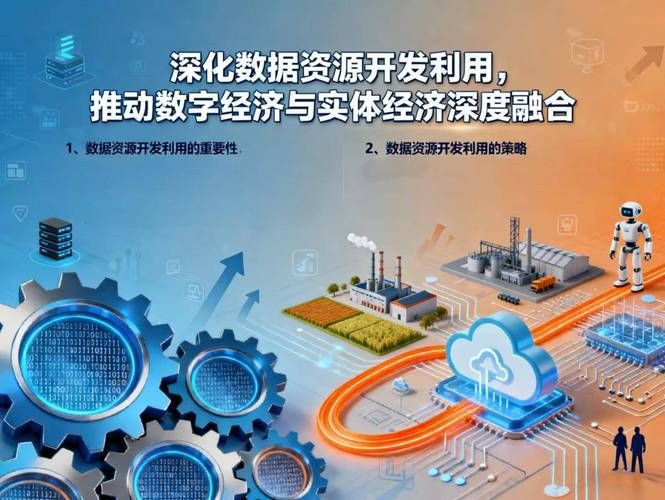
In terms of its constituent elements, the digital economy includes two key elements: data and digital technology. Data are ancient and, after the advent of the internet, they are digitized and accumulate into large data that can be rapidly extracted and analysed by computers. In recent years, big data have been widely used in the production, life and social governance of human society as new elements of capital, labour and natural resources. The emergence of this new element has considerable political, economic and cultural implications for the world and deserves careful study by all sectors of society. Data elements are characterized by low marginal costs, non-depletion, ease of reproduction, and are engines of deepening the digital economy; digital technologies are characterized by an iterative rapidity, rapid proliferation and high permeability, both of which increase industrial competitiveness by accelerating the supply and diffusion of innovation, optimizing the configuration of elements in production functions, improving technological efficiency in production processes and reducing transaction costs。
In terms of the five main categories of industries in the new structural economy, the digital industry is an alternative supercar industry. New structural economics divides the real economy's industries into five types: catch-up, lead-up, transition, switch-over and strategic, based on the gap between an industry and the world front, the degree of comparative advantage and the length of the research and development cycle for new products. Among them, the trans-car industry is characterized by a particularly short cycle of product, technology and development, usually with a new generation of technology inputs in 6-18 months, with human capital as the key input to r&d. The digital industry meets these conditions and is typical of an alternative supercar industry。
Meaning and prospects of the digital economy
The digital economy is a valuable opportunity for the chinese economy to achieve an alternative supercar in the fourth industrial revolution and is of great strategic importance for achieving high-quality development and the great revival of the chinese nation. In 2020, the value added of the core industry of our digital economy, which provides a powerful engine for economic development, was 7. 8 per cent of gross domestic product (GDP). Accelerating the digital transformation of our industry will help our digital economy to outpace its share of GDP, while the real economy, with its manufacturing as its core, will achieve efficiency gains。
The combination of these five types of industries and the digital economy is important. For example, the automobile industry is a standard catch-up industry, but new technologies such as unmanned driving brought about by the combination of automobiles and digital technology, as well as the extension of the automobile industry to service industries, present opportunities for catching up in china. For example, for leading domestic power industries, digitalization can be used to upgrade value chains and continue to lead. The growth of the digital industry has increased the direct driving effect of the digital economy on economic development; and the empowerment of five categories of industries through the digital economy has accelerated the catch-up of backward industries with data and digital technology, maintaining the advantages of leading industries and providing the impetus for the new era to achieve high-quality development in the country。
Moreover, with regard to new technologies and industries represented by big data, artificial intelligence, internet applications, china is not only on the same line as developed countries, but also has a comparative advantage in terms of data resources, human capital and market volumes. One is data advantage. Big data are new factors of production, known as “oil for the twenty-first century”. There are more than 1 billion internet users in china, generating big data resources. The second is talent. China is a large country in terms of human resources, with an absolute number of innovative talent and an advantage in research and development. Third is market advantage. The combination of china's most integrated industrial mix, not only of data, population, but also of markets and applications, offers great prospects for our digital economy。
How to develop a digital economy
The first is to make full use of comparative advantages and use both domestic and foreign markets. In the context of the global industrial division of labour, we need to be fully aware of our country's strengths, such as in the areas of software, artificial intelligence, applications, etc., to continue to be strengthened; without a comparative advantage, we need to make full use of international markets and resources. The technological upgrading of the digital economy, with enterprises requiring significant r & d inputs to acquire core technologies, and china’s super-large market, the loss of which means that it may lose its ability to continue investing heavily in r & d in order to maintain its technological leadership, have generally focused on the chinese market. For “no buy” key core technologies, there is a need to focus on accelerating r & d. High-quality economic development takes into account costs and profitability, and it is neither realistic nor possible to develop all products and technologies on its own. At the same time, it is important to keep abreast of the products and technologies of the international market, to learn about world developments, to know their own short-sets and to try to catch up。
The second is to actively promote digital integration and broaden the development space. The digital economy and the development of the real economy can accelerate the upgrading of traditional industries and generate greater value. The number of industries in the country varies from one industry to another, with consumer services and the digital economy developing the most innovatively, with some of the major internet platforms developing at the highest level in the world because of the country's better communications, internet base, large and concentrated cities, well-developed transport infrastructure and relatively low labour costs. We still have a large gap with developed countries in terms of the digitalization of higher value added production services. In general, there is room for an increase in the share of our digital economy in GDP. We need to maximize our comparative advantage, accelerate the digital transformation of different types of industries, improve the quality and efficiency of economic development and translate development opportunities and growth potential into tangible results and benefits。
Third is the digital economy as an emerging industry whose applications have yet to be explored. For the current stage of development, governments can provide policy support or security in support of smes, strengthening data security and avoiding monopolies. For example, smes face higher technology input costs and digital thresholds compared to the high input capacity and motivation of large firms, requiring some policy support and incentives from governments to assist relevant platform companies in developing sme-specific know-how to help them digitize to improve competitiveness. On the other hand, the integration of digital technologies with the real economy is progressing faster in the services sector, but there are still gaps in the manufacturing sector, requiring measures tailored to different industrial characteristics. In addition, the digital economy is based on data elements and involves a large amount of personal information, paying attention to the rational use and protection of personal information and avoiding the use of data as a monopoly by enterprises to discourage innovation. The policy needs to be continuously adjusted to the characteristics of the digital economy itself, the different industrial characteristics and the different stages of its development, the integration of digital technology with the real economy, to better advance digital industrialization and the digitalization of industry, and to achieve high-quality development and the full realization of the socialist modern state。
(by professor at beijing university and director of the new structural economics institute)