Although our latest version of the influenza vaccine guide has not yet been released, the recent united states advisory board on immunization implementation issued vaccines to prevent and control seasonal influenza in the 2024-2025 influenza season: recommendations of the advisory board on immunization practice — the united states, which answers many of the key questions about influenza vaccine, many of which are left unanswered in various domestic documents。
Let's take a look at the contents of his rock and make them available in question and answer form, and make some evaluations based on the actual situation in my country and abroad。
Problem directory
Target audience for influenza vaccine
Time for influenza vaccination
United states influenza vaccine immunization process
Type and choice of influenza vaccine
Vaccination and replanting
Influenza vaccine taboos and attention
The following is a question-and-answer session, where you can find answers based on directory information, where the computer can search through ctrl+f, and where the mobile phone can be searched by opening and using a search function in the browser, or pull slowly。
Target audience for influenza vaccine
All of you. All persons aged 6 months without taboos should be routinely vaccinated against influenza every year, especially for those at increased risk of serious diseases and flu complications (see figure below), as well as medical personnel who may be exposed to influenza。
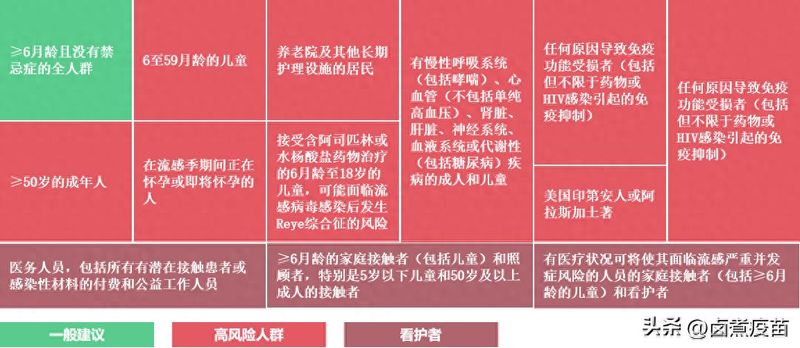
Point assessment: in contrast to domestic recommendations, the general recommendation is that the 60-year-old population be given priority for vaccination and that the united states be reduced to 50-year-olds; in addition, there are fewer recommendations for caregivers, contacts and specific ethnic groups in the country and data are lacking。
Time for influenza vaccination
September or october. For the majority of those who need a dose of influenza vaccine (i. E., the population aged 9 years or 8 years old who have reached the age of 2 doses) the ideal time for vaccination is september or october。
Particular attention is drawn to the fact that influenza vaccines may be available as early as july or august or even earlier, but most populations are not recommended for vaccination in july and august, especially among older people, as immunization may be declining during the influenza season; moreover, vaccinations are not recommended for early and mid-pregnancy。
Response: not generally recommended. Except for those who fear that they will not be able to be vaccinated after september, they may be considered for vaccination in july or august, including:
Fear of early and mid-pregnancy women who cannot be subsequently vaccinated against influenza
Children between 26 and 8 years of age who are in need of 2 doses of influenza vaccine can complete 2 doses by october
(b) children who need only one dose may consider one dose for pre-school visits (by 1 september)
It is feared that women in late pregnancy who cannot be vaccinated against influenza in september or october can be vaccinated in july or august。
Response: no recommendation. While delays in vaccination may lead to increased immunity during the influenza season, delays may result in missed vaccination opportunities and difficulties in vaccinations for a limited period of time。
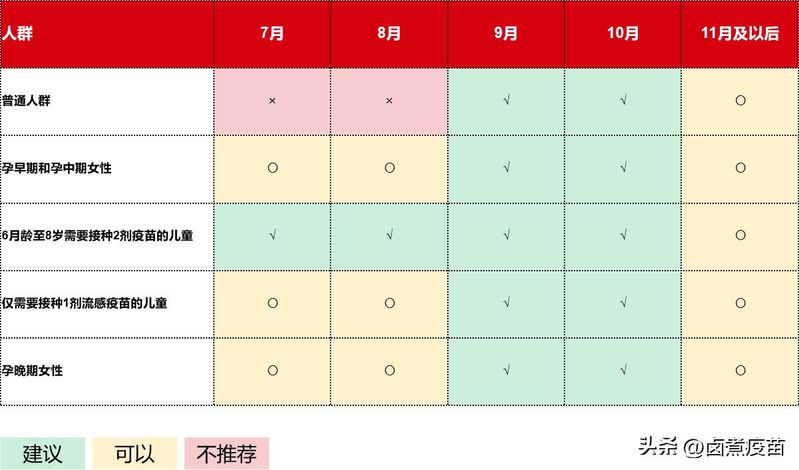
Point assessment: acip provides very clear recommendations on the timing of vaccinations, but it also elaborates on the advantages and disadvantages of different vaccinations, and it is important to target specific populations for early access to vaccines. However, given the different periods of influenza activity in different parts of the country, vaccination time should also be considered in the context of epidemiology。
United states influenza vaccine immunization process
Response: different age groups. Under the united states acip-recommended immunization procedures, children aged between 6 and 8 who were vaccinated against influenza for the first time, or who had previously been vaccinated against one dose of influenza, require two doses at intervals of four weeks. Only one dose is required for other children aged between 6 and 8 years or 9 years who are vaccinated against 2 doses。
Answer: two. For 8-year-old children requiring 2 doses of vaccine, the second dose of influenza should be administered even if they were 9 years old at the time of the second dose. In addition, people aged 6 to 35 months are given a dose type of 0. 25 ml or 0. 5 ml; those aged 36 months (three years) are vaccinated with 0. 5 ml。
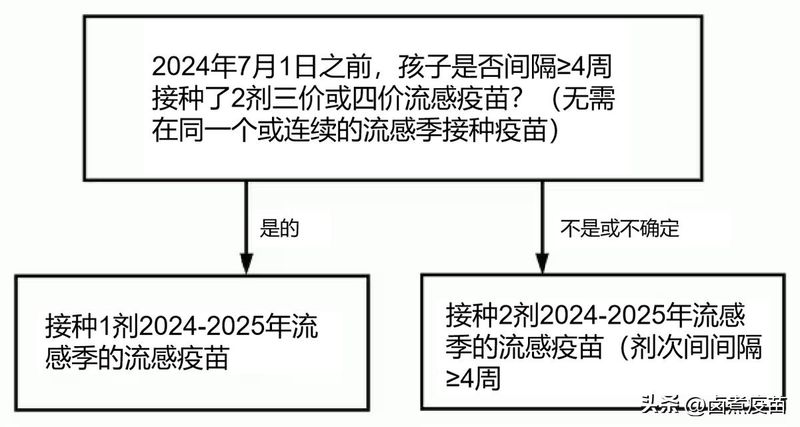
Point: like the united states, we have both 0. 25ml and 0. 5ml-type influenza vaccines, and the guidelines recommend similar immunization procedures (the first dose was administered from june to 8 years of age in the country, without taking into account the previous dose); moreover, the united states explicitly vaccinated children who were initially vaccinated against influenza at the age of “cane” (35 months and 8 years and 11 months), which is also not mentioned in the domestic guidelines。
*note: according to the national vaccine instructions, children between the ages of june and 35 are vaccinated with 2 doses of influenza per year, which is not “wrong” or even “advanced”. This was also due to the fact that only one dose of influenza vaccine per year had been administered abroad, and after the first dose had been found to be ineffective, it was changed to two, while japan suggested that two doses of influenza vaccine per year for children under 13 years of age be administered in the light of the fact that two doses could provide better protection. Research also found that children vaccinated with 2 doses were better protected against type b (b) influenza in some years。
Type and choice of influenza vaccine
Response: from a technical point of view, only active fission vaccine and recombinant vaccine are available. In the 2024-2025 influenza season, the united states approved nine influenza vaccines, including a fission vaccine (the chicken embryo standard agent fragmentation vaccine, the chicken embryo high dose fragmentation vaccine, the chicken embryo detoxification vaccine, the chicken embryo spectrogen detification vaccine, the canine kidney cell detoxification vaccine) with a variety of options, with only one recomposition vaccine (cong cell expression)。
Response: no priority recommendations except for specific groups. When multiple influenza vaccines are available, no priority is given to any influenza vaccine. However, due to the deterioration of the immune system for older persons, a common influenza vaccine may not be able to induce an ideal immune response, and therefore high-dose contusion vaccine for chicken embryos, a congener decomposition vaccine for chicken embryos and a recomposition vaccine are recommended for priority use for older persons。
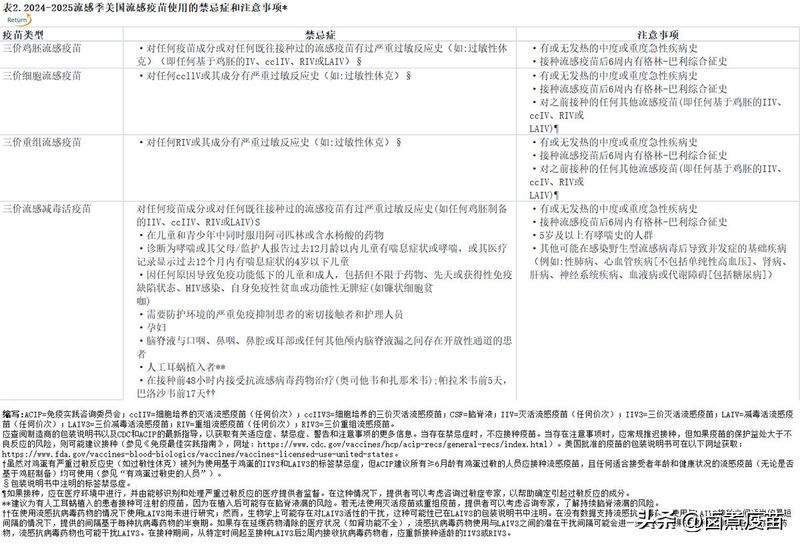
Response: there is a high level of taboos and attention, especially for the detoxification vaccine. Due to the wide variety of taboos and precautions for different vaccines, in particular for detoxification vaccines, the table is presented in the original language (abbreviations are explained in the figure)。
Response: almost 20 dollars (us$ 140). According to the united states cdc, both the cdc influenza virus fission vaccine and the detoxification vaccine were in the range of $15-20 (about $20-30 on the private market), with little difference。
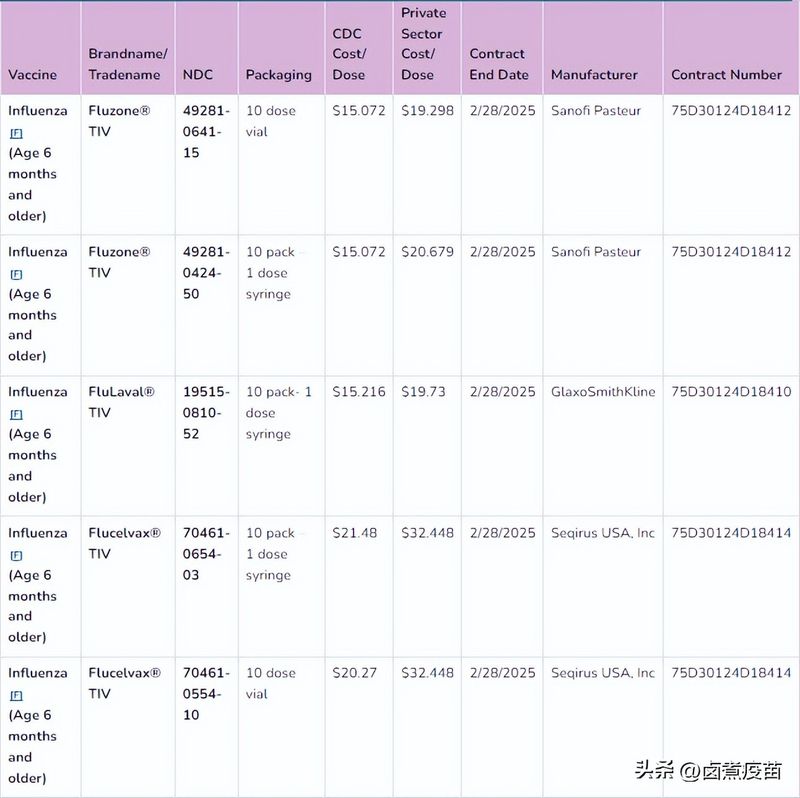
Point assessment: in the case of influenza vaccines, which have clear protection effects for different populations in different influenza seasons, the protection effects are generally similar or less differentiated (the different processes may vary from one population to another), so the most important thing in vaccine selection is “vaccination” rather than “brand” or “technical platform”. In addition, domestic vaccine prices vary widely and many influenza vaccines lack protection effectiveness/effect research data, which requires professional attention。
Vaccination and replanting
A: just take it as it is. For children (e. G., 0. 25 ml) who are accidentally vaccinated against an adult (e. G., 0. 5 ml) they are counted as having completed a single dose。
Response: an additional 0. 25 ml can be completed or reset with 0. 5 ml. For children aged 36 (3 years) to 17 years and adults aged 18 years, if a smaller dose of vaccine (e. G. 0. 25 ml) is accidentally provided, the remaining dose should be filled in the same vaccination or, if it is difficult to measure the remaining dose required, it is acceptable to repeat the full dose (0. 5 ml) directly. If the error was discovered after the recipient had left the place of vaccination, the full dose should be re-inoculated as soon as the recipient could return。
It's okay to sneeze, it's bad for nostrils. If the inoculation is followed by sneezing, the vaccination shall not be repeated. However, if a nasal plug may prevent the vaccine from reaching the mucous membrane of the nasal, consideration should be given to postponing the vaccination until the disease is resolved or other appropriate vaccines are administered。
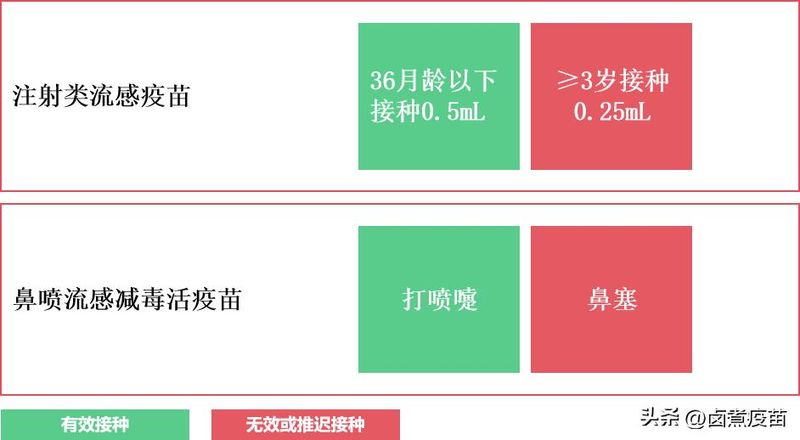
The above-mentioned issues have been the subject of very clear recommendations, in particular that many of them usually lead to disputes at the national level. It is hoped that national guidelines, consensus, recommendations and norms will be updated with appropriate reference to the above-mentioned elements, and that the aefi mandate will be clarified so as to help people at the grass-roots level to build confidence in the application of vaccines。
Influenza vaccine taboos and attention
Response: yes and recommended. Although it may be classified as a taboo, it is recommended that all egg-sensitized persons aged 6 months be vaccinated against influenza. Any influenza vaccine (based on chicken embryos or non-rooster embryos) suitable for the age and health of the inoculation is available。
Response: individual consideration. It is recommended that a serious allergy to any influenza vaccine (e. G. An allergy shock) is a taboo for the future inoculation of all chicken-based and detoxification influenza vaccines. The use of each chicken-based, live influenza vaccine and a detoxification influenza vaccine is also prohibited for any component of the vaccine (excluding eggs) that has a serious allergic history。
Response: use drug prevention measures as appropriate. The preventive use of antivirals to prevent influenza could be considered for those who cannot be vaccinated, especially those at higher risk of medical complications due to severe influenza
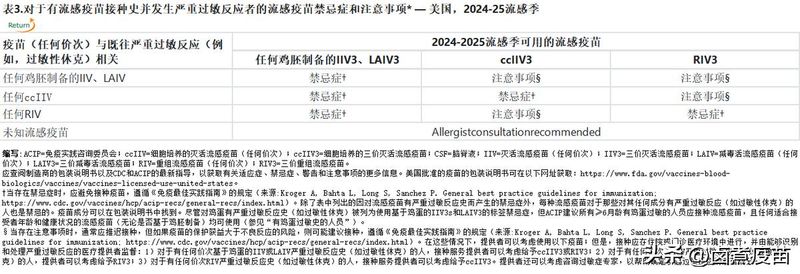
Point: information from the chinese pharmacy and china's technical guide to influenza vaccination shows that egg allergies are not taboo for influenza vaccination, and studies in the united states have found that egg allergies can be allergic to chicken-based influenza vaccine. However, as we do not have influenza vaccines based on cell preparation or restructuring techniques, the status of other vaccines is not repeated。
Summary: the number of flu vaccines available in the country is increasing, but they are chicken-based influenza vaccines (fissilization/sub-units/detoxification), mostly applied in the country for many years (defunctation and sub-units have been applied in the country for over 20 years). Thus, every year, china's centers for disease prevention and control clearly emphasize that “no priority is given” (perhaps, too few products and little evidence of much vaccine research). It is therefore for all, professionals and ordinary people alike, to understand one thing: a good vaccine is a vaccine。