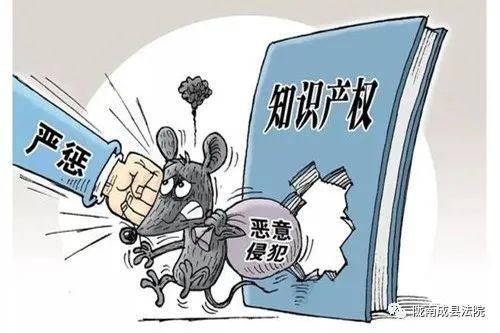
A total of 48 amendments to the penal code (xi) deal with eight amendments to offences against intellectual property, which are higher; all seven offences against intellectual property, with the exception of patent fraud, have been amended, not only in terms of changes in the circumstances of the conviction and sentence, but also in terms of additions or deletions to the constituent elements, as well as in terms of the addition of new offences and the greater extent of the amendments. Here, the rationale for the amendment of the offence of infringement of intellectual property, its features and the relevant issues in its application are explored with a view to its usefulness。
Logic of amendments to offences against intellectual property
Innovation is the first driving force for development, and the protection of intellectual property rights is the protection of innovation. A comprehensive strengthening of the judicial protection of intellectual property rights is not only an objective requirement for compliance with international rules and international commitments, but also an inherent requirement for the promotion of high-quality economic development and the construction of new institutions of an open economy. The amendments to the offence of infringement of intellectual property give the following logical reasons。
The requirement to increase the level of criminal justice protection of intellectual property based on the implementation of party central decision-making deployments. In november 2019, the central office of the communist republic of china and the office of the state council issued opinions on strengthening intellectual property protection, which explicitly called for the strengthening of criminal justice protection and the improvement of criminal law and judicial interpretation. (b) to intensify its efforts to combat crime, to study the lowering of the criteria for the criminalization of offences against intellectual property, to increase the penalties imposed, to modify the description of offences and to promote the resolution of matters involving violations。

The requirement for greater harmonization of laws based on the compatibility of criminal law with pre-existing law. With a view to strengthening the rule of law for the protection of intellectual property rights, the laws and regulations relating to intellectual property rights have been amended, such as the revised copyright act (11 november 2020, 1 june 2021), the trademark act (23 april 2019, 1 november 2019), the patent act (17 october 2020, 1 june 2021) and the anti-improper competition act (23 april 2019). The offence of infringement of intellectual property is a statutory offence and the amendment of the pre-existing law necessarily affects the amendment of the relevant provisions of the penal code. Article 9 of the anti-improper competition law substantially broadens the scope of protection of traditional commercial secrets, from “not known to the public, technical information and business information that brings economic benefits to the rights-holders, is practical and confidential to the rights-holders” to “technical information, business information, such as technical information, which is not known to the public and which has commercial value and is subject to confidentiality measures by the rights-holders”, which necessarily affects the judicial determination of offences against business secrets。
Respond to demands for justice based on solid judicial practice. To strengthen the criminal justice protection of intellectual property rights, the judiciary has undertaken a series of initiatives within the framework of the rule of law to respond to practical needs and solve protection challenges. A series of judicial interpretations and normative documents have also been issued in the “two-high” sectors. For example, in 1998 the supreme people's court issued the interpretations on the specific application of the law in criminal cases of illegal publications; in 2004, 2007 and 2020, the “two-highs” issued three joint documents on certain issues in the specific application of the law in criminal cases of violations of intellectual property rights; in 2011 the “two-highs” issued the opinions on certain issues in the application of the law in criminal cases of violations of intellectual property rights; in 2020, the supreme people's court issued the opinions on the comprehensive enhancement of judicial protection of intellectual property rights; the opinions on the increased punishment of violations of intellectual property rights by law; and in 2020, the supreme people's procuratorate and the ministry of public security issued the decision on the revision of the criteria for criminal cases of violations of business secrets. On the basis of practical experience, amendments (xi) to the penal code include provisions for offences against the trademark of services, improve the provisions for infringements of neighbouring rights such as the type of works in copyright, the violation of the violation of the rights of performers and so forth, replace the offence of violation of commercial secrecy with “serious damage to the rights holder” and add the offence of commercial espionage, undoubtedly responding to the need for criminal justice protection of intellectual property rights in a legislative manner and focusing on the narrow scope of protection, the high threshold of conviction and the existence of protection gaps。
Characteristics of amendments to offences against intellectual property
From different angles, the amendments to the criminal law amendment (xi) on offences against intellectual property rights are read differently and generally reflect the “close” “close” “conversion” of criminal justice protection of intellectual property rights。

Reflecting the “severe” character, i. E. Severe punishment. On the one hand, it is directly reflected in the adjustment of legal penalties and the increase in the number of sentences imposed, the abolition of custodial and regulatory penalties for other offences against intellectual property, except for the unamended offence of false patent, the imposition of a prison sentence as a basic offence and the increase of the maximum sentence for aggravated offences to 10 years' imprisonment; on the other hand, it is directly reflected in the lowering of the threshold of entry (the overall threshold for intellectual property offences in the country, and there is a downward trajectory, reflecting an increase in the efforts to combat crimes against intellectual property), such as the offence of violation of commercial secrets, which was revised to read “significant damage to the rights holder” by “serious circumstances” and “particularly serious consequences” by “extraordinary circumstances”。
Reflects the “close” character, i. E., a web of weaves. On the one hand, it is reflected directly in the expansion or refinement of the types of conduct, such as the modification of the term “inducing” to “bribery, fraud” in the case of offences against commercial secrets, the addition of new forms of electronic intrusion, the violation of statutory confidentiality obligations, and, on the other hand, in the extension of the scope of criminal protection, such as the inclusion of service trademarks in the case of offences of false registration of trademarks and the addition of rights related to copyrights in the case of offences against copyrights (such as the right to perform, the right to produce audio and video recordings, the right to broadcast organizations, etc.)。
Reflects the characteristic of “uniform”, that is, harmonization. On the one hand, it is directly reflected in the strengthening of the coordination between criminal law and pre-inclusion law, such as the compatibility of the description of the offence with the pre-inclusion law, the deletion of the definition of “commercial secrecy” in the criminal law as the direct invocation of anti-improper competition law provisions, and, on the other hand, in the coordination of the offence of infringement of intellectual property, such as the modification of the “value of sale” to “the amount of the proceeds obtained in violation of the law” and the uniform application of the “serious” “special gravity” as a comprehensive sentence。
Several issues in the application of offences against intellectual property
The life of the law lies in its enforcement, and there are some issues that need to be clarified in the application of offences against intellectual property rights。
The question of the analytical judgement of the prefix. Strengthening intellectual property protection is the strengthening of the chain of protection, which includes, in addition to legal protection, economic, technical and social governance tools, as well as civil and administrative judicial protection in addition to criminal justice protection. Thus, the concept of criminal and non-criminality should be based on the nature of the criminal law, the second law, and the precise determination of the limits of the criminal and civil legal relationship between intellectual property rights, which is necessary only in cases where civil legal protection of pre-existing law, administrative judicial protection is inadequate or ineffective. In the understanding of the constituent elements of the offence and the relevant terms, the principle of uniformity of law and order should be followed by a uniform path of interpretation, which should be determined on the basis of prior intellectual property laws and regulations and judicial interpretations. The definition of “business secrecy” in the judicial determination of offences against trade secrets is essential, and the anti-improper competition law defines it in a typographical manner, but judicial practice is complex and detailed in the supreme people's court's provisions on certain issues of the law applicable to the trial of civil cases of violations of business secrets, which came into effect on 12 september 2020, and can be used for specific criminal determinations。
Treatment in competing situations. Crimes against intellectual property can easily compete with related offences, and in judicial practice the perpetrator is guilty of an offence against intellectual property, which at the same time constitutes a crime against the production and sale of counterfeit goods, and is punishable by a heavier penalty under the offences against intellectual property and the production and sale of counterfeit goods. Moreover, the acquisition of the business secrets of rights holders by electronic intrusion, which also constitutes the offence of illegal access to data from computer information systems and illegal control of computer information systems, should also be dealt with on the basis of the principle of “one-size-fits-all”. It is worth exploring the electronic access to the business secrets of rights-holders and the processing of non-commercial confidential data, which should be dealt with in a holistic manner, on the basis of a comprehensive and adequate evaluation and in the light of a combination of culpability。
The question of the breakdown of the “severe” “severe” offence. The number of offences against intellectual property rights has been amended to read, for example, “the amount of proceeds obtained in violation of the law”, “the aggravating circumstances” and “the aggravating circumstances”. “the amount of proceeds obtained in violation of the law”, which is easier to understand than “the amount sold”, refers to the amount of profits. “serious” is a comprehensive concept that extends beyond the broadest range of means, methods, time, place, consequences, target, number, motive, amount, subjective evil and even the effects of the act; and so forth, the criminal law ensures the stability of the text by means of a principled provision. The amount of the offence, such as the amount of the illicit business, the amount of the sale, the amount of the illicit proceeds and the direct economic loss caused by the act, is therefore an important but not the only factor in the judicial determination of an offence against intellectual property. What is meant by “serious” and what is meant by “special” depends on a summary of judicial practice. From this perspective, it is particularly urgent for the authorities concerned, such as the “two-high”, to refine the list of offences in order to meet the need to punish offences against intellectual property, in particular cyber-related offences。
(by the people's procuratorate of the pudu district of shanghai)