What's a fund split? What does that mean? The separation of funds is a way of recalculating the assets of the fund by changing the correlation between the net share of the fund and the total share of the fund, while maintaining the same level of total investor assets。
Assuming that an investor holds 10,000 fund a, the current net fund share is $1. 60, the corresponding fund assets are 1. 60 x 10,000 = $16,000. Following the split of the fund at the ratio of 1:1. 60, the net value of the fund was $1. 00, while the share of the fund held by investors was changed from 10,000 to 10,000 x 1. 6 = 16,000, and its corresponding assets remained at 1. 00 x 16,000 = $16,000, with no change in the size of the assets
Disaggregation of funds can reduce investor sensitivity to prices, facilitate the continued marketing of funds, improve the share-holder structure of the funds and allow fund managers to operate funds more efficiently, thereby implementing the investment philosophy and investment philosophy in which the funds operate。
What is the difference between “fund replication”, “fund fragmentation” and “fund fragmentation”

There are three different ways of copying, dividing and dividing. The common feature is the decline in the net value of merit funds, which allows investors to buy better funds at lower prices and to reap the potential future benefits of merit funds。
The fund is divided into a one-time allocation of realized gains, reducing the net value to close to $1. A large proportion of the fund's share would need to be sold on the secondary market, thereby converting it into a realizable gain, which would then be distributed to the fund holder. Since the fund's dividends are realized, the fund's managers must release the profit-making stocks or bonds in their hands, thereby increasing transaction costs。
The replication of the fund was the creation of a new fund in the way an old fund operated. The old fund has been recognized by investors, but its unit net value is already high and the fund is not small, and continued requisitions may spread the benefits of old investors, while new investors are being held back by high net values. The replication of the fund addresses this problem. However, since the old and new funds were at different times, timing was also needed to achieve the good performance of the old funds。
The separation of funds is the division of higher net-value funds into lower-net-value funds. When the fund was split, the original portfolio remained unchanged, the fund manager remained unchanged and the fund's share increased, while the net unit share decreased. The split of the share of the fund is achieved by directly adjusting the size of the share of the fund to achieve a reduction in the net share of the fund, without prejudice to the realized gains, unrealized gains, collections, etc. Of the fund. Distinction between fund fragmentation and fund fragmentation?
Q: is the fund split based on a $1. 00 requisition

Response: on the day of the split, the price of the fund is based on the split announcement, which is usually $1. 00. From the next day, there will be fluctuations based on market changes, which may be higher than $1 or lower than $1。
Q: is there a “closed period” for the split of the fund, similar to that of the new issuing fund? Are there any limits to requisitioning and redeeming before and after the split
Response: whether there is a closed period after the split of the fund, subject to the announcement of the respective fund. Generally, there is no closed period during which investors can redeem the fund at any time during the second working day following the split. However, in view of the fact that segmentation may attract a certain degree of centralized requisitioning, and because of the need for smooth investment operations of the fund, a limited requisition is generally used after the split of the fund, and when the fund reaches its intended size, the requisition will be suspended。
Q: the difference between the separation of funds and the separation of funds
Response: disaggregation of the share of the fund can accurately adjust the net share of the fund to one dollar, achieving the purpose of reducing the net share of the fund by directly adjusting the size of the share of the fund, without prejudice to the realized gains of the fund, unrealized gains, the collection of funds and their proportional relationships, and without material negative impact on the equity interests of investors. In turn, it is difficult to accurately adjust the net share of the fund to just one dollar, largely close to one dollar。
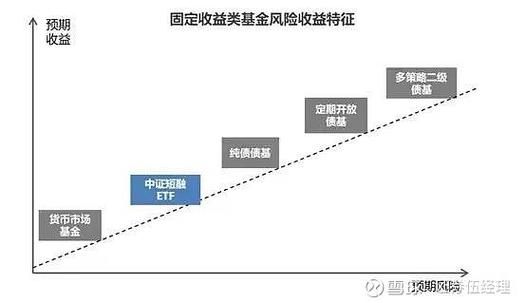
The split of funds is somewhat like the distribution of shares by listed companies, and the corresponding increase in the share of the fund has been accompanied by a decrease in the net value of the fund and a change in the total assets of the fund holders. The cash portion of the fund is similar to the cash dividends distributed by listed companies, which distributes the realized gains in cash。
Disbursements do not require the sale of still-good holding stocks compared to dividends, the realization of dividends to investors and the impact on the fund's investments
Q: requisition should be made before or after the split of the fund
Response: in fact, requisitions before and after the disassembly of funds have no material impact on investors. If the investor is satisfied with the proposed split fund, he does not want to split the split in haste on the day of purchase or fear that the split would lead to a proportional allocation on the day of the requisition because of excessive requisitions. Currently, the disassembly funds are mostly limited in volume) so that investors are well placed to ask for them before they split. Of course, if investors psychologically prefer low net-value funds and feel that a split net-value fund is more attractive to themselves, it would be better to wait until the day of the split or later before the requisition is made。