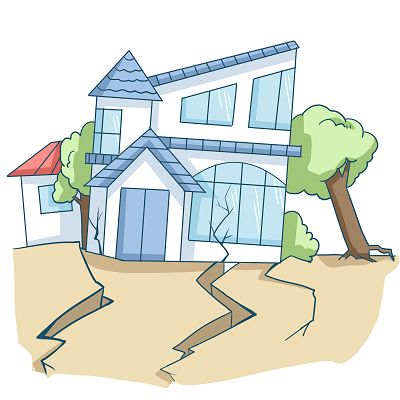
Speaker of the basics for earthquake prevention: 29 catalogue of basic concepts of earthquakes and coefficients for identification and assessment of seismic risks of households for seismic preparedness and emergency response, public seismic avoidance methods and skills systems of government and social support present catalogue basic concepts of earthquakes and generous earthquake 01 as a shock resulting from a sudden breakup within the earth and as a way of releasing energy within the earth. Earthquakes are defined as natural and artificial earthquakes by their cause; shallow, medium and deep-source earthquakes by their source depth; and micro-, weak, powerful and mega-seismic earthquakes by their size. Seismic taxonomic definitions and classification of seismic wave types are divided into vertical (p), transverse (s) and facial (l) waves. The vertical wave is the fastest, but less destructive; the transwave is slow but more destructive; and the surface wave is the most destructive wave in an earthquake, resulting from the combination of vertical and transwave encounters. When seismic waves are transmitted within the earth, reflections, refractions, etc., occur in different media (e. G., crust, mantle, etc.), leading to changes in the transmission path and speed of seismic waves. The tectonic theory of seismic wave transmission is that the earth's surface is covered by many plates of various sizes, which are constantly moving with heat within the earth, crushing and collisioning each other, thus triggering an earthquake. The type of plate boundary is divided into extended, destroyed and converted borders. The extended border is an area where the plates are fractured and where geological activities, such as seafloor expansion and volcanic eruptions, are common; the desolate border is an area where the plates collide with each other, often triggering earthquakes and mountain-building movements; and the transversal border is an area where the two plates slide between each other and can also trigger earthquakes. The area of error and rumours about the relationship between the plate movement and the earthquake should be returned to the house immediately after the earthquake. Rumours are that the structure of the house may have been damaged after the earthquake, that there is a great risk of entering the house to save property and that personal safety should be ensured. There are rumours that an earthquake is preceded by anomalies, such as light and sound, which can be used to predict earthquakes. Rumours say that anomalies such as the earth's light and the sound of the earth do not occur in every earthquake, nor do they provide a reliable basis for forecasting earthquakes. Earthquake forecasting requires specialized seismic monitoring equipment and scientific analysis. In the event of an earthquake in the area of error, the choice should be made quickly to jump off the building. Rumours: jumping from a building during an earthquake is extremely vulnerable and should choose to hide under a solid table, under a bed or under a wall. 030201 identify and assess seismic risk 02 to understand their own seismic zones, such as the pacific rim earthquake zone, the eurasia earthquake zone, and the activity faults and seismic frequency within the seismological zone. Earthquake zones identify potential hazards such as potential earthquake-induced surface fractures, landslides and mudslides, and the extent and extent to which these disasters may affect. The geological formations understand the history of past seismic activity, in particular the location and magnitude of the earthquake and the type and extent of disasters caused by the earthquake. Historical seismic records identify potentially dangerous areas and assess the building's resilience to earthquakes to check the structural type of the building, such as whether it is designed to withstand earthquakes and whether there are vulnerable structures or structures, such as wall cracks, unrighteous columns, etc. The structure assesses the resilience and resilience of materials used in buildings, such as reinforced concrete, bricks and wood. Building materials are aware of the age of construction of buildings, and old buildings may have design defects or aging of materials, with poor seismic resistance. Community plans for the construction years are informed about earthquake response measures in their communities, such as shelters, evacuation routes, emergency communication, etc., and participate in community seismic exercises. The individual plan sets out individual and family contingency plans for earthquakes, including pre-earthquake preparedness, shock avoidance, post-earthquake self-help and mutual rescue. The government is aware of the earthquake contingency plans developed by the local government, including emergency organizational structures, emergency communications, relief teams, material reserves, etc. To learn about local contingency plans and other sites where measures have been taken to address the earthquake security situation in public places such as malls, cinemas, gymnasiums, etc., and about their emergency response measures and evacuation routes. Household environments check whether there are items at home that may fall or be dumped, such as lamps, bookshelves, cabinets, etc., and the location of flammable explosive substances and toxic chemicals. School environments screen security hazards in school buildings, playgrounds, laboratories, etc., ensure unhindered access to evacuation routes, and develop earthquake evacuation contingency plans. The responsibilities and tasks of each family member, including evacuation routes, emergency liaison and self-help mutual assistance, are determined by the risk screening home preparedness and emergency response 03 in homes, schools, etc. The establishment of a family earthquake prevention team to develop detailed earthquake prevention plans and contingency plans based on the actual situation and living environment of family members. The development of earthquake prevention plans organizes regular seismic drills for family members to familiarize themselves with evacuation routes and emergency response measures and to improve their capacity to respond to earthquakes. The earthquake preparedness programme was developed for the home and emergency supplies such as food, water, medicine, emergency lights, flashlights and radios were prepared for use during earthquakes. Emergency supplies are prepared to prepare lists of necessary materials and equipment, such as helmets, gloves, masks, glasses, etc., to avoid injuries during earthquakes. Protection supplies are prepared for basic first aid supplies such as bandages, disinfection fluids, tourniquets, etc., for self-help or mutual rescue in the event of an earthquake. The first aid #01 shock avoidance measures were carried out in the course of the earthquake, using the right shock avoidance measures, such as hiding under the table and away from fragile items such as windows and glass. The self-help skills 02 self-help techniques in emergency situations provide basic self-help techniques, such as how to escape from hazardous areas, how to provide immediate relief, etc. In the aftermath of the earthquake, the principle of mutual rescue was actively involved in mutual rescue operations, following the principle of “saving first, save after” and save first those trapped in shallow ruins. Following an earthquake, psychological counselling is conducted in a timely manner to alleviate psychological stress and fear and to maintain a positive optimism. The restoration of normal living order as soon as possible, including food, water supplies and the rehabilitation of the living environment. Society supports active participation in social relief and reconstruction, seeking social support and help to overcome the difficulties together. Post-disaster psychological adjustment and rehabilitation suggest methods and techniques of shock avoidance in public places, such as schools, offices, etc., to avoid standing by doors and windows, near glass or under high-mounted items by choosing safe havens such as under a solid table, interior corner or wall. When an earthquake occurs, the location of the earthquake is chosen in such a way as to take immediate measures to avoid it, without hesitation or running. If you are in a high building, you should immediately go to the shelter and wait for the shock to stop before finding a way out. In case of refuge, prompt action is taken to protect the head and neck with your hands, or to put school bags, pillows, etc. On your head, in order to prevent damage from falling objects. In case of an earthquake, secure positions, such as seating, arming, etc., should be quickly located and held in order to avoid falling or being injured. The driver should stop immediately and pull the brakes immediately after the earthquake has stopped, pending the cessation of the earthquake. If you are in a subway or tunnel, you shall wait for instructions from the staff member before proceeding. In transportation, order is to be maintained, no panic is to be observed, staff are to be directed and the evacuation is to be orderly. If dangerous areas cannot be avoided in a timely manner, the head should be quickly protected by hand or in places of refuge such as low-lying areas and earth dumps. The protection of the head is to observe the environment after an earthquake and to observe the surrounding environment to avoid aftershocks or other secondary disasters. During outdoor activities, buildings, trees, street lights, electrical poles and other objects that may collapse or fall, as well as flammable explosive objects, shall be avoided as far as possible. In the event of an earthquake in a public place, outdoor activities should be conducted under the command of the staff on the ground and should be carried out in an orderly manner so as not to cause foot-stamping or congestion. Listening to commands in emergency situations, stay calm, do not panic, and try to remain sober. Stay calm, if trapped or unable to evacuate, and use mobile phones, whistles, etc., to send calls to the outside world for help. The delivery of the message follows on-site command, and the orderly government and social support system describes the responsibility and role of the 05 government departments in the development of earthquake mitigation planning and policy, which are responsible for the development of earthquake mitigation planning and policy, including laws and regulations for earthquake monitoring, early warning, defence and emergency response. The department organizing seismic monitoring and forecasting is responsible for organizing and coordinating seismic monitoring and forecasting, establishing seismic monitoring networks and improving the accuracy and timeliness of seismic predictions. The government department for the organization and coordination of emergency response is responsible for the preparation of contingency plans for the earthquake and for the organization and coordination of emergency response efforts, including the construction of relief teams, material allocation and disaster recovery. Civil society organizations that build relief teams can form specialized teams, conduct training and exercises, and improve their capacity and quality. For example, an earthquake rescue association quickly organized teams to the affected areas after the earthquake. The contribution of materials for the participation of civil society in relief activities and the mobilization of civil society organizations can provide emergency assistance in the affected areas by raising funds, donations, etc. For example, a public interest organization actively raised funds after the earthquake and provided a large amount of relief supplies to the affected areas. Post-disaster psychosocial support civil society organizations can also provide psychological support and counselling to affected populations to help them rebuild their homes。for example, a psychological counselling service sent professional counsellors to the disaster area after the earthquake to provide psychological support and assistance to the affected population. In construction projects, enterprises should conduct seismic safety evaluations to ensure the resilience and safety of construction works. Enterprises should regularly organize staff training and exercises on earthquake response to increase staff's awareness of emergency response and self-help. Enterprise units should develop earthquake contingency plans, establish emergency response teams and store the necessary emergency relief supplies and equipment to ensure rapid response and disposal in the event of an earthquake. As a result of the lessons learned from the training of earthquake safety assessment staff and the rehearsal of contingency plans and material reserves, continuous improvement in efforts to enhance seismic monitoring and forecasting should further strengthen seismic monitoring and forecasting, improve the accuracy and timeliness of earthquake early warning and provide stronger support for earthquake mitigation. Raising public awareness in society should strengthen international cooperation and the exchange of information and education on earthquake knowledge among government departments and enterprises, and increase public awareness of earthquake mitigation and self-help. Earthquakes are global disasters, and countries should strengthen international cooperation and exchange to jointly address the challenges of seismic disasters and share experiences and technologies for earthquake mitigation and mitigation. Tanks