I'm sure you're familiar with the heaters because they're used in our lives, and you don't know if you know the centrifuges. – a machine that relies on imported mechanical energy to increase the pressure of gases and to discharge them, which is an aerodynamic machine. Centrifuges are widely used for ventilation, dusting and cooling in factories, mines, tunnels, cooling towers, vehicles, ships and buildings; ventilation and winding in boilers and industrial kilns is quite effective in the case of centrifuge heaters, and today they bring people together to understand centrifuge heaters。
Centrifugal heater
Centrifugal heaters consist mainly of air heaters and wind machines, which heat up and then send them out, so that indoor air temperatures can be regulated. Air heaters consist of spiral wings. For example, a steam-type heater with a heat-discretion tube is surrounded by aluminium-banded special equipment at a wall thickness of 21. 5 seamless boilers at a distance of 2. 5 mm, a drain and heat-media flow pipe is the overall welding structure and the working pressure of the heater is below 0. 8 mpa。
Centrifugal heaters are based on the principle of dynamic-to-power conversion, using high-speed rotations of leaf wheels to accelerate the gas and then slow down, change direction and transform kinetic energy into dynamic (pressure). In a single stage centrifuge, the gas moves from a axis into a leaf wheel, and the gas flows through a leaf wheel, changing its course and then into an amplifier. In an amplifier, the gas changes the direction of the flow and increases the surface area of the pipe to slow down the flow, which transforms the kinetic energy into the pressure energy. The increase in pressure occurred mainly in leaf wheels, followed by an increase in pressure. In multi-stage centrifuges, the flower is used to bring the flow into the next wheel, generating higher pressure。
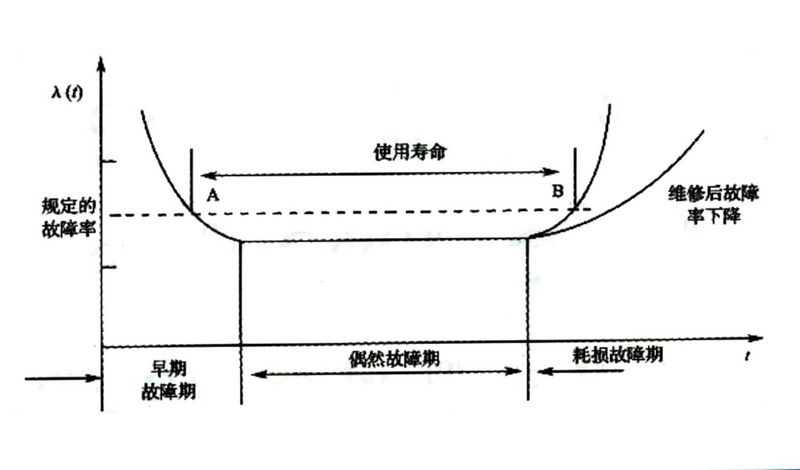
The loss of the centrifugal heater bearings is a recurring equipment problem, including the bearings of the winder, the wear of the bearings of the bearings, and the wear of the bearings of the blowers. In response to the above-mentioned malfunctions of the centrifuge heater, traditional maintenance methods include welding, heat spraying, electric brushing, etc., all of which have certain disadvantages: thermal stress from the high temperature welding cannot be completely eliminated, causing material damage, causing the parts to bend or fracture; and the electro-painting is limited by the thickness of the coating, is easy to strip, and both methods are metal repair, cannot alter the “hard-to-hard” co-operation, and, with the combined effect of each force, can result in the rebranding of the roller。
The present-day western countries have resorted to the restoration of high-molecular composites in response to the above problems, while the united states fusion blue system, which has a combination of super-intelligent, superior resistance, etc., can be used without demanufacturing. Neither welding stress effects nor repair thickness are limited, while the metal materials in the product are not concessional, absorb the shock vibrations of the equipment and avoid the possibility of wear and tearing again, and gradually replace traditional methods in domestic applications for centrifuge heater failure repair。
These are some of the information you have given about centrifuge heaters, as well as some of the working principles and the maintenance of faults. It is hoped that if we need to buy centrifuge heaters later on, we will be able to find out about them so that we can use them better。