The feeder is the developmental polar core with unique spatial positioning and capability. - the key to building the feeder is to create a radiation-intensive band power across the board

Interview guests
Zou wei
Adviser to the government of hubei province, vice-president of the provincial council for political affairs, university of wuhan
The 12th and 11th plenary sessions of the provincial council, held recently, emphasized that ensuring decisive progress in the construction of feeder points is a strategic initiative that is firmly committed to political responsibility and is in full compliance with the zealous demands of general secretary xi. The acceleration of the construction of an important strategic anchor for the rise of the central region is the strategic positioning given to lake north by general secretary xi, which is the most important historical opportunity for the development of the new era。
The feeder starts at the geographic location
Transport positioning, enabling status
The hubei daily newspaper is a media journalist: economic and social development is a complex, energy-changing and dynamic system. How can we explore the theoretical content of “pivots” through theoretical analysis and national experiences such as development economics, space economics, new trade theory, new economic geography
Zouway: “practice points” are derived from the lever and power theory of physics, which provides a scientific overview of the focus, support and key points that are relevant to the overall strategy of economic development。
The leverage principle indicates that the feeder is the fixed support point for the lever system and the extraction point for the conversion of the mechanical advantage. The energy-grade principle of quantum mechanics shows that atoms consist of atoms and electrons operating around them, at different levels of power, which determine the transformation and release of energy. Leverage principles and transformational patterns provide important inspiration for economic and social research。
In economic development, the backbone is the developmental pole with a unique spatial positioning and capability level. They relate to regional and global economic, technological, industrial and governance systems. They are important factors that drive and support economic growth. They determine the basic patterns, economic structures and mechanisms of regional resource allocation。
The bottom logic of a region becoming a “pivot” is a unique location advantage. The basic premise of the pillar is that there is an irreplaceable special advantage in the distribution of some or some of the important zone factors. The economic centres of the early developed countries are usually industrial clusters, whether agricultural or industrial, which are characterized by the cycling characteristics of industrial distribution, concentric circles and technological clusters, depending on the characteristics of industrial development and the principles of economic efficiency, and are located at the centre of the circles. The central theory further sheds light on the changing character of cities, which are the backbone of the industrial and demographic spatial configuration of the radiation belt. However, as the technological revolution and the boundaries of human economic activity transcend the bounds of traditional industries and factors, centres based on natural geographical advantages may lose the basis for economic pivot. Typical examples are the early agricultural economic centres in italy, germany and france, and the rust belts in the central and western parts of the united states, which have seen loss of population and industrial decline。
The skeleton that achieves the function of a “postpoint” is the hub of the traffic network system. The application of higher-quality transport tools and the development of more accessible and efficient transport corridors will alter the pre-existing geography-based division of labour and trade patterns and the positioning and functioning of regional economic outlets. The difference in functions in the economic space between different regions depends on the accessibility of the transport network, and the more accessible areas, the easier it becomes to become a regional or global economy. In the real economy, the backbone function is not only pivotal, but is also reflected in the role of industrial spatial organization and industry life cycle in overall economic development, with leadership and support in the multi-level configuration of economic activity through the deep linkages of industrial chain value chains。
The key to the implementation of the “pivot” effect lies in the level of capacity, i. E., the radiation generated in the economy as a whole, the concentration, and the power. The dual economic principle, the causal principle of circulatory accumulation, points to the large rural-urban migration of labour during the industrialization process, with a small number of cities becoming a rallying point for industry, population and wealth. The theory of big push and the theory of critical minimum effort suggest that to form the backbone of rapid economic development, multiple industries must work simultaneously up and down in a given area, with a short period of “big push” to form a level of capacity that is sufficient to exceed critical levels. The “growth point” and “development poles” theories emphasize the need for some regions to pool substantial factor resources to develop the polarity. These theories are intellectual and enlightening, based on the theoretical approach of development economics and on national development experiences。
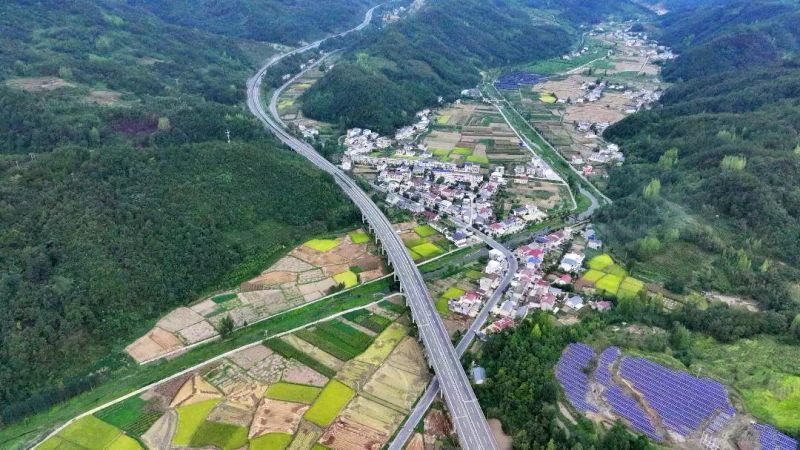
“pivot theory” is the solution to economic development
Critical thinking on insufficient imbalances
The hubei daily newspaper's mass media reporter: the presence of a multidisciplinary theory in economic development has led to different development experiences based on the principle of spontaneous operation of markets. Why, in your view, is it only my country's practice of integrating regional development strategies that explicitly calls for strategic delivery points in some regions, including the critical deployment of hubei “to accelerate the emergence of the central region”
Zouey: “pivot theory” is an important element of a china-specific coherent regional development theory. It is a key idea to address inadequate imbalances in economic development. It reflects china’s wisdom to govern “one-size-fits-all, one-size-fits-all.”。
The dynamic practice of china's economic development gives a rich scientific identity to the “pivot”。
The feeder is the apex of the polar, point-axis in the structure of economic space. The polar nuclear programme emphasizes the high concentration of economic activities and resource elements. Point axes point to new growth points in the region driven by feeder points and are structured into development axes and axes。
Pivots are core nodes of high-energy and high-centre economic and social networks, leading the process of human flow, logistics, information flow, energy flow connectivity, dispersion or clustering within the region。
Pivots are key points in the supply chain system of the industrial chain. The backbone is the backbone and backbone of the dominant industry in the region and, through spatial linkages and spillovers, has become the centre of gravity for the regional economic activity landscape。
The channels through which the nodes function are the dominant effects, the multiplier effects, the polarized effects and the diffuse effects. The dominant effect is the “head-starting” of development in the area from which it is exposed; the multiplier effect is the multiplier effect that can drive investment within the region through optimal resource allocation; the polarization effect is the high concentration of economic activities of high value added, particularly primary innovation activities at the feeder point; and the diffusion effect is the expansion of economic activities along points, lines, axes, surfaces, prying and creating economies of scale。
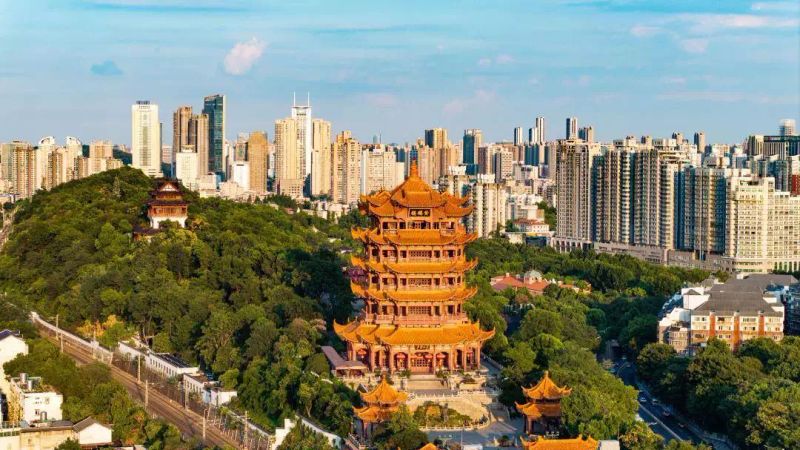
Hubei is developing the country
Be brave, be good at choosing the big ones
Hubei daily press: faced with the rapidly evolving dynamics of international development patterns, security patterns, science and technology patterns and governance patterns, our country has accelerated the construction of a new development landscape to respond to uncertainty in the external environment with high-quality development certainty. How should we further grasp the significance of national development in the central region
Zouvi: the central region runs through the middle east and west, connects the north and the south, and communicates both within and outside the country, and is an important contributor to the national economy。
The strategic requirements of the party centre for the rise of the central region are both consistent and more responsive to developments and tasks of the new era. Since the 18th anniversary of the party, general secretary xi has hosted two seminars on a coordinated regional development strategy for the rise of the central region. From “south-west chang” to “hangnan changsa”, the subject remains the same, and the title was elevated from “symposium for the advancement of the central region” to “symposium for the advancement of the central region in a new era”, which is richer and more far-reaching, demonstrating the strategic determination of the central party to accelerate the rise of the central region. The “unchanged” and “changed” requirements for the development of the central region were important follow-up to our efforts to promote quality development in the central region。
In summary, what is “unchanged” is to emphasize the role of the “three bases one hub” in the central region; and what is “changed” is to make clear that the central region has a vital place throughout the country and is expected to play a greater role in the modernization of china in the new era. “no change” is required to accelerate high-quality manufacturing development in the central region, and to accelerate the construction of modern industrial systems and the development of new quality productivity, as appropriate. “no change” is required to improve the capacity of the central region for autonomous innovation in key areas; and “change” is required to strengthen the deeper integration of sti and industrial innovation and to enhance technological support capabilities for industrial innovation development. “no change” is required for the orderly transfer of industrial gradients in the central region to optimize industrial layout; and “change” is required for the strengthening of the main road map in the central region for the consolidation of large markets throughout the country and for strengthening linkages with other major development strategies. “no change” requires the central region to work together to promote eco-environmental conservation and green low-carbon development; and “change” requires the promotion of industrial ecology and eco-industrialization to accelerate the construction of beautiful central areas。
During his visit to hubei in 2013, general secretary xi called for “to work towards building critical strategic points in the central region”. Last year, when visiting hubei, the secretary-general stressed “the importance of accelerating the construction of the strategic feeder of the rise of the central region”. The spirit of these important directives is consistent and up-to-date, marking the new dimensions of hubei’s history in the convergence between the two major scenarios, giving hubei a new mission in the two strategic superstitions of his high-quality development in the yangtze economic belt and the rise of the central region, and charting a new path in hubei’s struggle to make a greater contribution to china’s modernization。
From “efforts to build” to “accelerated construction”, it reflects the strategic assessment and overall deployment of the national and international economic situation by the central party. At present, the development of the new technological and industrial revolution has accelerated the reshaping of the global blueprint for innovation, the world economic and trade system has undergone major adjustments and divisions, and the domestic economy has been challenged by pressures such as contraction of demand, supply shocks, and expected weakening. Our country is accelerating the construction of a single national market to seize new opportunities such as domestic demand potential, science, technology and innovation, and green transformation. Hebei, the only province to have a long run-off of the yangtze main line of over 1,000 kilometres, is located in the nine provinces of tokuixi and the north and south, with conditions and responsibilities to maintain the backbone of the yangtze economy, to pry the rise of the central region, to connect to the development hub and strategic points of the national unity market。
From “effort for construction” to “accelerating construction”, it is a vivid practice to follow up on general secretary xi's advice on the development of hubei. Since its eighteenth anniversary, the hubei economy has spanned three trillions, four trillions, five trillions and six trillions of the country's seventh largest economy. The hubei economy is growing faster than the province and leads the centre. Hubei has a bottom line and has the power to act as a backbone for the rise of science, technology and innovation in the central region, leading upscaling industries, revolving hubs and supporting green development。
From “efforts for construction” to “expedited construction”, an advance order was issued on the strength and strength of the province. Hubei has to be faster, better and stronger in regional development than in other areas, to be “c” and to be brave and good in national development. In the context of comprehensive and deeper reform, it should be a test field for innovative and integrated reforms, with deep-seated reforms that promote the building of autonomous and innovative sources of innovation, institutionally open new highlands and powerful engines of high-quality development。
The hubei daily news is full of reporters