Addie pedagogical design model
1 presentation of modalities
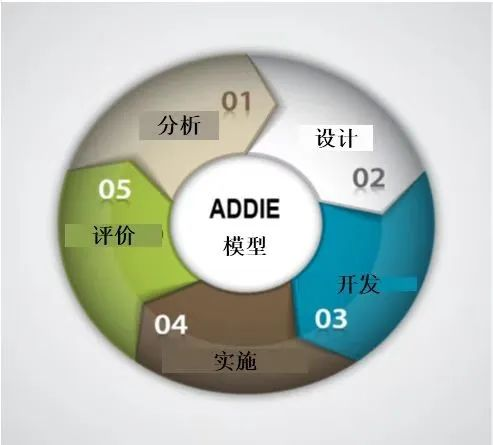
The addie model runs from analysis, design, development, implementation to assessment。
1. Three aspects
Area i: learning what (learning goal setting)
Ii. How to learn (learning to apply strategies)
Iii. How to judge the learning results achieved by learners (learning appraisal implementation)
2. Five core steps



2. Examples of application
The addie model reflects the inner core and common features of theoretical models of pedagogical design。
This paper is based on a case study of professional degree graduate studies in english and analyses the application of the addie model to the course design process, with the aim of optimizing teaching results。
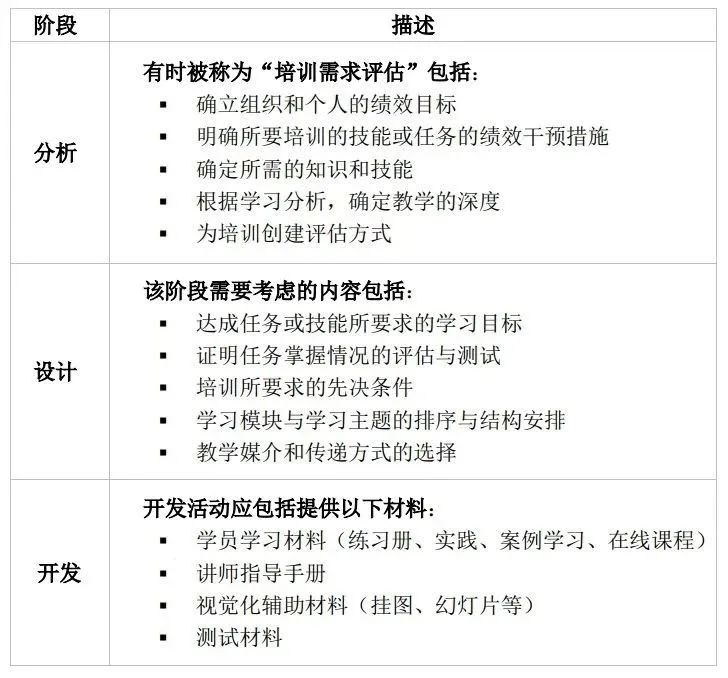
1. Analysis phase
(1) main elements
The analysis phase, as the first stage of the entire design phase of teaching, identifies objective elements, teaching objectives and learning needs. The analysis of objective elements includes an analysis of learners and available resources; the analysis of teaching objectives, which is considered at the cognitive, skill and emotional levels, is the goal achieved by learners through their learning activities; and the analysis of needs can be seen as a progressive means of filling the gap between existing objective elements and teaching objectives。
(2) investigation analysis
Questionnaires were sent to a graduate degree degree in a graduate school to examine students' motivations and learning styles and to carry out analysis at the pre-school stage。
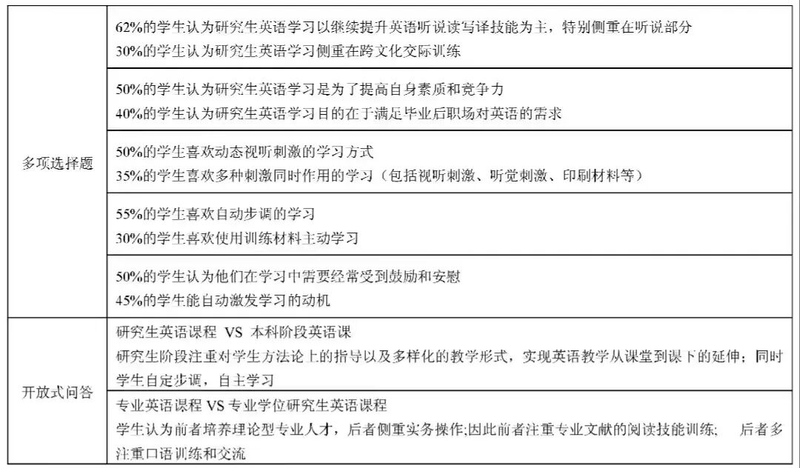
From the above-mentioned questionnaire, it can be seen that postgraduate professional degrees require enhanced language-hearing and oral training in foreign language studies and enhanced cross-cultural communication training; and that postgraduate professional degrees in english should strengthen their professional “practices” in order “to meet the demand for english in the workplace” and “to improve their competitiveness”, as compared to the professional english courses, but more emphasis needs to be placed on “oral training and communication”. At the same time, the postgraduate school of law emphasized the importance of “self-paced and autonomous learning”, and the importance of english studies at the post-graduate level lies in the teacher's “methodological guidance”。
(3) teaching objectives。
Acquiring word-to-word audio materials on various subjects and familiarizing themselves with various english accents; conducting personal discussions or discussions on topics of daily or general professional cases, using normative terms that are appropriate to the context and context; mastering learning methods in english that are appropriate to the needs of the individual, effectively self-learning after school and fostering the concept of lifelong learning。
2. Design phase
The pre-design analysis is based on the identification of teaching processes and teaching sequences, the establishment of work progress and the selection of specific media forms。
The organization of the content of the english curriculum takes into account the value orientation of the student with regard to language learning, i. E. The importance of the content of language learning to the student's subject, thus establishing the level and modularization of the content of learning, from basic language skills to the development and upgrading of intercultural skills, and finally the combination of language skills and practice。
Development phase
On the basis of the analytical design phase, the english-language curriculum selects the main selection of materials, together with the development of supporting teaching materials, the generation of specific modules of teaching content and the flexible use of appropriate media to maximize the amount of teaching messages。
4. Implementation phase
The implementation phase is aimed at exporting teaching activities in different practical settings and passing on teaching programmes and content. Pedagogical activities need to be implemented in accordance with the needs of students, with emphasis on methodological guidance for students and diversified forms of teaching, with a view to extending teaching from classroom to classroom。
Assessment phase
The assessment phase runs throughout the pedagogical design process, divided into process and summary assessments。
(1) process assessment: process assessment collects data in the form of questionnaires, interviews or interviews during the above-mentioned stages of the teaching design and between them, continuously revises the pedagogic design programme at a later stage, highlighting the internal circular features of the addie model。
(2) summary assessment: this evaluation is carried out after the completion of the implementation phase of the teaching plan, and is followed up on knowledge transfer, learning effectiveness, learning attitudes, etc. Strengthening the sequenced features of the addie model based on the results of the survey and highlighting its step-by-step and operationalization。
6. Summary
The shift from simple repetition of foreign language teaching activities to dynamic pluralism is an inevitable trend. Teachers need to effectively manage the variables of the dynamics of the teaching process, organize the teaching process in an orderly manner through a teaching model system, control the variables, optimize the effectiveness of the teaching, change the dynamics of the teaching activity and isolate the single state, and prepare teachers to form a local and holistic view of the teaching activity, emphasizing the relevance and sustainability of the teaching activity。

3. Restatement of the examination
The first steps in the entire teaching cycle are:c
A. Implementation phase
B. Design phase
C. Analysis phase
Assessment phase
Fill questions
Addie pedagogical design model covers five core step analysis, design, development, implementation, evaluation of the teaching design process
Please describe the main elements of the addie model。
The addie model consists of three main components, namely, what to learn (learning target setting), how to learn (learning strategy application) and how to judge the learning effectiveness of learners (learning evaluation implementation)。