The import tax exemption will end
Over the past two years, as global e-commerce has flourished, a growing number of platforms and sellers have started to move out, and platforms like temu, which are primarily expensive and expensive, have emerged rapidly and are well received in many overseas markets. But the path of so-called success is not easy, and it is inevitable that there will be problems as we walk out。
A few days ago, it was reported that german finance minister christian lindner had indicated that “germany would support the removal of the 150 euro exemption limit at the european level”. The ministry of finance of germany also welcomed the european commission's “proposal to adapt european customs law to meet the challenges of electronic commerce”, which included ending tax exemptions。
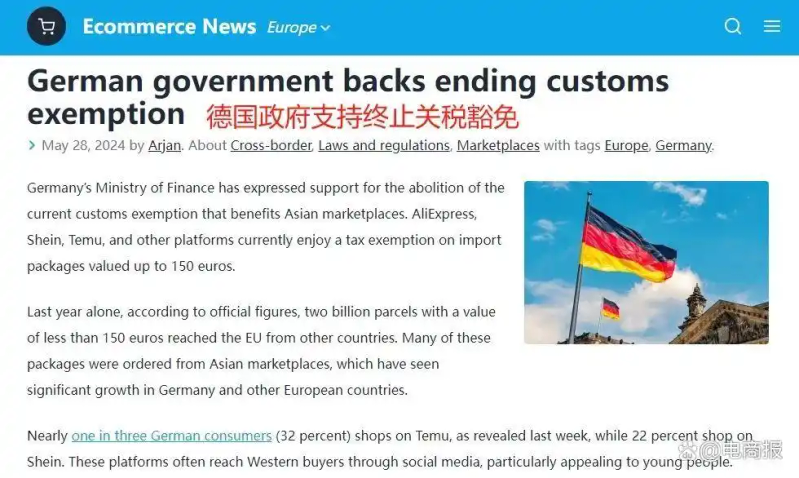
Germany will support the elimination of import duty exemptions
This is not good news for both vendors and platforms, as germany supports a comprehensive reform of eu import duties, or will end the tax-free policy on cheap packages。
In time, as early as may 2023, the european commission indicated its intention to eliminate the current policy of exemption for imports of goods under euro150. Since, under previous eu regulations, parcels purchased online from non-eu countries are not subject to customs duties as long as their value is less than 150 euros。
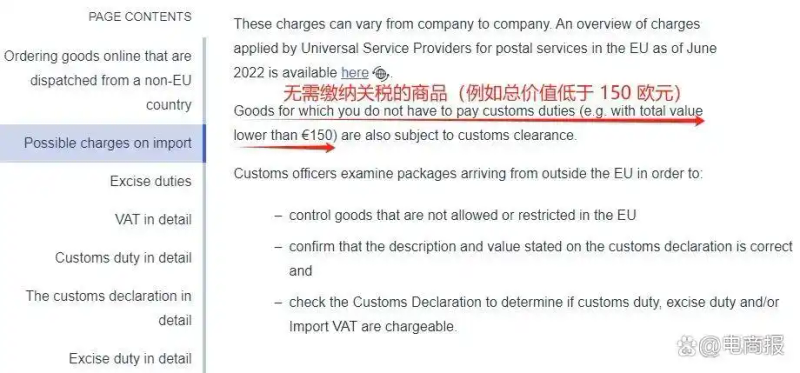
Non-payment of customs duties up to euro150
As to the reasons for the abolition of this policy, the european commission stated: “this threshold has been heavily exploited by fraudsters and as many as 65 per cent of the parcels entering the eu are currently undervalued in order to avoid import duties”
In fact, the european commission did so for no reason. According to official data, in the last year alone, 2 billion parcels worth less than 150 euros entered the european union from other countries. In response, the commission stated that “the enormous volume of electronic commerce is testing the limits of customs”。

It's hard to dig up
It is well known that, as the third largest global electricity market, the development of a mature, well-infrastructured european electricity market has been a priority for many of the world's economies。
According to data released by the former statista, the size of the european electricity market is expected to reach $106. 8 billion in 2027. Such a large market is more attractive to cross-border sellers。
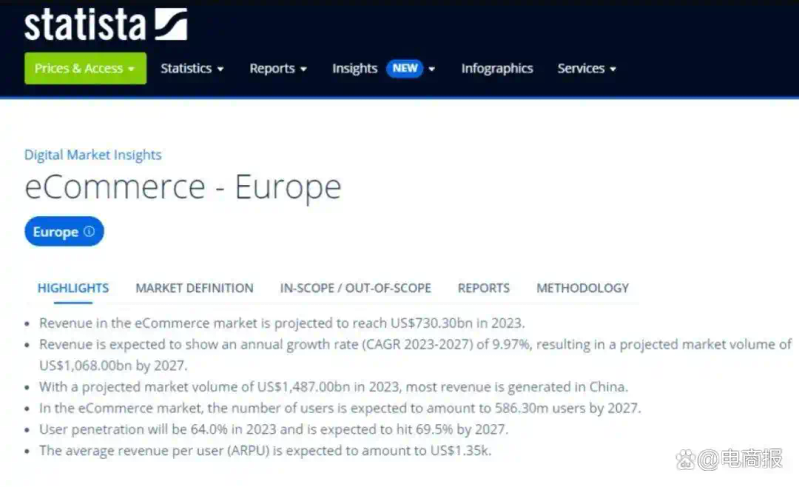
The size of the european electricity market
To be honest, the previous policy of “exempting taxes on imported parcels valued at no more than 150 euros” was indeed a great advantage for china's cross-border platforms and vendors. Thanks to chinese-made supply advantages, shein and temu platforms quickly seized overseas markets, providing even a dress of as low as $8 and a smart watch of $25, which also makes more overseas consumers happy to shop on china’s cross-border platforms。
According to a recent study by ecc kÖln, 32 per cent of german consumers would buy goods on temu, compared to 11 per cent last year; at the same time, 22 per cent of germans indicated having gone shopping on shein, a figure higher than 10 per cent last year. In addition, research has shown that this is so popular precisely because of its advantages in pricing, product types, etc。
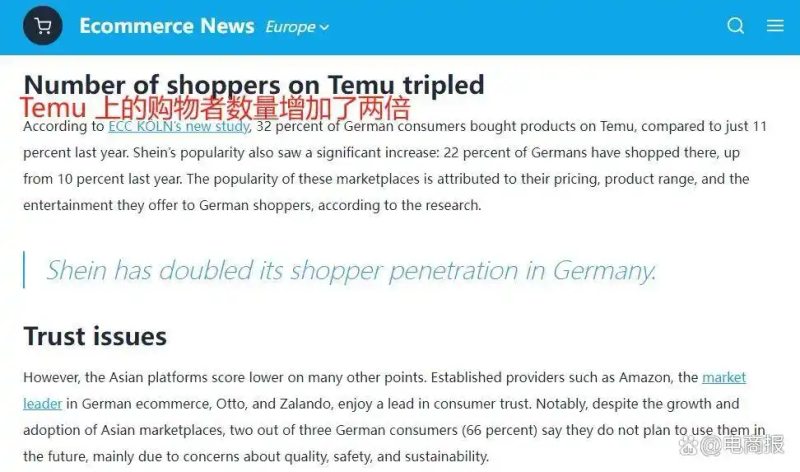
The number of shoppers on temu skyrocketed
If the exemption limit of 150 euros were removed, the seller's price advantage would be diminished and the cost would rise to a certain extent。
It is worth noting that the spokesman for temu stated that “the main factor driving our rapid expansion and market acceptance is the efficiency and skilled operational capacity of our supply chain that we have developed over the years”. It is understandable that even if the eu were to completely eliminate import duty-free systems, the platform would not be significantly affected and would continue to operate smoothly。
In general, sellers will face a new round of challenges following the elimination of duty-free policies and will need to be prepared well in advance to optimize the quality of goods and services and to better achieve the transition to crisis, even if there are no obvious price advantages。
Author, uncle ma