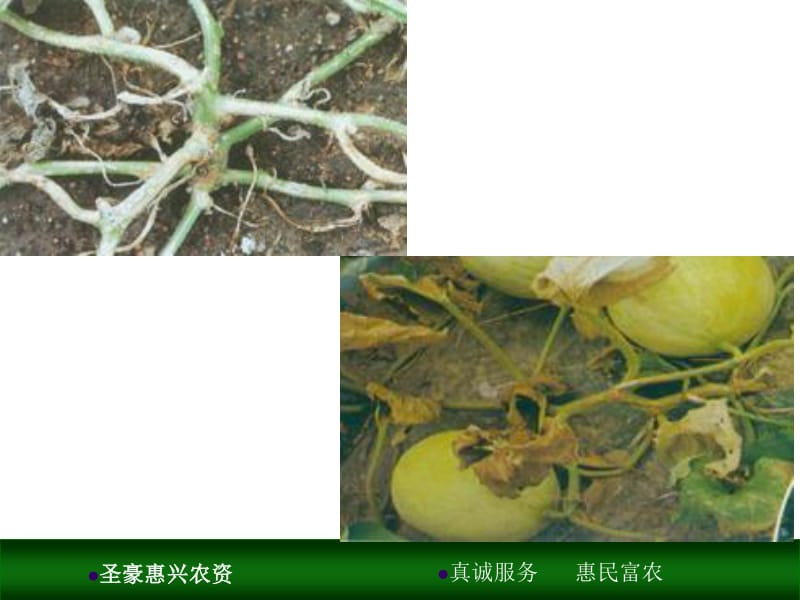
[the text] continues until the fruits mature. Calcium and boron affect not only the sugar content of the fruit, but also the appearance of the fruit, which, when calcium is insufficient, has rough, broad-white surface strips and is prone to brown spots in the flesh when it is missing. The land melons are fertilized: the melons require a continuous supply of nitrogen, phosphorus and potassium fertilizer during their reproductive years. The highest amount of fertilizer is smoked during the outcome period. Too much nitrogen is applied at the early stages of fertility, which can lead to fertilized melons, and too much nitrogen is applied when the fruit is nearing maturity, which in turn can affect the increase in sugar, so that nitrogen fertilizer should be based on long-lasting, slow-effect fertilizers. The melon is sensitive to calcium, magnesium, boron, etc. And should be applied as appropriate. Fertilizer types should be dominated by high-quality organic fertilizers rich in phosphorus and potassium. On the other hand, in order to make good use of the fertilizers of the rich, it is applied in good faith in the process of tilling the land. The application amounts to 1/3 - 2/3 of the total fertilisation, with 2,500 - 3,000 kg of high-quality agricultural fertilizer per acre and 500 1,000 kg of fine fat. In addition, calcium alkaline phosphate works better, usually with 25-50 kg. The shrunk season and the choreographing period are 1 to 3 times. In addition to the use of fertilizers in protected areas, sugar melons in protected areas can be watered together with dark trenches, followed by nitrogen fertilizer and potassium phosphate, 20 kg nitrogen fertilizer per acre and 20kg potassium phosphate. With a high value of melons grown in the protected areas for the benefit of the rich, it is feasible to increase inputs appropriately. In order to improve the sit-in rate of head-stabbings in the protected areas of the early springs, sanctuaries are able to use 2. 5 g/kg sit-in guacamole when the female is or will be open. When the fruit is largely plentiful, the surface of the fruit is sprayed with 500 to 1,000 mg/ kg ethylene and can be harvested early without affecting the flavor. Fertilizers: flowering up to the end of the fruit boom has absorbed the most minerals in a month, with chicken stretching following n, p, fruit swelling following n, p, k. Pumpy melon n, p, k = 30:55 pm st. Hae-he-he-he-heng agricultural fund c. Temperature: 18°m at night, not less than 15°m. Pathogen: the pathogen is a fungus of the cystals, two fungus of the fungus: the chalk fungus, and the monochromus of the cystal, and the monochromus of the cystal, the sanctuary, the sanctuary, the sanctuary, and the pattern of the disease: the fungs produce saplings at 15-30°c, relative humidity is 80% or more, air moisture rises and humidity is appropriate, and the breeze is suitable for the sphinx to disperse between 6 a. M. And 3 a. M., especially from noon to 3 p. M. Powder disease occurs at 10-25°c, and prevalence depends on humidity and host behaviour. There's a strain of disease, and there's light yellow stains on the head of the leaf, and it's spreading in polygons along the vein. Under continuous rainfall conditions, the disease spreads rapidly or integrates into large specks, leading to leaf rolls or drying up, with all the next leaf being dried up, and sometimes leaving only a few green leaves near the growth point. The relative humidity is above 83 per cent, and the disease produces a large number of spores, which are suitable for re-infection after three to four days. St. George's landlord's farming fund, and his sincere service to wealthy farmers