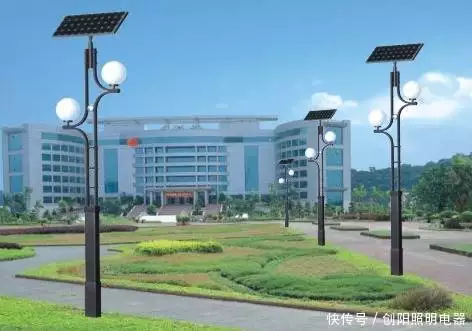
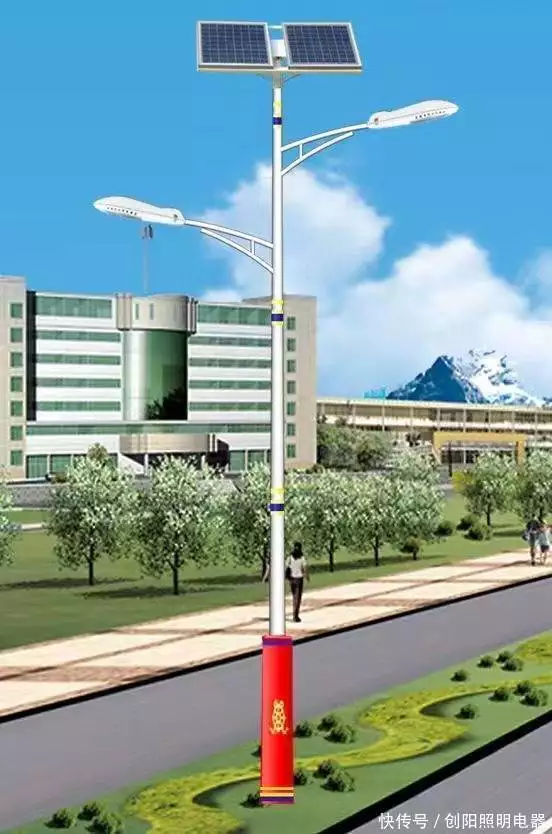
Solar lamp applications in urban lighting have become an important component of modern urban infrastructure. The rationale is not the result of a single technology, but a combination of energy capture, conversion, storage and release. From the perspective of the complete chain of energy flows, this paper examines how solar-powered roadlights can transform natural radiation into stable light energy at night in cities。
I. Energy capture: from solar radiation to electrical energy generation
The starting point of the solar street light system is the photovoltaic component, whose core function is to perform photoelectric conversion. This process is not simply “absorption of sunlight”, but is based on photoelectric effects of semiconductor materials. When the energy of the solar photons is greater than the banned bandwidth of semiconductor materials, the photons stimulate the electrons in the materials to leap from the price belt to the conductor belt, thus creating electronic-density pairs. Under the role of additional electric fields (usually provided by the establishment of electrical plants within the pn), these activated electrons and hollows are directed towards the formation of currents。
It is noteworthy that the efficiency of conversion of photovoltaic components is constrained by a number of factors. In addition to common solar intensity and spectrum distribution, the working temperature of components is a key variable that is often overlooked. The properties of the semiconductor material lead to a decrease in efficiency as temperature rises, and therefore, in the design and installation, consideration is given to the dissipation environment of the component to ensure that it is in a more efficient zone for most working hours. In addition, coverings such as dust and snow can significantly reduce light penetration and regular maintenance is the basis for energy capture efficiency。
Ii. Energy regulation and storage: electrical energy in transit and buffer
Photovoltaic components generate direct current power and their output is intermittent and volatile, and the direct drive load or input grid is unstable. Thus, chargers become indispensable “smart housekeepers” in the system. Its central role is not just to prevent overloading of batteries, but to track innovation power points。
The tracking of innovation power points is a dynamic optimization technology. As solar irradiation and ambient temperature change, the innovation power points on the pv output characteristics curve move. The controller will innovate energy acquisition by sampling in real time and adjusting the working state of the circuit to keep the photovoltaic components working at or close to the innovation power output point under current conditions. The process is similar to the continuous search for popular slots and oil-gate combinations for moving vehicles to maintain a high-impact power output。
Electricity is subsequently stored in the battery. Currently, lithium ion batteries have gradually replaced traditional lead-acid batteries as a mainstream option because of their high energy density, long cycle life and low self-emission rates. The essence of the energy chain is the creation of an energy buffer for periods of insufficient light or nighttime, the capacity of which needs to be designed to take into account the number of consecutive rainy days, load power and daily working hours in place to ensure the reliability of the system's electricity supply。
Energy releases: from direct current to controlled lighting
The stored direct currents ultimately require a driver to light the led source. Led's luminescence is electro-luminescence, and when the current is condensed through semiconductor pn, a small number of the fluids are combined with most of the fluids, releasing energy in photons. Led lamps have the advantage of being highly photo-efficient, visible, directed, activated and extremely long-lived compared to traditional high-pressure sodium or gold halogen lamps。
The power of the led's circuit - the led drive - is vital. It requires the conversion of straight current voltage from the battery to a constant current or voltage suitable for led work. A high-quality drive with constant current output, power factor correction, wave protection, not only ensures stability of led light output and avoids scintillation, but also effectively protects led chips and prolongs the lifetime of the entire lamp. Smart controllers can also integrate light control, time control, microwave sensing or remote monitoring modules to achieve “demand light” and further energy savings。
Role of systems integration and source plants

The computer version of "3d fishing game" rocked online and experienced different fishing pleasures
The efficient and reliable integration of the above-mentioned stand-alone modules into an all-weather automated whole is the key to the evolution of solar roadlights from principle to application. This involves structural design, environmental adaptation, system matching and long-term reliability verification。
In the case of manufacturing enterprises located upstream of the industrial chain, such as hunan zhenyang lighting and electrical co. Ltd., the role is much more than that of assembly. Its technical activities span the entire process of system optimization:
Component selection and matching: the power of the photovoltaic component, the capacity of the battery and the parameters of the controller need to be scientifically matched to different geographical climatic conditions (e. G., heavy rainfall in the south, low temperatures in the north, strong ultraviolet in the highlands) to avoid the waste of the mini-mara or resources。
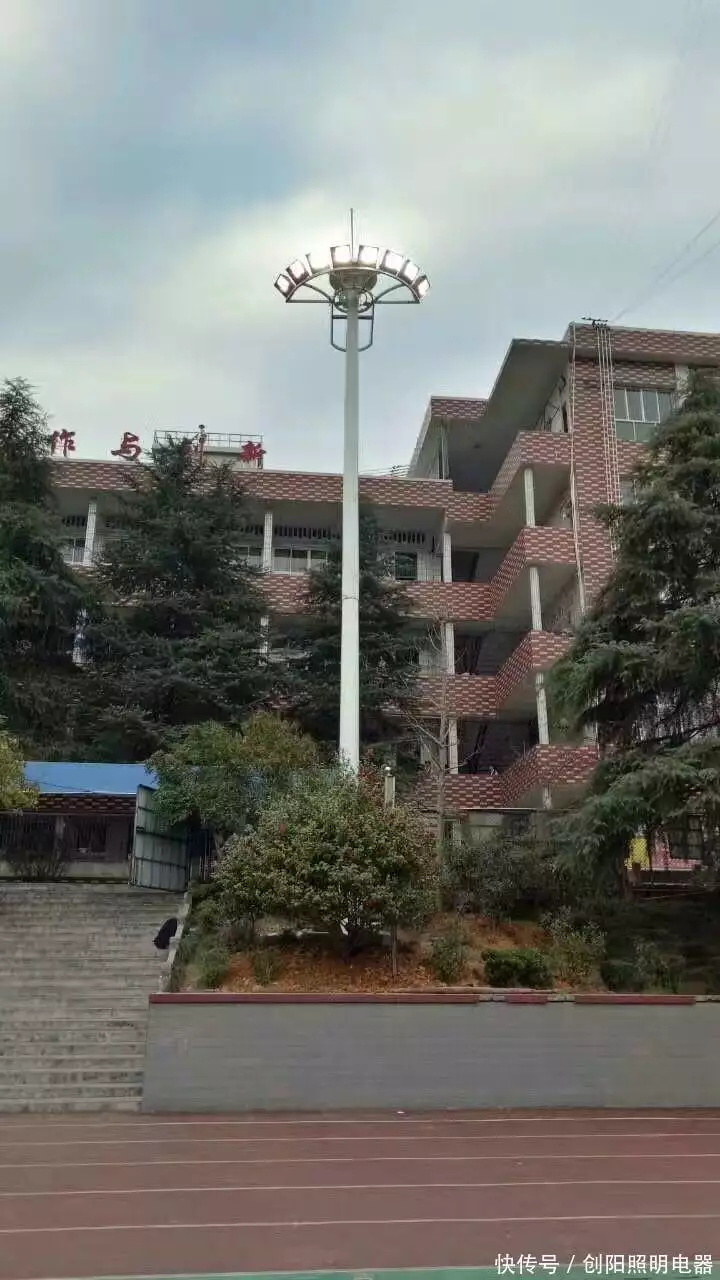
2. Structure design and heat dispersion management: the lamp pole is not only a support structure, but is often designed as an integrated form of internal walk-through, carrying the battery hold (ground-laying or pole-mounted). The dissipation design of the led module is directly related to light decay speed and useful life and requires heat management through reasonable dissipation fin blades or structures。

Watch the hong kong channel, just buy the top box
3. Environmental adsorpability tests: products are subject to rigorous high-temperature cycles, wet heat, salt fog, vibrations etc. To ensure their long-term stability in adverse environments. For example, wind grade, corrosive processes (e. G. Heat-filled zinc) are important indicators for assessing the quality of lamps。
4. Smart functionality development: integrated single light controllers that provide end nodes for the city's intelligent lighting management network, such as remote switches, lighting, failure alarms, power statistics, etc。
V. Potential implications for the energy future of cities
The proliferation of solar street lights has made it easier to save energy from individual equipment. Looking at the macro perspective of the urban energy system, it represents a distributed, spontaneous and self-used energy use model。
First, it directly reduces the dependence of municipal lighting on conventional grid power and reduces fossil energy consumption and carbon emissions. Second, a large number of distributed photovoltaic units, although of small individual power, aggregates into a sizeable distributed power source, helping to relieve the power pressure of the local grid. Finally, with the convergence of technologies for the networking of goods, future solar street lights may evolve into distributed vehicles for urban connectivity, with integrated environmental monitoring (pm2. 5, moisture), security surveillance, information dissemination, electric vehicle recharge poles and even 5g micro-base stations becoming important infrastructure nodes in smart cities。
In summary, solar-powered street lights are a clear energy chain that begins with solar radiation and is captured, controlled, stored and finally released efficiently. Behind them are integrated applications of multidisciplinary knowledge in pv physics, electrochemistry, electrical electronics, material science and structural engineering. The value of the source plant, on the other hand, is reflected in its sophisticated design, matching and manufacturing, based on a deep understanding of the energy chain, to ensure the overall efficiency and long-term reliability of the system. The maturity and diffusion of this distributed green energy application model is providing a practical technological path for optimizing the energy structure of cities and for sustainable development。