This technology is packaged and relates in particular to the packaging structure of an optical lens。
Background technology:
Due to the optical lenses ' requirements for surface photopurity, packaging materials requiring direct contact with optical lenses are soft and soft, avoiding surface defects such as optic lens cuts due to accidental collisions and frictions; and because optical lenses are mostly relatively thin, their packaging is designed to take into account the use of more rigid and resilient materials to withstand damage caused by unforeseen external pressures during transport. Infrared polished membrane lenses, which are optical lenses for processing of infrared materials such as zinc selenide, zinc sulfuride, tablets, silicone, sulfur glass, calcium fluoride, magnesium fluoride, etc., after the polishing, membrane plating process, are more stringent in their packaging than normal optical lenses。
2. The current packaging scheme for lenses is typically, after using dustless wrapping, into a dent with a pearled cotton tray, which is stacked with multiple trays and then placed in an overpack. This packaging is inadequate for optical lenses with high surface quality requirements, as follows:
3. (1) multiple pallets are packaged together in transparent tape, with limited capacity to protect against external stress and may still be transported in a manner that may result in damage to internal products as a result of physical alteration by external force。
4. (2) the use of dustless paper is prone to scratching the optical lens surface so that it does not meet the quality requirements。
5. (3) although the pallet is used in low-density pearl cotton, it is not soft enough to meet the requirements of a polished membrane optical lens, which can easily be scratched during its insertion and removal。
6. (4) the use of overpacks of wood, aluminium alloy, etc., is more expensive and less expensive than boxes。
7. (5) multiple materials, such as pearl cotton boxes and sheeting, need to be combined and the functionality of individual individual packaging boxes can be achieved through transparent tape entanglement, which is more complex。
8. The existing lens packaging method, which also uses a hard protection box for lens packaging, is then packaged in a limited manner through a soft pallet dent, although this packaging structure does not apply to the transport of multiple layers of hard-protected boxes, and the soft pallet of this method has a large size and limited packaging of lenses。
Technical realization thinking
In order to address the above, this practical novelty provides an optical lens packaging structure that effectively prevents optical lens damage caused by external force during storage and transport。
2. The packaging structure of an optical lens, which includes an overpack, at least one sponge packaging and at least one rigid protection box
3. The sponge packagings specified include the packaging body and the packaging head; the packaging body specified includes multiple holding cells for the optical lenses specified; and the packaging covers the slots specified
4. The said sponge packagings are fixed in the said rigid protection boxes
5. The said rigid protection boxes are contained in the said overpacks。
6. In this programme, when overpacks are stretched, the effect of external force on internal products is reduced through the use of overpacks and hard-quality protection boxes. Sponge packagings are placed in hard-quality protection boxes, optical lenses are kept limited by holding cells on the packaging body, and optical lenses are protected in all directions through the packaging covers and packaging body。
7. Further, the said rigid protective cartridges include the contents of the box and the protective covers; the specified packagings are embedded in the contents and the said packaging covers are embedded in the protective covers。
Further, the above-mentioned protective cap is connected to the box's own card button。
9. Further, the housing tanks in question have one or more size specifications which match the optical lenses in question。
10. Further, there are multiple rigid protection boxes in question, each with a sponge packaging; the multiple rigid protection boxes in question are co-ordinated into each other's boxes。
11. Further, the materials in the said rigid protective box are polypropylene, which has superior impact resistance, pressure and impact advantages; and the use of polypropylene material has provided the rigid protective box with excellent seals, providing better seals for storage of polished/plating lenses to effectively isolate air and slow surface oxidation。
12. Further, the boxes described are double-walled boxes。
Further, pearl cotton is placed between the internal surface of the said overpack and the rigid protection box。
14. Further, it includes a protective layer, which is placed in direct contact with the optical lens and separates the optical lens from the tank wall of the holding tank and the packaging cover。
15. Further, the protective layer described is one of electron paper and electrostatic protective film. Based on optical lenses of different materials, lenses are packaged using different layers, such as electro-capable paper, electrostatic protective film, further avoiding external damage to the lens surface。
16. One or more of the above-mentioned technical programmes can achieve at least one of the following beneficial effects compared to existing technologies:
17, (1) the packaging structure of this optical lens is antishock-resistant, resistant to pressure and effectively prevents damage to the lens from external force during transport. More specifically
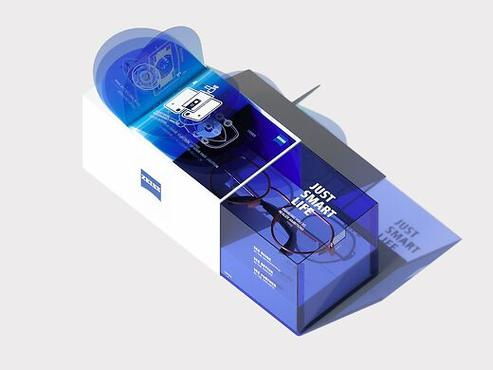
Provides an overall protection package: using a rigid protection box as the primary material for external stress, individual individually packaged hard protection boxes are then arranged in a certain order into an overpacked box, which forms the whole packaging, which is significantly enhanced in its external pressure resistance and minimizes possible damage to lenses during transport
19. The use of sponges as built-in packaging, which buffer and limit lenses and which are softer than the pearl cotton in the technology available, can better avoid the damage caused by friction during the application of the lenses。
20, (2) the packaging structure of this optical lens allows for the packaging of optical lenses of various specifications and solves the problem of multiple specification lenses for a large number of duplicate designs. More specifically
21. Sponge packagings can set up holding cells of different sizes to accommodate optical lenses of different sizes, choose the normal size of the procurement when selecting a hard protection box, and perform the function of packing multiple lenses of the same sizes by adapting the design of the inner sponge packaging
The function of packaging multiple lenses may also be achieved by adjusting the thickness or folding of the package of electrostatic protective film or capacitor paper for the design of the sponge packaging in the same paragraph。
23 (3) packaging using the packaging structure of this optical lens, which is simple to operate, improves packaging efficiency. Specifically, sponge packagings and rigid protection boxes can be used together as a package in form; when packaging is performed, only the protective layer is packed with optical lenses and placed in the holding tank, with a protective cover attached, and the whole rigid protection box is stacked into the outer packaging in a certain order of layers。
24 (4) the packaging structure using this optical lens allows for a larger number of lenses. More specifically
25. With the addition of rigid protection boxes for pp of plastic materials based on overpacks, given the good resistance of the pp of plastic materials themselves, their anti-shock resistance and the overall protective effects of multiple rigid protection boxes, the design of sea cotton packagings can reduce the distance between the holding tanks, the distance between the holding tanks and the edges, and the thickness of the upper and lower sea cotton packagings, which significantly reduces the volume of internal buffer materials in the rigid protection boxes and allows for the packaging of additional quantities of lenses, subject to the achievement of protective lens surfaces
Furthermore, the rigid protection boxes can be stacked with multiple layers, which further increases the capacity of the lenses。
27, (5) the packaging structure of this optical lens is low. More specifically
Due to the flexibility of the sponge packaging design, rigid protection boxes can be standardized without additional modelling costs
Due to the strong resistance of the hard protection box, the resistance to shock and the overall protective effect of multiple hard protection boxes, the overpacks can use double-walled cardboard boxes without the need for more costly overpacks of wood, aluminium alloy, etc., to meet the anti-pressure and seismic requirements of optical lens packaging。
Technical characteristics:
1. The packaging structure of an optical lens, which is characterized by an overpack, at least one rigid protection box and at least one sponge packaging
The packaging structure of the optical lenses referred to in claim 1 is characterized by the rigid protective box in question, which includes the contents of the box and the protective cover; the packaging in question is embedded in the contents of the box and the packaging in question is embedded in the protective cover。
3. The packaging structure of the optical lenses referred to in claim 2 is characterised by the fact that the said protective cover is connected to the box's own card button。
4. The packaging structure of the optical lens, as described in claim 1, is characterized by one or more sizes of the holding slot in question, which correspond to the optical lens in question。
5. The configuration of the optical lenses described in claim 1 is characterized by the multiple configurations of the rigid protection boxes in question, each with a sponge packaging in each of them; the multiple rigid protection boxes in question are co-ordinated in the outer packagings。
6. The packaging structure of the optical lenses described in claim 1 is characterized by polypropylene in the rigid protective cartridges in question。
7. The packaging structure of the optical lenses described in claim 1 is characterized by the fact that the outer packagings in question are double-walled boxes。
8. The packaging structure of the optical lenses described in claim 1 is characterized by pearl cotton placed between the interior surface of the outer packaging and the rigid protective box。
9. The packaging structure of optical lenses described in one to eight of the items referred to in the claim is characterized by, inter alia, protective layers, which are placed in direct contact with the optical lenses in question and which are isolated from the chute wall of the holding tank in question and the packaging covers in question。
10. The packaging structure of the optical lenses referred to in claim 9 is characterized by the protective layer described as a form of electron paper, electrostatic protective film。
Technical summary
This technology is in the area of packaging technology and the packaging structure of an optical lens is made public. The structure in question consists of an overpack, at least one rigid protection box and at least one sponge packaging; the said sponge packaging consists of the packaging package and the packaging cover; the specified packaging material contains a number of holding cells for the optical lens in question; the said packaging covers the slot in question; the said sponge packaging is secured in the said rigid protection box; and the stated rigid protection box is secured in the stated outer packaging. The packaging structure of this optical lens is antishock-resistant, resistant to pressure and can effectively prevent damage to the lens during storage and transport due to external force; it can be packaged in optical lenses of various specifications; the packaging operation is simple and improves packaging efficiency; and the packaging structure using this optical lens can be more numerous and less costly。
Technical researcher: tang weemin, zhang xu, she woo tae, lee yong-ying, olenfang, ji xinyo, chenwon, yong-hin, li, guo menping
Protected users of technology: anhui gwang jie, ltd
Technological research and development days: 20240522
Technical publication day: 2025/3/18