Qinghai lake grew over a period of more than 10 years in size equivalent to “26 western lakes” and recovered its water level to the end of the 1970s; there was a marked expansion of salt lakes in the coco sicily protected area and water desalination; and kangudi, glacial, retreated almost 6 metres per year on average over the last six years ... Recent research in qinghai province has shown that the tibetan plateau, which is sensitive to global climate change responses, is showing a growing trend towards warming and humidity。
Signal: lake expansion glacier retreats
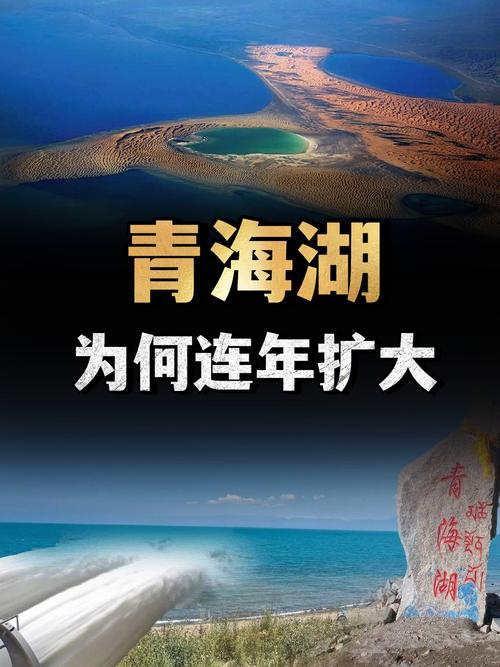
The results of qinghai province's first national geo-national survey show that in september 2016, the country's largest saltwater lake, qinghai lake, was 4429. 3 square kilometres, an increase of 169. 7 square kilometres, equivalent to 26 western lakes, compared to the same period last year。
An analysis of monitoring data from the qinghai climate centre and the qinghai hydrological water resources survey (qinghai water resources survey) also showed that the trend of declining water levels in qinghai lake began to rise from 2005 to 2016, with the qinghai lake hydrological station cumulatively rising by 1. 66 metres over a period of more than 10 years, returning to its level in the late 1970s。
“from 2005 onwards, rainfall in the qinghai lake basin has been increasing steadily, increasing from 358. 8 mm per year from 1961 to 2004 to 421. 8 mm per year from 2005 to 2016, increasing by almost 20 per cent.” the senior engineer of the qinghai climate centre, dai lian, presented this。
The coco sicily protected area, located in the outer plains of the tibetan highlands, is part of a typical area of fragile ecosystems, along with lake qinghai. In november 2016, the qinghai salt lake institute of the chinese academy of sciences conducted a survey to sample typical salt lakes in protected areas, such as salt lake, lake sikin ulan and lake luo-wudan. The results show that salt lakes in the protected areas are marked by lake expansion and water desalination。
At the same time, meteorological monitoring in qinghai province shows that between 1961 and 2014, the average annual precipitation in coco sicily showed a trend of 20. 7 mm per decade, with the average annual precipitation in the last 10 years being 20 per cent higher than the average annual precipitation in the last 30 years. At the same time, there has been a significant increase in the temperature of cacao sicily, with the annual average temperature rising by 0. 32 degrees celsius every 10 years。
The researcher of the institute of environmental and engineering research in the dry zone of the chinese academy of sciences, bo kenta, introduced that, since the 1970s, kangudi, on the south-west side of the dangura mountains, on the south-west side of the winter snow mountain, had begun to retreat slightly, with the rate of contraction accelerating in the 1990s. Between 2010 and 2016, jianggudi, on the other hand, had retreated to 34 metres in six years, an average of nearly 6 metres per year。
Figure: climate warming or major causes
The quechua plateau is the most developed region of the earth's terrestrial glaciers and the centre of the monsoon climate. Aqueous circulation is channelled to the surrounding continents through the regulated distribution of the tibetan plateau, creating a rich monsoon climate on earth. As a result, the tibetan plateau is the regulator of the earth's ecosystem and the central nerve of life on earth。
According to years of monitoring by china's atmospheric background reference observation base at the taiwariwan mountain base, atmospheric co2 concentrations have increased by an average of about 2 ppm per year (1 ppm for one million air molecules containing one carbon dioxide molecule). According to china's atmospheric base reference station director zhang zhang zhong qing, this indicates that the global greenhouse gas emissions situation remains critical and global warming trends remain unchanged。
The most direct evidence of global climate change is presented by the pancreas, which in the 1980s and 1990s saw an annual retreat of about 2 metres from the gwangudi glaciers, and an average of 6 metres in recent years。
“0°c is the critical temperature value for water in liquid and solid form, and the temperature at an altitude of 5,000 m in the last few decades has been largely below the threshold, so glaciers are generally stable. In recent years, global warming has led to the melting of glaciers and frozen soil, which has been the main cause of the increase in the area of lakes in the tibetan plateau. The independent expert, yang yong, chief scientist of the mountain breaking research society。
“as the global climate warms, warmer temperatures, increased precipitation in the qinghai lake basin, increased river run-off flows, increased climate warming and humidisation, together with continued melting of high mountain glaciers and high mountain snow to the north-west of qinghai sea lake, which increases the flow of run-off into the lake.” in addition, the restoration of vegetation and wetlands in the qinghai lake basin and the continued improvement of the ecological environment surrounding the basin have nothing to do with the integrated management of the ecological protection of the qinghai lake basin, which has been implemented in recent years。
In response to an increase in the size of lakes within the protected area of coca sicily, “preliminary analysis may be related to the melting of glaciers in the basin and the melting of the lake's tundra aquifer”. Mahi state, researcher at the blue sea salt lake institute, central college。
Liu bocon, a senior engineer at the institute of meteorological sciences of qinghai province, who has long been concerned about the ecological problems of coco sicily, endorses the reasoning of the salt lake institute at the middle school of sciences: the increasing trend towards warmer and humid climate in the tibetan plateau is the main reason for the continued expansion of the lake area of the cacao-sili and even of the tibetan plateau。
Future: energy efficiency reduction efforts
In the context of global warming, what are the challenges to the human living environment posed by the increased trend towards warming and humidization of the tibetan plateau? Extensive discussions and research have taken place in the industry。
Climate experts predict that the increase in precipitation in the three river-sourced areas over the next 50 years will be conducive to vegetation growth and that there may be a trend towards forestation of mountain vegetation. In addition, higher temperatures will increase the comfort of the living environment of human production, which will benefit tourism development。
The yang yong team conducted a qualitative rough survey of glaciers, marshes, lakes and associated surface temperatures at altitudes above 4,000 metres above sea level. On the one hand, many lakes are growing year by year, while on the other hand, many of the otherwise green or thinly green plateaus turn into deserts or grey walls in just over 20 years。
“the mechanisms and impacts of climate change in the tibetan plateau are complex and humans have to cope with the melting retreat of glaciers due to warming — rising snow lines — increasing extreme weather frequency — increased natural disasters of various kinds — weakened climate regulation in the tibetan plateau — desertification, desertification and expansion of desertification.” yang yong said that earthquakes and geological disasters accompanied by active geological activity would produce a series of disaster chains during periods of warming。
It was agreed that: “the continued retreat of glaciers will have serious consequences and the flow of rivers will increase, but will eventually lead to a reduction or even a break in the flow of rivers, leading to the desertification of the land as the retreat increases.”
“i believe that the increase in temperatures at the height of 5,000-6000 metres is due mainly to the fact that large amounts of greenhouse gases emitted by humans drift into the atmosphere to absorb heat.” yang yong stated that the results of research abroad indicated that the combination of many harmful substances, such as biogas, carbon dioxide, nitrogen oxides, sulphur dioxide and particulate dust, was 7 to 22 times more capable of absorbing and heating than dry air。
The experts interviewed were generally of the view that the trend towards warm and humidizing the tibetan plateau was irreversible and that how to meet the challenges and even take advantage of the opportunities was a necessary way for human beings to co-exist with the natural environment. It is imperative that humankind vigorously pursue energy-saving reductions and radical changes in energy-intensive, high-consumption, high-emission and irrational production lifestyles in order to minimize the adverse effects of greenhouse gases on our environment. Lu shelly zhang daegawa