What's the biggest muscle ranking in the body
The muscles consist mainly of muscle tissue. The shape of the muscle cell is very long and it is in the form of fibre, so it is commonly referred to as the muscle fibre. There's a lot of muscle in our body. Here's where i'm going to tell you about the top muscle ranking。
The biggest muscles in the body
(i) chest muscles
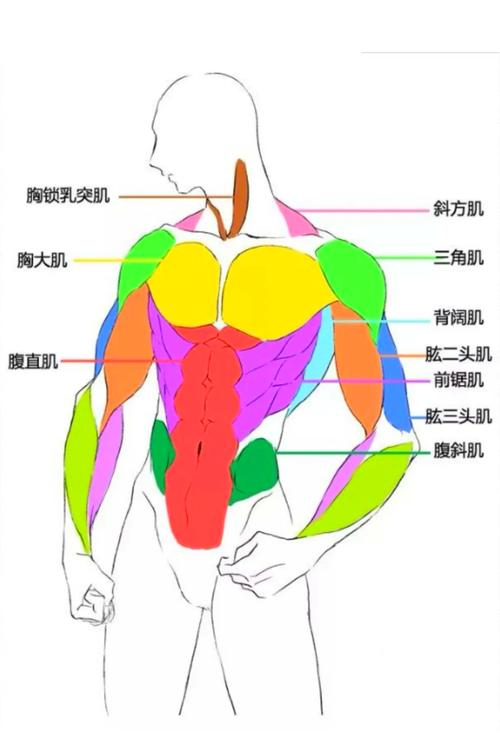
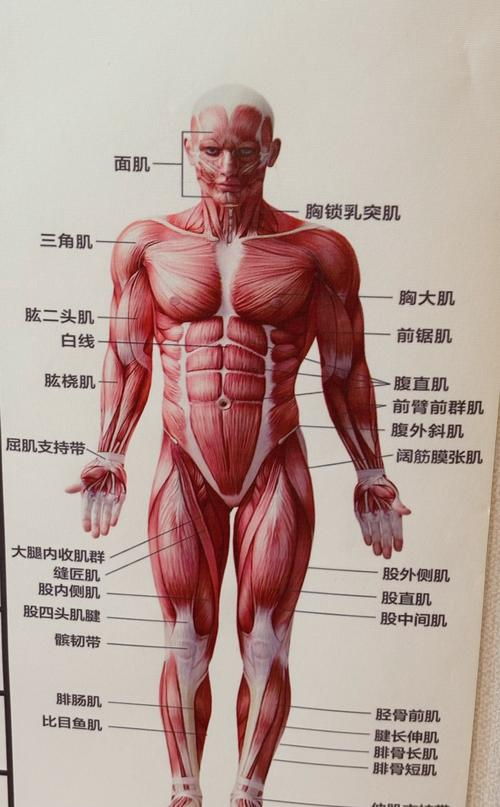
Under the front of the chest, it is a fan flat muscle, which is large in scope and is divided into the upper and upper muscles. Its function is to make the upper arm inward, forward, lower and upward; the arm rotates internally. You can train by pushing at all angles; birds at all angles; arms with poles stretching out; upstretching; push-ups; and hammering down。
(ii) diaphragm
In front of the upper arm under the skin. Its function is to bend the elbow; to put the forearms down in the palm of the hand; and to bend the forearms forward to the shoulder. The method of training is to bend in various ways; to row。
(iii) breast-locked breast muscles
This is the most visible muscle in the lower part of the neck, whose function is to bend the head and the neck to the side; to rotate the head and the neck, and to bend the neck forward or back. The exercise can be done by wearing a neck hat; a corner bridge for wrestling; and assistive and self-restraint movements。
(iv) frontal arms to finger muscles
It is under the inside skin in front of the forearm that it is able to bend and reach out. This muscle can be developed using exercises such as entanglement hammers and strutting wrists。
(v) slash muscles
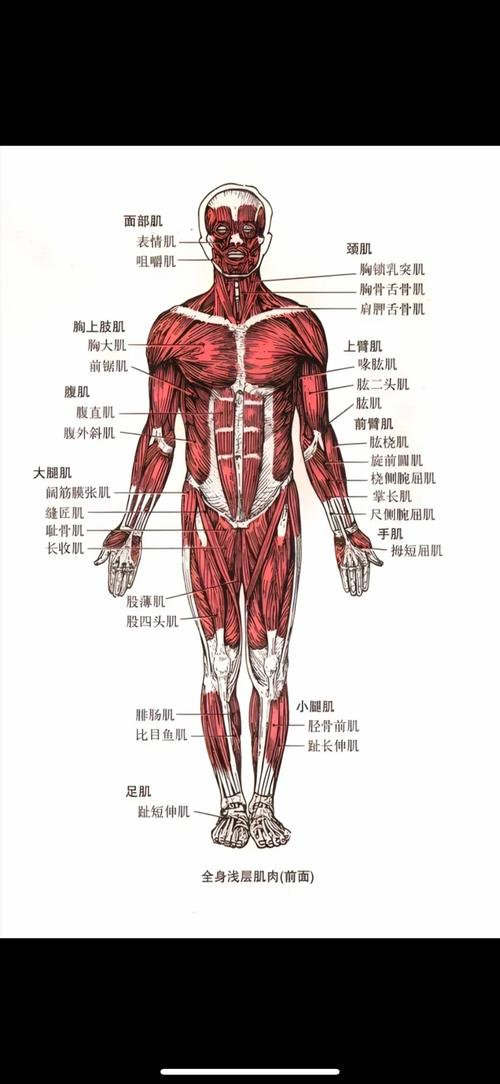
Under the skin of the neck and back, a triangle is formed on one side and a slash is formed on both sides of the right and the right side, known as the slash muscle. Its functions are to lift and lower shoulder belts; to move shoulder cheekbones; and to reverse head and side. Training can be done by shrugging shoulders, raising power, lifting necks, raising sides, rowing boats。
(vi) triangular muscles
Under the shoulder skin. It's a triangulated muscle, the expanse of the shoulder is formed by the muscle. Muscle fibres on both sides are permeable and central fibres are multi-plumic, and these structural muscles are small and powerful. Its function is to hold its arms horizontally; the arms move forward, centre and rear to a certain direction. All kinds of bells and bells can be lifted, push (front bells), bells can be raised in front, back and behind, and lead bodies can be trained up。
(vii) triple muscles
Under the skin behind the upper arm. Its function is to keep the arm straight and pull back. Training can be done by stretching arms, pulling arms down, holding narrow pushes, stretching arms and rowing boats。
(viii) oxygen
It is under the outermost skin of the frontal arm muscle and is flat. When it is close, it can bend its forearm. When it is firmer, it can bring its upper arms forward. The force of the muscle is developed using heavy bending and top-up induction exercises。
(ix) oxygen
It's in the lower half of the bicep. It starts in front of the lower half of the osteoporosis and ends in the thickness of the bone. The effect is to stretch. The training method is the same as the biceps。
(x) back broad muscles
Under the back of the waist and the lower side of the chest, it is the largest wide muscle. The upper part is covered with tilt muscles. Its function is to pull the arm down and back; to press the shoulder belt down; and to the side of the body. The training moves are the various ways in which the drawings pull up and down; the rowing of boats; and the bowing up and pulling。
(xi) upper back muscles (big cylindricals, small cylindricals, lower muskets, diamond-shaped muscles)
On the back of the body. It allows the arms to rotate inwardly and outwardly; the arms to recline; and the shoulders to rise, rotate and down. Training moves have deep crouches, hard pulling, rowing, etc。
(xii) ex-saw muscles
Under the outer skin of the chest contours, the upper part is covered by the large and small muscles of the chest, and is a flat muscle. Its functions are to turn down the shoulder; to pull the shoulder towards the side; to help expand the chest; and to help lift both arms over the head. The training was conducted as a push-up and stand-up campaign。
(xiii) abdomen (upper abdomen + lower abs)
Composed of upper and lower abs. On both sides of the straight line of the front wall. Its functions are to bend the spinal column forward; to compress the abdomen; to oppress the rib by various methods of training; to sit on the back; and to raise its straight legs。
Main classification of muscles
Bones
It's the type of muscle you can see and feel. When a gymnast increases muscle strength through exercise, the exercise is the skeletal muscle. The skeletal muscles are attached to the bones and appear in pairs: one muscle moves the bones in one direction and the other in the opposite direction. These muscles usually shrink with will, which means that when they try to contract, the nervous system directs them to do so. Skeletal muscles can undergo short-term single contraction (twitch) or long-term persistent contraction (tetanus)。
Smooth muscles
They are found in digestive systems, blood vessels, bladders, respiratory tracts and female uterus. Smooth muscles can tighten and maintain tension for long periods of time. Such muscles do not shrink with will, which means that the nervous system automatically controls them without having to consider them. For example, the muscles in the stomach and the intestine perform tasks on a daily basis, but are generally invisible。
Heart muscles
It exists only in the heart, and its greatest characteristics are endurance and strength. It stretches like smooth muscles, and it shrinks like bones. It's just a twitching muscle and doesn't shrink with will。
Muscle aids
Overview
The muscular auxiliary structure consists of the dysentery, the cleavage, etc. They have the ability to assist muscle activity, maintain muscle position and reduce friction and protection during exercise。
Band
The fascia is all over the body, divided between shallow and deep。
1. Suberfect (suberfective fascia) is also known as the subcutaneous dysentery, which is under the skin and is covered by all parts of the body and consists of loosely connected organizations. The shallow artery, the subcutaneous veins, the skin nerve, the lymphobar tube operates inside the shallow band, with some local breast and skin muscles. The shallow membrane has some protective effect on the muscles, veins and nerves at its depth, such as that of the hand and the bottom of the foot, which is well developed and can buffer the pressure。
2. Deep-deep fascia, also known as the ingrain, consists of a conjunctive tissue, situated on the deep side of the shallow-drained membrane, wrapped in body walls, muscles of the limbs and vascular nerves, etc. Deep-drained membranes are closely related to muscles, which are stratificationed with muscles. In four limbs, deep-stamped human muscles, attached to the bone, constitute muscular intervals; cosmobilium is formed with the deep-dural membrane that surrounds the muscles; it also wraps around the veins, and the nerve forms the vascular neurosynthesis; it also provides muscle attachment or a starting point for the muscle。
Scramble
The synovial bursa is a closed cyst, wall thin, with slides, and is located mostly in contact with the bone to reduce friction between the two. Some of the shampoo capsules are connected to the joints and the joint cavities. Scratch cystitis can affect the mobility of parts of the body。
Zenium
腱鞘tendinous sheath is a pipe surrounded by muscles, which is found in the more active wrists, ankles, fingers and toes. Zirconium can be divided into two parts: the fibre layer is also known as the fibrosium fibrosion of tendon, which is located in the outer layer and is formed by a bone fibre pipe which is thickened by a deep dysenter, which acts as a slider for muscle; and the synovial shell of tendon, which is also known as the synovial sheath of tendon, which is inside the gillium fibrosis and is made up of double cylinders made up of slides. The slabs are divided into a dirty layer and a wall layer, surrounded by muscles, which is attached to the interior of the slab. There is a small amount of slide between the two layers of the dirt and the wall, so that muscles can move freely within the slab. Improper long-term, excessive and rapid movement of the finger can lead to bruising, pain and influence the movement of muscular muscles, clinically referred to as oscillitis, one of the most common cases. The scaffolding moves to the two-layered scaffolding section of the muscular lobe, known as the muscular mesotendon, which includes the vascular passage of the muscular gill。