In the age of the internet, when information exploded, knowledge was not only vast, but also rapidly updated, and it was difficult to meet individual learning and growth needs simply by relying on sporadic memories and messy notes. If knowledge systems are not bottomed up, the fragmentation of knowledge gathered around them often leads to two problems: the loss of in-depth thinking and the loss of efficiency in the use of knowledge。
Therefore, a clear and complete knowledge system is essential to enhance individual capabilities, efficiency and deep thinking. So how do we build our own knowledge systems
Overall, the following four steps need to be adopted:
Mass inputs
Combine arteries
Practical testing
Over and over again
The following is presented below。
01 mass inputs
According to the brum classification, it is not possible for a person to cross the two layers of “memory” and “understanding” capacity in the pyramid, but to directly “analyze” the ability to “create”。
The bloom's taxonony classification was introduced by the education psychologist benjamin bloom in 1956 and revised by anderson and krathwohl in 2001。
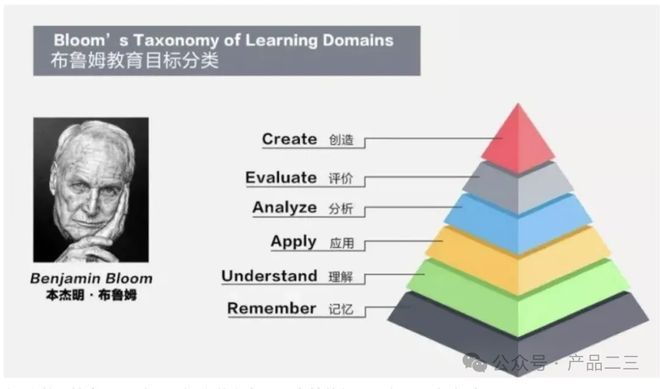
The revised brum classification divides cognitive objectives into six levels, in order of increasing cognitive complexity, including the following:
These levels reflect different levels of cognitive activity and thinking processes in an incremental order of cognitive complexity. To achieve a high level of awareness, it is necessary to begin at the bottom of the pyramid, which is built on a large number of inputs。
In the input process, special attention needs to be paid to the quality of the screening information. Most of the information obtained in a short and smooth way is “tits” that satisfy the spirit of charisma, poaching, entertainment, immediate happiness and lack of quality information. The best way to do this would be to have a thematic reading that would achieve single-point breakthroughs and then expand in other directions。
02 combination of arteries
Learn not, but ignore not. — the word for politics
After a large amount of knowledge is entered into a particular area, what follows is to combe the artery, systematize and structure the fragmented knowledge, so that it can be systematized and its knowledge made more accessible and accessible。
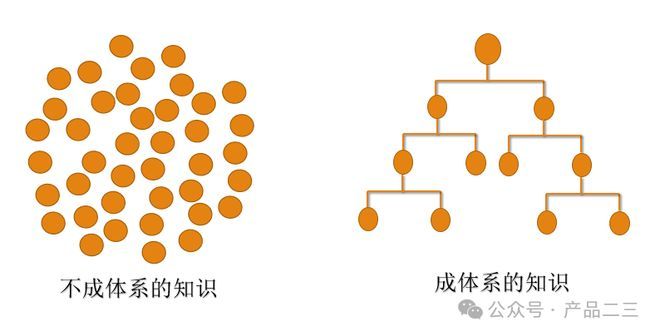
Systems are relatively simple for mature disciplines. When going to college, each discipline often has the introduction to the... General, which is basically the framework for the corresponding disciplines. You can build the initial knowledge structure by reading these basic books and adding the corresponding branches to your research focus。
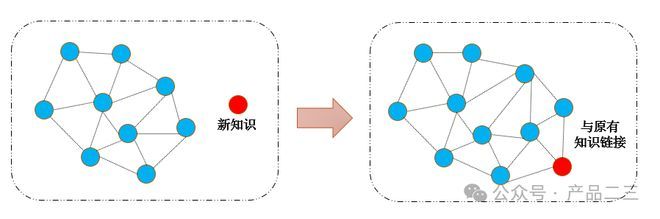
Once the framework is in place, and when you enter it later, for each new point of knowledge you need to think about where it should be in your institutional framework and how it should be connected to your own existing knowledge system。
If you encounter a completely new point, and you don't know which part of the old system to put, you need to think about whether this is another dimension or another intellectual point of logic. It could be placed next to the original framework, without any connection, and then dealt with once again, or when the connection is found, so that your system can be continually improved。
What you need to do is to “classify” and “categorize” the fragmented knowledge points in immature disciplines. The classification is an infinite refinement of a point, while the classification is a consolidation of many scattered points. In this way, you can build up your own knowledge framework。
03 practical test
Because of the oblivion curve, retention rates for post-learning knowledge are often low. Studies at the national training laboratory in the united states have confirmed that the average efficiency of learners is completely different in different ways of learning, which is the famous “learning pyramid”。
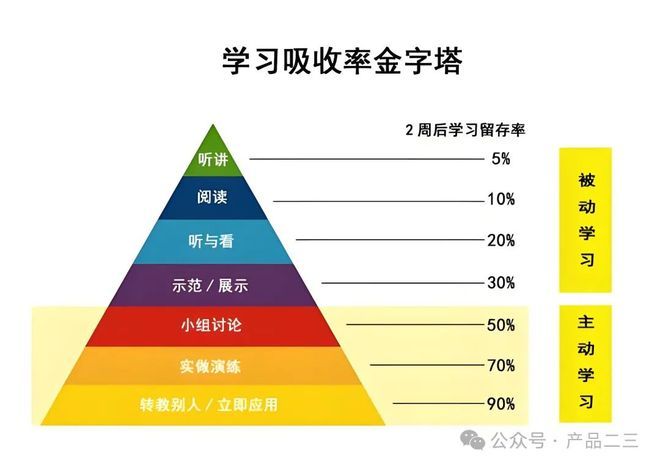
As can be seen from this pyramid, the highest absorption rate of learning is “output”, which is about to be passed on to others. The feynman learning act is an excellent way of learning, with the following steps:
Step 1: select the concept to learn, take a blank paper and write the name of the concept at the top。
Step 2: imagine you're a teacher to talk to and record your speech. This step is crucial, because it is in interpreting knowledge that you understand, and not even understand, that you understand better。
Step three: when you don't understand, don't rush down, go back to reread the reference material, listen to the lecture or ask the teacher to answer it, until you understand, and then write down the explanation on the paper and write down the answer that is closest to the standard。
Step four: simplify expression and re-program it in as simple a language as possible, so that a student with no knowledge of it can understand it。
Through feynman learning, you can not only consolidate knowledge but also deepen understanding and build your own “outside brain”。
The outer brain is the place where our knowledge is placed. In the age of mobile internet, we don't need to put everything in the brain, build the outside brain, index the knowledge, and go over it with a hand-to-hand look, which is an aesthetic knowledge system. In the course of reading, they will naturally form in your mind and call at will。
You need to choose your own software to build your own “outside brain”, such as a canary knowledge library, flybook files, cloud notes, impression notes, etc. I'm more used to using the knowledge base of a canary, and you can all try to find the best for yourself。
When you have a knowledge system, you can export it from your own thinking, like a blog or a public number, or writing answers, writing columns, etc. It tends to be painful at the beginning of the output, but when you can really do it more naturally, it proves that you really learn and have it. Here's a quote from jealousy lin: "the water is too drunk to piss."。
04 over and over
Why does the classic book keep rolling out new editions? Why does the product always upgrade? The reason is simple: new methods and technologies will emerge。
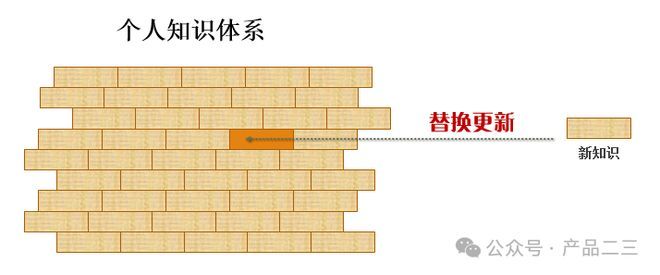
The same applies to knowledge systems. When a system is in place, it is not static, but needs to be updated over and over again as new knowledge emerges and personal awareness rises. Inputs of new knowledge and feedback through output can lead to an iterative optimization of knowledge systems。
Building knowledge systems is a long and evolving process. From a large number of inputs, to a clear line of communication, to the continuous optimization of their learning methods and systems through practical validation and feedback. As awareness rises and systems evolve, our knowledge will gradually become deep, vast and ultimately self-driven。
Source | product ii-iii (id:gh 40f0376baa)
Author yoon tianjun; editor zilong shrimp dumpling