The question of paying for property
Owners are dissatisfied with the quality of the company's services and do not pay property fees for long periods of time. The property company filed a complaint against the owner for payment of 13 months ' outstanding property fees and for payment of liquidated damages。
The court found that the property company did not perform its duties of management and service well, but did complete a certain property service and ordered the owner to pay half of the cost of the property at his discretion
In which cases can owners reasonably refuse to pay property fees or pay less? What are the circumstances in which property fees cannot be withheld even if they are dissatisfied with services
From the moment we got the keys to the new house, we were dealing most with the property company, and it would be disturbing if the estates in the sub-district were responsible and managed, and could be useful for the later life of the owner, and vice versa, if the sub-districts were not serviced, there were piles of garbage in the sub-districts, the security of the sub-districts, the parking of private cars, etc. At this point in time, some of the more emotional owners would be determined not to pay property fees because property services were not available. So, can the owner provide evidence of imperfect property services and, where appropriate, do not pay or pay less? Will the court support it? Property companies sued owners
13 months of property arrears and default payments
In the second half of 2016, six people, including li, chung and peng, who live in the tea townships of the city of yanzhou, hunan province, settled in one of the subdistricts of the district and signed an agreement with a small property management company for the previous period. Previously, the property company had entered into a “front property management service contract” with the district developers。
The contract provided that the property company would be responsible for the maintenance, conservation and management of common property areas; the operation, maintenance, conservation and management of common property facility equipment; the cleaning, garbage collection, removal and drainage of the common property areas and associated sites; the conservation and management of public greening; the management of parking vehicles; the provision of assistance in the management of public order maintenance, safety precautions, etc.; decoration management services; and the management of property archives. At the same time, the standards of quality of service for property companies were clarified. Subsequently, the sub-districts set up an owner committee, which voted to dismiss the property company. During this period, six people, including li, jong-choon and peng, failed to pay property fees for long periods of time because they were not satisfied with the quality of the services provided by the property companies. On 16 november 2019, the property company filed a civil action with the tea hill district people's court, demanding that li pay the outstanding 13-month property fee of $2188 and the default money of $500, followed by a similar civil action against five individuals, jong-yi and peng。
First instance judgement
The owner pays half of the outstanding property fee at his discretion
In december 2019, the tea hill district people's court held a hearing on the series of cases. During the hearing, li submitted video and photographs of inadequate property services in the district, as well as a protest signed by the community owners. The court found that only three persons who had reached retirement age had been placed in the administration of the district by the property company and that none of them had an entry and health certificate. During the period of service, the property company took over advertising for the exterior wall without the consent of the relevant owners, resulting in damage to the walls of five of the owners. In addition to sharing access to a nearby kindergarten, property managers are sometimes absent from the scene to maintain traffic order, leading to congestion during peak periods。
The court found that the property company had not performed its duties of property management and services well, but had completed certain property services, and that mr. Lee and others could not withhold all property fees. As a result, the first instance judgement dismissed the other claims of the property company for the discretionary payment of $1094, or half of the amount owed. The fees of the five individuals, zhong yi, peng and others, have also been reduced by half. Subsequently, the property company appealed the judgement to the jizhou city intermediate people's court. On 16 march 2020, the jizhou intermediate people's court held a second hearing on the case. During the second trial, the property company did not submit new evidence. Lee et al. Submitted new evidence that the property company had taken over the outside wall advertising, etc., which was partially accepted。
Second judgment
Dismissed the property company's appeal and upheld the sentence
The jiju city intermediate people's court found that evidence such as photographs of the district, video material submitted by lee and others, and documents signed by the joint owners of the district, could prove that the property company had not fulfilled its obligations under the property service contract. At the same time, given that the property company has been dismissed and that problems with the services provided by the property company can also be identified, the first instance judgement was not inappropriate in the case of six persons, li, who paid the property fee at their discretion, i. E. “minus the fee”. Despite the lack of property services and the fact that lee and others did not pay their property fees as scheduled, there was a breach on both sides, so it was inappropriate for the first instance not to support the company's claim that lee and others pay the default money. Ultimately, the jiju city intermediate people's court rejected the property company's appeal and upheld the sentence。
Judge alert
The committee or owner should be careful to fix or retain evidence
The first is the establishment of operational committees in a timely manner and in accordance with the law, when the conditions are ripe for the owner's housing, in order to better communicate with the enterprises involved in property services, to govern them together and to safeguard their rights and interests. Second, in cases where the property services enterprise does not perform its duties, such as property management and maintenance, the owner's committee or the owner should be careful to fix or retain evidence in order to provide relevant material in the course of the proceedings before the court can decide, as the case may be, whether or not to deduct property costs. Thirdly, upon termination of the rights and obligations under the property service contract or dismissal of the property service enterprise, the property service enterprise shall hand over in a timely manner the property service house and related facilities, as well as the relevant information necessary for the property service and the funds for specialized maintenance that it administers。
News link
What, then, are the circumstances under which (low) payment of property fees can be reasonably withheld? What are the circumstances in which property fees cannot be withheld? Here's a summary of dry goods -
You can't refuse to pay property fees
Situation i
Neighbors have broken the rules
A property company has been in charge of property management in a small district of bong-hyun in shanghai since 2016. During this period, the owner of the property was troubled by the unauthorized construction of his neighbour, who responded to the property. The property company issued a rectification notice and reported it to the authorities, but the matter was not resolved. One considers that the property company has failed in its duties and therefore refuses to pay the property management fee. In march of this year, the property company sued the court for the payment of property management fees by wang。
According to wang, property companies have a responsibility to maintain order in small areas and property can be forcibly dismantled in cases of irregularities, but the matter remains unresolved. Property companies did not fulfil their management obligations and therefore did not agree to pay property fees。
In the view of the property company, after receiving a response from wang, the company, on the one hand, issued a rectification notice to the owner of the illegal construction, and, on the other hand, communicated with the authorities of the municipality, the housing authority and the administration, requesting that the matter be resolved. The company has issued a rectification notice and reported it to the authorities concerned, and has fulfilled its management obligation to pay the property costs as contracted。
The court held that, in accordance with the principles of good faith, equal value and remuneration, the property company provided management services to the owner, who was supposed to pay the management fee to the property company. Changes in the nature of the use of houses, for example, in the case of irregular construction of small areas, are a flaw in public order and in the management of public affairs. Upon receipt of the complaint, the property company has taken positive measures to issue a change notice to the offending owner. In case of ineffectiveness of dissuasion, the competent authorities were informed that they had complied with the corresponding notification, reporting obligations and that property companies did not have the right to compel the demolition of illegal buildings, so there was no legal basis for the owner to refuse to pay for the property。
Under the auspices of the court, wang paid the outstanding property fees on the spot。
Scenario ii
Stolen vehicles
In september 2017, zhang's electric vehicle located in a small area was stolen, and zhang's motor vehicle was allegedly stolen because of the responsibility of the small area property management company。
Subsequently, zhang asked for a two-year discount on the property management fee, to which the property company had not responded. Zhang was therefore sued by the property company for non-payment of property fees between 1 january 2018 and 30 december 2019。
Since zhang could not prove that the theft of the electric vehicle was due to the failure of the property company to fulfil its contractual obligations, zhang did not pay property fees on this ground, which was not supported by the court。
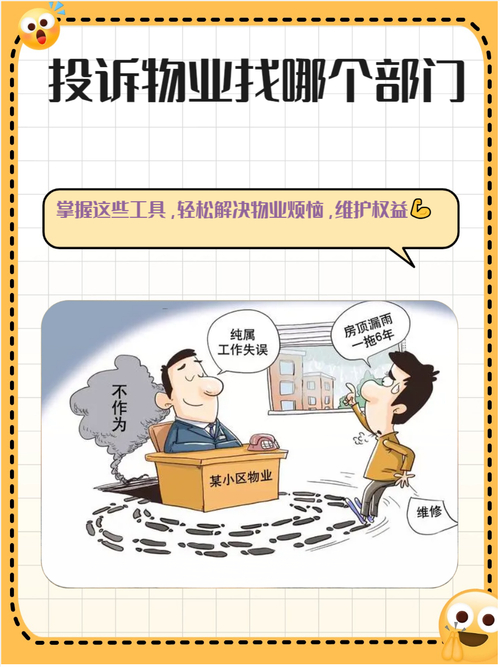
The court held that the fact that the owner had breached the contract with the property company was not sufficient to constitute a fundamental breach of contract, thereby completely exempting the owner from payment obligations. Thus, the theft of the vehicle cannot be a defence against the owner's refusal to pay the property fee。
Scenario iii
Quality of houses
Where there is a problem with the quality of the house, the owner should claim the right from the developer, and according to the relevant legal provisions, there is a problem with the quality of the house delivered by the developer, not the liability of the property company. Although some development chambers issue housing quality assurance certificates, it is clear that: “when a household is resident, a letter about the quality of the dwelling visits, complains and is entrusted to a certain property by the company”. The developers, however, have only entrusted property companies with the handling of letters, visits and complaints, and have not transferred the obligation to maintain the quality of the house to property companies, on which the owners have refused to pay property fees, without legal basis。
Situation iv
No property contract by owner
In property management services, the decisions of the owner's assembly or the owner's committee are binding on the owner. During the performance of the contract, the property company had contractually performed its management and service obligations and the owner had contractually been expected to pay the property fee, while the court did not support the refusal to pay the property fee on the ground that he had not contracted with the property company。
Article 94 of the civil code provides that the owner shall pay property fees to property service providers as agreed. Property service providers who have provided services in accordance with the agreement and the relevant provisions may not refuse to pay property fees on the ground that they have not accepted or are not required to accept the relevant property services. If the owner fails to pay the property fee in breach of the agreement, the property servicesman may call for payment within a reasonable period of time; if the reasonable period is not paid, the property servicesmen may sue or apply for arbitration。
Cases in which property fees can be withheld (underpaid)
Situation i
New house, no general electricity
In october 2017, li purchased a new house in a small district of bong-hyun district in shanghai. The contract provides that the developer, upon delivery, has complete water supply and drainage facilities, is connected to the municipal public water supply and drainage network, is integrated into the urban electricity network and is officially connected and connected to the owner by the property company. In april 2018, the developer entered into a prior property service contract with a property company. In may 2019, li went to the property company to check in, etc., and found that the house had no general water or electricity. On the same day, li signed a property management services agreement with the property corporation. Since then, li has not paid for property services during the unused house。
Since then, the property company has refused to perform renovations on the grounds that li had not paid for its property services, and has refused to assist it with general water and electricity. Li brought the property company before the court, requesting that it be ordered to supply electricity to the water in the house and to compensate it for the loss of property services from the date of receipt until the date of the actual opening of the house。
The court stated that the case involved two types of legal relations. One of lee's property management services agreements were signed with the property management services company, which was the legal relationship of the property services contract, the dispute between the parties over the payment of property management fees and the property services contract dispute. The refusal of the property company to assist li to open a general water supply for the house and, as a result, to cause damage to li was a violation of the law. The right to water and electricity is a fundamental right to ensure the well-being and well-being of citizens, and property companies may not use general water, electricity, gas or water outages, power outages or outages to induce a party to fulfil its contractual obligations. In this case, the contract for the purchase of the property had provided for the delivery of the commercial house to ensure that the water supply and drainage facilities were fully equipped, together with the actual liability for the supply of general water and electricity in the district was the property company. Following the handover process between may 2019 and the property company li, the company refused to open general water for it on the grounds that it had not paid the management fees of the property company during the vacant period of the house, refused to issue an electricity letter to assist it in providing general electricity, violated his legitimate civil rights, and was liable for the violation of rights and damages。
The court stated that according to article 944, paragraph 3, of the civil code, property service providers were not permitted to impose property charges by stopping the supply of electricity, water, heating, gas, etc.: the property company assisted lee in the supply of electricity for the use of water for the opening of the house; and compensation for the loss of property service costs of lee from the date of receipt of the house until the date of the actual opening of the general electricity。
The court also stated that, according to the interpretation of the legal issues of the specific application of the proceedings in property services disputes issued by the supreme people's court, the prior property service contracts entered into by the construction unit with the property services enterprise in accordance with the law are binding on the owner. The people's court does not support a plea by the owner on the ground that he is not a party to the contract. In the present case, therefore, li siao had to pay for the unused house, which could not be withheld on the grounds that he had not received property services. However, as the property company did not claim in the case, the court did not deal with it。
Scenario ii
Non-renewal of property service contracts after expiry
The people's court does not support property services that the property company refuses to hand over after the expiry of the contract for property services and requires the owner to pay for the property services until the expiry of the property service and the people's court decides to transfer the property management. After the termination of the contractual obligation for property services, the legal relationship between the parties for property services has been terminated, despite the refusal of the firm to withdraw and hand over. There is no legal basis for a property company to request the owner to pay for property after the termination of the contractual obligation for property services on the ground that a de facto property service relationship exists。
Scenario iii
Property companies take a stand-off approach to security risks
Mr. Ma refused to pay for the property because of the security risks posed to the sub-district's security by the illegal construction of a glass roof by the owner of a sub-district. In the proceedings, the property company could not produce relevant evidence that had been reflected in the complaint to the administrative authorities, nor did it take appropriate reasonable and lawful measures to respond. As a result, mr. Ma's daily life was affected, and his safety and security were greatly hampered, and the court ruled that mr. Ma's property fees were reduced at his discretion。
Property companies should stop and report promptly to the relevant administrative authorities for violations of the norms of law and order, environmental protection and decoration in property management areas. Otherwise, the owner may exercise his or her faulty defence and reduce the cost of the property。
Situation iv
Property company charges for cooperation in renovations
There is no legal basis for the company to charge the owner for cooperation in the renovation. Even if the owner had paid the cooperation fee for the renovation, the act should not be considered voluntary and the property company should return the sum without conditions。
While some of the fit-out co-operation fees are partially charged in accordance with the construction management provisions of the owners ' convention and are mostly charged for the refurbishment of construction units, most are paid in advance or borne by the owners. There is no legal basis for the company to charge the cooperation fee for the renovation, which the owner may refuse. If received, it should be returned。
In the following cases, property management fees may be withheld
1. Property charges should be charged from the date on which the owner receives the notice of receipt of the building, and not from the date of delivery specified in the contract for the purchase of the building. If the developer fails to notify the owner of the building and therefore delays the taking, the owner may refuse to pay the property fee for this period
2. Refusal to pay for the energy costs of powering equipment such as heating, central air conditioning, etc., which are not covered by the owner
3. The owner has the right to refuse to pay for services not provided in the contract or without the consent of the owner
The unauthorized increase in the prices of property services by property companies and the refusal of owners to pay for the unauthorized increases
5. In the absence of original approval documents from the price management authorities, the owner may refuse to submit them. Synthesis