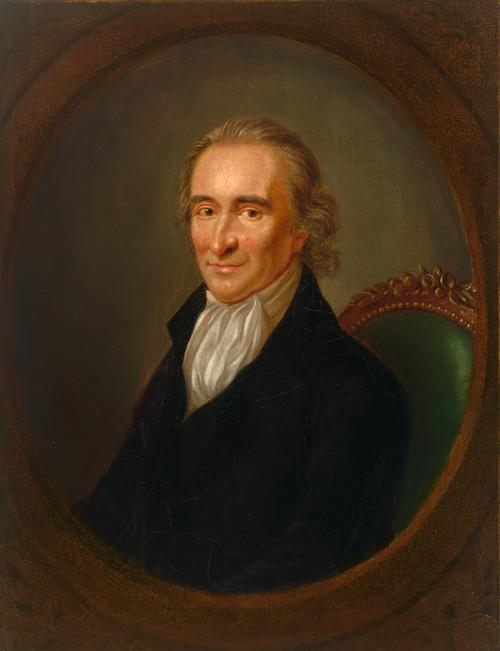
People used to say that lafayette at the end of the eighteenth century was the hero of two worlds, but forgot that the time was better qualified to be the champion of democracy -- thomas pann. Lafayette swords, pan pens. The sword of the former can only connect two battles between the american revolution, the french revolution and the old continent, but it does not reveal the intrinsic link between the two revolutions. The latter not only revealed their connection, but also made a significant contribution to the modern political doctrine on which the two revolutions were based. The pen of pan is in front of the sword of lafayette. But pan's fate -- whether it's personal or historical -- is far from comparable to the lafayette. Lafayette gained a great reputation before he was born and was welcomed in european capitals. Pan was a victim. He was slandered by burke, tried by pitt, arrested for robespierre. In the end, washington suffered from indignity. It's not surprising that he was hunted down by the old feudal palace, and, sadly, he was hit by the new ruling party, which was his comrades not long ago. The revolution, which he inspired by the citizens of the world in england, france and the united states of america, had left behind -- it had been a tragedy that only rousseau could share. Even so, rousseau had the honor of dying, far better than him. No one has been involved in so many events in his time, no one's work has won so many readers in his time, but no one has been forgotten as quickly as he has been, so that the remains are still unaccounted for. On january 29, 1737, thom as. Paine was born in a poor breastdresser family in setford, norfolk county, united kingdom. He left school at a young age, was a shopkeeper, a breast-dresser, a teacher and a tax collector, and was threatened by unemployment and hunger. He got married twice, and ended up in misery: one mourning, one divorce. Before common sense was published, he had written his last name as "pain" in protest against british society. In 1,774 he organized a petition from the lower tax collectors demanding an increase in wages. During his petition to congress in london, he met with franklin, the representative of the north american colony in london. The latter admires him for being "a noble young man of originality". After the petition failed, panth was dismissed by the british crown. In january of this year, he took the conclusion that the wealth of the rich was the disaster of others and left the increasingly hateful britain, exiled to north america. After the arrival, he quickly found a career with franklin's letter of recommendation. From january to may of january 1 776, pan was editor of pennsylvania magazine in philadelphia. On march 8, 1,775, he published africa slaves in the americas, criticizing the enslavement of blacks as "murder, robbery, lewdness and barbarism" and calling on north americans "to cease and abolish this system with deep sorrow and aversion". Historians have determined that this is one of the first and most outstanding literature against slavery on north american soil. The penn abolitionists were inspired by his article, and a few weeks later, they formed the american abolition association -- the first ever in north america -- the abolition organization. Panth became its ex officio member. After pan's arrival, the events in north america are moving towards the height of armed resistance to britain. But then north americans were not determined to be independent. "the king's mercy, the parliament's tyranny" is common not only in the civil society, but even in the army. The declaration of the first continental conference in september 1 774 is a declaration of complete loyalty to the crown and attachment to great britain: " you are told that we are insolent, dissatisfied with the government and the desire for independence. Please believe that none of this is true." as long as we return to our position at the end of the last war, our harmony will be restored, as it was in january 1,776, in washington's chief officer's restaurant, every night to the health of the king. For most north americans, it's not acceptable to go out of their home country and build a republic, but to repeat in north america the tragedies of chaos and destruction in history -- far as ancient rome, near poland. Only a few advanced elements, such as benjamin roth, john adams and others, saw the prospect of war being independent, the prospect of independence being republican. But they are constrained by real interests and afraid to make public appeals. But the war is going on every night, every hour of every day, so there's a very strange situation: the war is going on, but the prospects for war are blurry. In this case, there was only war in north america, there was no revolution. The war came close after pan's commons